Why DNFBPs Are a High-Risk Sector for AML
Introduction
In the global fight against money laundering and terrorist financing, Designated Non-Financial Businesses and Professions (DNFBPs) have been identified as highly vulnerable. In the UAE, DNFBPs include real estate brokers, dealers in precious metals and stones, lawyers, accountants, auditors, and trust & company service providers. Despite not being financial institutions, they are directly exposed to financial crime risks due to the nature of their industries.
________________________________________
Characteristics That Make DNFBPs High-Risk
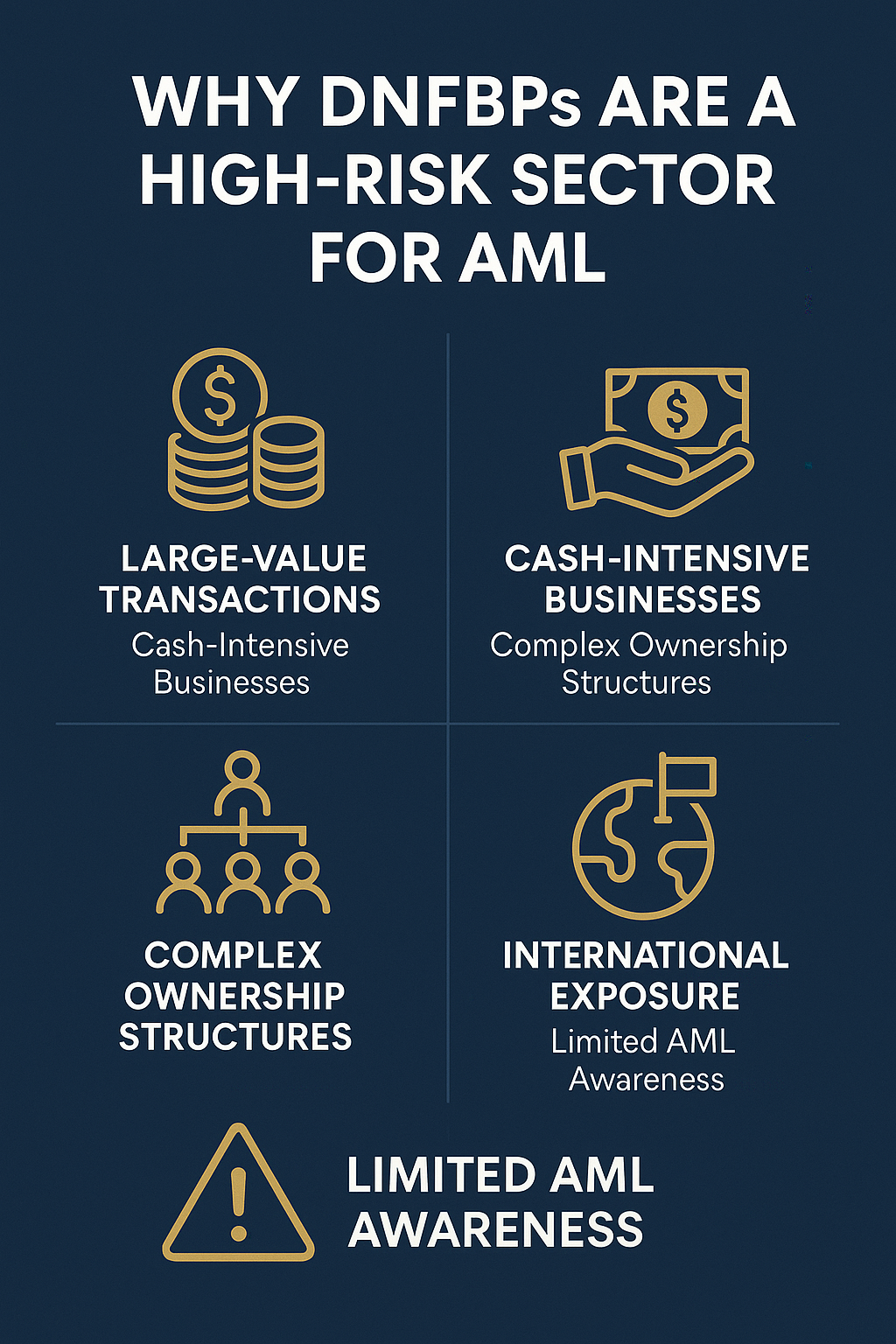
1. Large-Value Transactions
• DNFBPs often deal with high-value goods and services such as gold, diamonds, luxury properties, and complex legal or corporate structures.
• These transactions provide opportunities for criminals to integrate illicit funds into the legitimate economy.
2. Cash-Intensive Business Models
• Precious metals, jewelry, and real estate sectors are traditionally cash-driven.
• High-value cash transactions are harder to trace and raise risks of structuring and layering in money laundering.
3. Complex Ownership Structures
• Lawyers, auditors, and corporate service providers may set up trusts, shell companies, or offshore entities.
• These structures can conceal the Ultimate Beneficial Owner (UBO), creating opacity for regulators.
4. International Exposure
• Many DNFBPs deal with cross-border clients, including those from high-risk jurisdictions.
• This increases exposure to terrorist financing and sanctions risks.
5. Limited AML Awareness
• Unlike banks, DNFBPs historically lacked strong compliance cultures.
• Some businesses underestimate their role in AML, leading to weak controls, poor reporting, and insufficient training.
________________________________________
Regulatory Expectations
The Financial Action Task Force (FATF) has long identified DNFBPs as crucial “gatekeepers” in the global financial system. In the UAE:
• DNFBPs are regulated under Federal Decree-Law No. 20 of 2018 and Cabinet Decision No. 10 of 2019.
• They must register with the goAML system and report Suspicious Transaction Reports (STRs).
• Regulators conduct inspections and impose heavy fines for non-compliance.
________________________________________
Key Risk Scenarios for DNFBPs
1. Real Estate – Criminals purchase luxury properties to launder large sums of money, often through shell companies or proxies.
2. Precious Metals & Stones – Gold and diamonds are portable, high-value assets easily bought and resold across borders.
3. Law Firms – Lawyers may unintentionally facilitate laundering through company formations or escrow accounts.
4. Accountants & Auditors – Professionals may overlook suspicious financial patterns during audits or tax structuring.
5. Trust & Company Service Providers (TCSPs) – Use of offshore structures can obscure ownership and create vehicles for laundering.
________________________________________
Mitigating the Risks
To reduce exposure, DNFBPs must:
• Conduct robust risk assessments and adopt a risk-based approach.
• Implement Customer Due Diligence (CDD) and verify UBOs.
• Train employees to identify red flags such as unusual payment methods, complex ownership, or reluctance to provide documentation.
• Maintain proper record-keeping for a minimum of five years.
• Appoint a competent Money Laundering Reporting Officer (MLRO).
________________________________________
Conclusion
DNFBPs play a pivotal role in maintaining the integrity of the financial system. Their exposure to large-value, cash-driven, and cross-border transactions makes them a prime target for money launderers and terrorist financiers. In the UAE, regulators are increasingly scrutinizing DNFBPs to ensure they strengthen their AML compliance frameworks. By recognizing their high-risk nature and addressing compliance gaps, DNFBPs can protect themselves from regulatory penalties and reputational damage.
________________________________________
📌 About Us
Sheikh Anwar Accounting and Auditing LLC provides expert AML and compliance advisory services for DNFBPs across the UAE. We assist businesses with risk assessments, AML frameworks, goAML registration, and ongoing monitoring.
🌐 Website: www.sa-auditors.com
📧 Email: info@sa-auditors.com