VAT and RCM in Free Zones
Introduction
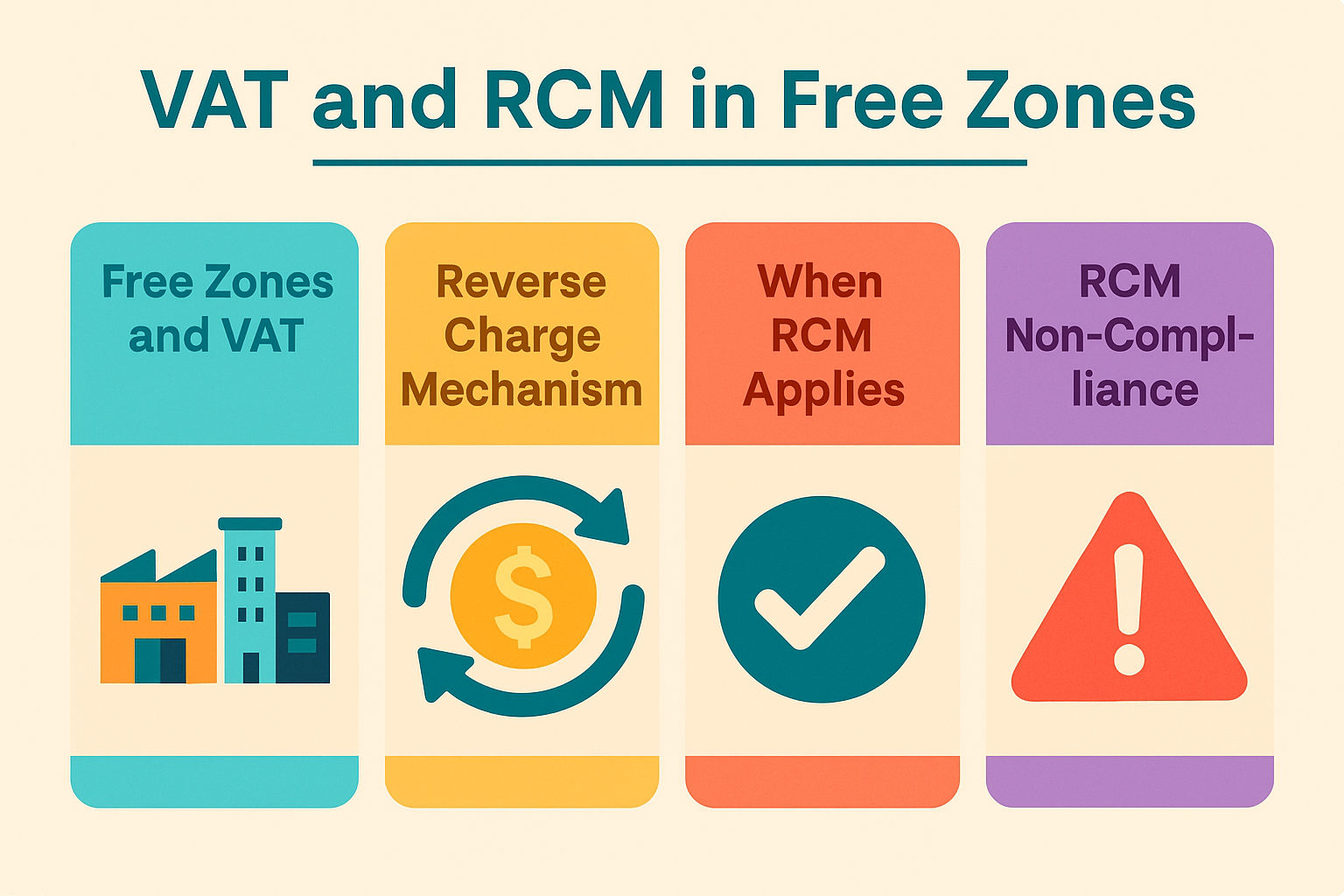
Free Zones in the UAE offer a strategic business environment with tax incentives and simplified regulations. However, when it comes to VAT (Value Added Tax), Free Zone entities must navigate specific rules—especially around the Reverse Charge Mechanism (RCM).
🔍 Understanding Free Zones under UAE VAT
Under Federal Decree-Law No. (8) of 2017 and Cabinet Decision No. 59 of 2017, the UAE classifies certain Free Zones as Designated Zones for VAT purposes.
🏢 Designated Zones vs Non-Designated Free Zones
• Designated Zones (DZs): Considered outside the UAE for VAT on certain supplies of goods (e.g., JAFZA, DAFZA, etc.)
• Non-Designated Zones: Treated as within the UAE VAT territory. Regular VAT rules apply.
________________________________________
🧾 VAT Treatment in Free Zones
Type of Transaction Designated Zone Non-Designated Zone
Goods to Mainland Subject to VAT Subject to VAT
Goods between DZs VAT exempt (if conditions met) Subject to VAT
Services Always subject to VAT Subject to VAT
________________________________________
🔄 What is Reverse Charge Mechanism (RCM)?
RCM shifts the responsibility of VAT payment from the supplier to the recipient of goods/services. This typically applies to:
• Import of Goods
• Import of Services
• Certain local supplies by non-residents
________________________________________
📌 When Does RCM Apply to Free Zone Companies?
✅ 1. Import of Services from Outside UAE
Even in Designated Zones, imported services (like software, consultancy, digital services) are subject to RCM.
👉 Example: A Free Zone company receives audit services from a UK-based firm. The company must account for VAT under RCM.
________________________________________
✅ 2. Import of Goods into the UAE
Free Zone companies importing goods into the UAE mainland must pay VAT using RCM during customs clearance.
👉 Example: A company in JAFZA imports electronics from China into Dubai mainland. VAT is payable at customs under RCM.
________________________________________
✅ 3. Procurement from UAE Mainland by DZ Company
When a Designated Zone company buys services or goods from the mainland, VAT is applied by the mainland supplier. However, if the supplier is not VAT-registered, RCM applies.
________________________________________
✅ 4. Supply Chain Adjustments for Tax Grouping
If a Free Zone company is part of a tax group with a mainland company, RCM doesn’t apply on internal transactions—but proper documentation is essential.
________________________________________
⚠️ RCM Non-Compliance Risks
• Penalties for incorrect VAT return filings.
• Misclassification of zone status may lead to tax errors.
• Failure to account for RCM on imports leads to administrative fines.
________________________________________
🛠️ How to Report RCM in VAT Return (Form 201)
• Box 3: Imported goods through UAE customs
• Box 6: Imported services (RCM)
• Box 10: Adjust input VAT on imports
Make sure you retain documentation for all RCM-related invoices and calculations.
________________________________________
📝 Tips for Free Zone Companies
• Confirm your zone status (Designated or not) with FTA.
• Keep detailed purchase records from foreign and local vendors.
• Conduct VAT health checks quarterly to stay compliant.
• Use accounting software that supports RCM automation.
________________________________________
🏢 About Sheikh Anwar Accounting and Auditing LLC
At Sheikh Anwar Accounting and Auditing LLC, we help Free Zone businesses in the UAE manage VAT compliance, RCM calculations, and tax return filing with full accuracy. Whether you’re in a Designated Zone or not, we ensure your VAT obligations are met efficiently.
📞 Contact us today for Free Zone VAT Advisory and RCM setup.
🌐 Visit us: www.sa-auditors.com
📧 Email: info@sa-auditors.com
📱 WhatsApp: +971-XX-XXXXXXX