Using RPA (Robotic Process Automation) in AML
Introduction
The growing complexity of financial crime, combined with strict regulatory expectations, has made Anti-Money Laundering (AML) compliance one of the most resource-intensive functions in financial institutions and Designated Non-Financial Businesses and Professions (DNFBPs). Manual processes are often slow, error-prone, and unable to keep pace with the vast volume of transactions and compliance checks required. This is where Robotic Process Automation (RPA) comes into play. By automating repetitive, rule-based AML tasks, RPA allows compliance teams to focus on higher-value investigations while ensuring accuracy, efficiency, and scalability.
________________________________________
What is RPA in AML?
Robotic Process Automation (RPA) is the use of software “bots” that mimic human actions to complete structured, repetitive tasks within existing systems. Unlike traditional IT automation, RPA interacts with applications through the user interface, making it easy to deploy without significant system changes.
In AML, RPA helps automate:
• KYC/Onboarding checks
• Sanctions and watchlist screening
• Transaction monitoring alerts review
• Data entry, validation, and reconciliation
• Regulatory reporting (e.g., STR filing)
________________________________________
Key Use Cases of RPA in AML
1. Customer Due Diligence (CDD) and KYC
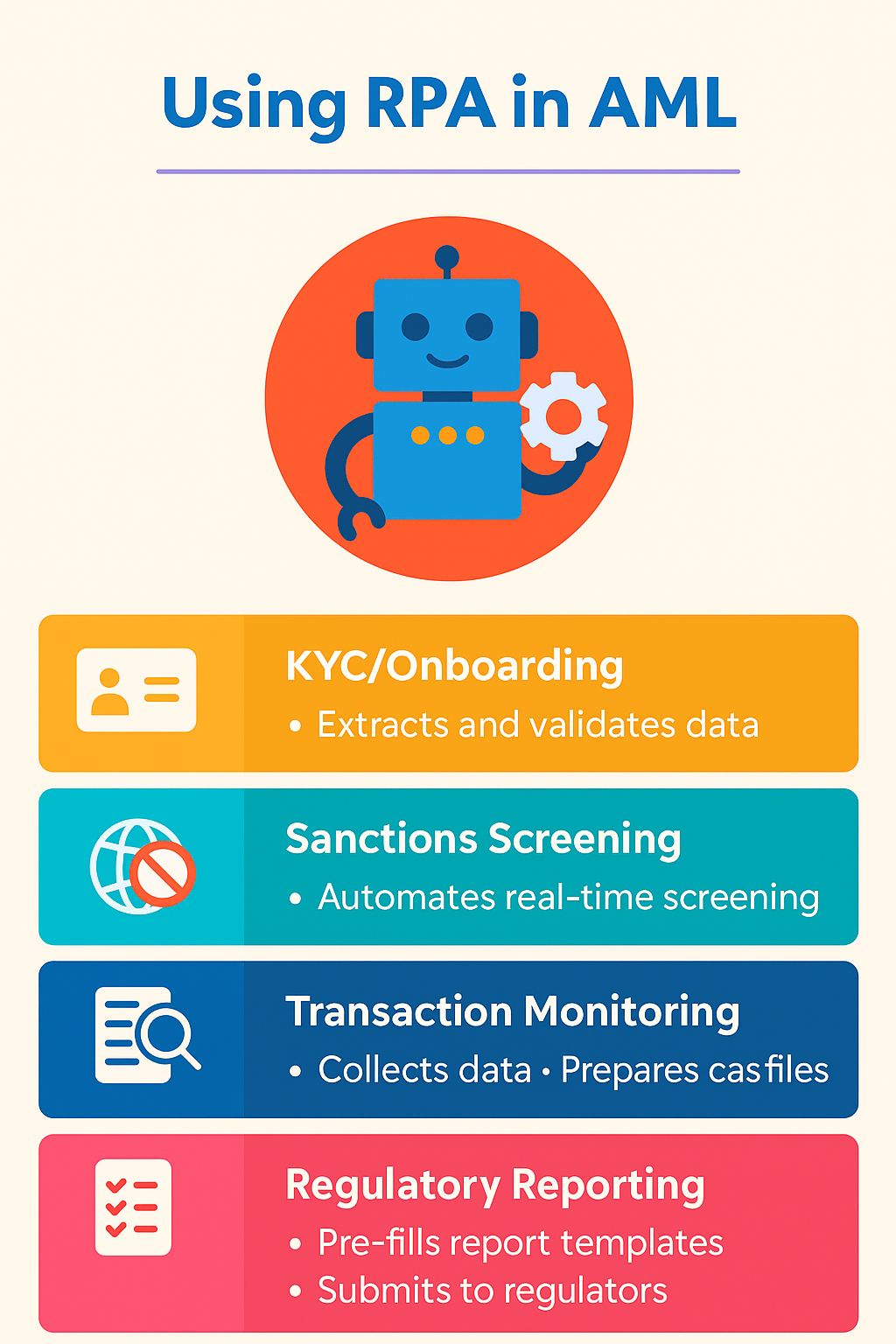
RPA bots can automatically extract data from documents, validate it against external databases, and populate KYC systems. This speeds up onboarding while reducing human errors.
2. Sanctions and PEP Screening
RPA ensures real-time, automated screening of customers and transactions against sanctions, watchlists, and PEP databases, minimizing delays and false negatives.
3. Transaction Monitoring Support
When a transaction monitoring system generates alerts, RPA bots can collect relevant customer data, transaction history, and supporting documents, preparing comprehensive case files for compliance officers.
4. Regulatory Reporting
Preparing Suspicious Transaction Reports (STRs) is often manual and time-consuming. RPA can pre-fill report templates, attach required documents, and submit to regulators (such as via the UAE’s goAML portal).
5. Data Reconciliation and Audit Trails
RPA can reconcile AML-related data from multiple systems, ensuring consistency, and create transparent audit trails for inspections.
________________________________________
Benefits of RPA in AML
1. Efficiency and Speed – Automates repetitive manual tasks, reducing turnaround times.
2. Accuracy and Consistency – Eliminates human error in data entry and screening.
3. Scalability – Handles large transaction volumes without additional staff.
4. Cost Savings – Reduces compliance costs by cutting manual labor.
5. Regulatory Compliance – Ensures timely and accurate reporting aligned with AML laws.
6. Improved Employee Productivity – Allows compliance staff to focus on investigations and decision-making.
________________________________________
Challenges in Implementing RPA
• Integration Complexity – RPA must connect seamlessly with multiple AML systems and databases.
• Change Management – Staff may resist shifting from manual processes to automation.
• Initial Costs – Deployment, licensing, and maintenance require upfront investment.
• Limited Scope – RPA is rule-based and not suited for handling unstructured or judgment-based decisions (which require AI/ML).
________________________________________
Future of RPA in AML
RPA is increasingly being combined with Artificial Intelligence (AI), Natural Language Processing (NLP), and Machine Learning (ML) to create Intelligent Automation. This allows compliance functions to not only automate repetitive tasks but also analyze unstructured data, detect suspicious patterns, and predict potential risks. In the UAE and globally, regulators encourage RegTech adoption, making RPA a powerful enabler of compliance.
________________________________________
Conclusion
Robotic Process Automation is transforming AML compliance by reducing operational burdens, improving accuracy, and ensuring regulatory adherence. While not a replacement for human judgment, RPA significantly enhances efficiency and allows compliance teams to focus on high-risk investigations. For businesses in the UAE, adopting RPA in AML frameworks provides a competitive advantage in managing compliance obligations effectively.
________________________________________
About Us
At Sheikh Anwar Accounting and Auditing LLC, we support organizations in implementing AML technology solutions such as RPA, transaction monitoring, and case management systems. Our expertise ensures compliance with UAE regulations and international AML standards, enabling businesses to operate securely and confidently.
📩 Email: info@sa-auditors.com
🌐 Website: www.sa-auditors.com