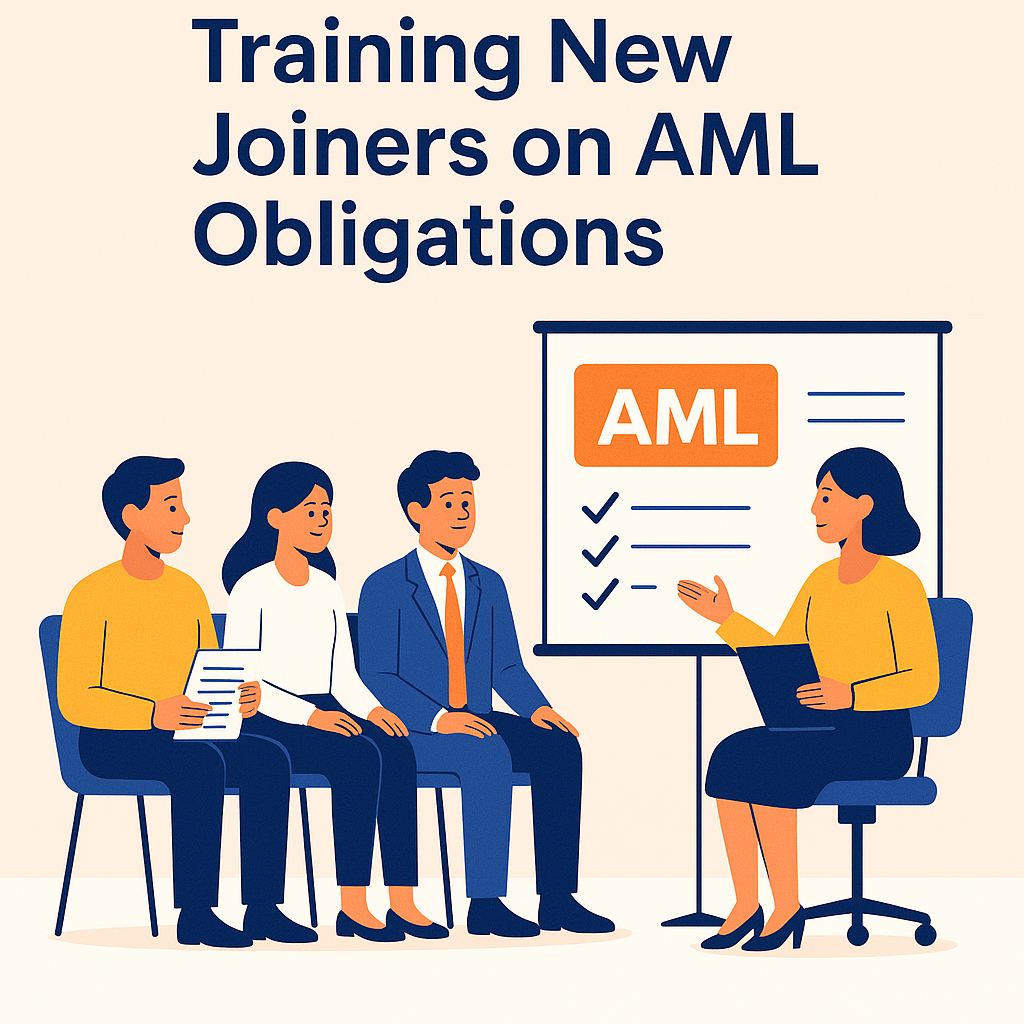
Training New Joiners on AML Obligations
Introduction
In today’s regulatory landscape, Anti-Money Laundering (AML) compliance is no longer optional—it is a critical requirement for all Designated Non-Financial Businesses and Professions (DNFBPs), including jewellers, real estate firms, law firms, and accountants in the UAE. One of the most effective ways to strengthen compliance is to ensure that new employees receive proper AML training from day one.
________________________________________
Why AML Training for New Joiners Is Essential
1. First Line of Defense
Employees—especially frontline staff—are the first to interact with clients and process transactions. Without proper AML awareness, they may unintentionally miss red flags or fail to collect the required due diligence documents.
2. Regulatory Requirement
UAE AML laws, including Federal Decree-Law No. 20 of 2018 and Cabinet Decision No. 10 of 2019, require DNFBPs to conduct ongoing staff training. Regulators such as the Ministry of Economy (MOE) frequently review training records during inspections.
3. Reputation Management
A single compliance failure can damage a company’s credibility. Training new joiners ensures that every team member contributes to safeguarding the business reputation.
________________________________________
Key Areas to Cover in AML Training for New Employees
1. Overview of AML Laws and Regulations
o UAE AML/CFT legal framework.
o Obligations under Ministry of Economy guidelines.
o Role of the UAE Financial Intelligence Unit (FIU).
2. Customer Due Diligence (CDD) & Know Your Customer (KYC)
o How to verify customer identity (Emirates ID, passport, trade license).
o Identifying Politically Exposed Persons (PEPs).
o Understanding beneficial ownership.
3. Recognizing Red Flags
o Cash-intensive transactions.
o Unusual behavior (reluctance to provide information, use of third parties).
o Dealings with high-risk jurisdictions.
4. Suspicious Transaction Reporting (STRs)
o When to raise an STR.
o How to use the goAML system.
o Confidentiality obligations when reporting.
5. Record Keeping Requirements
o Maintaining transaction records for at least five years.
o Readiness for regulatory inspections.
6. Role of Employees in Compliance
o Frontline: spotting suspicious behavior.
o Management: enforcing policies and procedures.
o Compliance officers: monitoring and reporting.
________________________________________
Best Practices for Training New Joiners
• Mandatory Induction Training: Ensure every new staff member attends AML training within their first week.
• Practical Case Studies: Use real-life examples from the UAE market to make training relatable.
• Ongoing Refreshers: AML training should not be one-time; periodic refreshers help reinforce knowledge.
• Assessments & Certification: Test employees’ understanding to confirm readiness.
________________________________________
Benefits of Early AML Training
• Compliance with UAE Laws – Reduces risk of fines and penalties.
• Stronger Internal Controls – Staff equipped to handle AML responsibilities effectively.
• Enhanced Reputation – Clients and regulators trust businesses that prioritize compliance.
• Long-Term Efficiency – Trained employees handle processes smoothly and reduce the chance of reporting errors.
________________________________________
How We Can Help
At Sheikh Anwar Accounting and Auditing LLC, we provide structured AML training programs designed specifically for new joiners. Our sessions cover UAE regulatory requirements, practical red flag identification, and hands-on guidance on goAML reporting.
• Email: info@sa-auditors.com
• Website: www.sa-auditors.com