The Rise of Digital Identity in AML Compliance
Introduction
As financial transactions become increasingly digital, the fight against money laundering and terrorist financing has shifted into new technological frontiers. One of the most significant developments in recent years is the adoption of digital identity solutions in Anti-Money Laundering (AML) compliance. Digital identity allows institutions to verify, authenticate, and monitor customers more efficiently while reducing risks associated with fraud, impersonation, and regulatory breaches.
________________________________________
What is Digital Identity in AML?
Digital identity refers to the use of technology-driven identification methods—such as biometric verification, e-KYC, blockchain-based credentials, and government-issued digital IDs—to verify individuals and businesses in financial and non-financial transactions.
In the context of AML, digital identity is not just about onboarding customers; it also enables:
• Continuous monitoring of client activity.
• Enhanced customer due diligence (CDD) and Know Your Customer (KYC) checks.
• Stronger defenses against financial crime.
________________________________________
Why Digital Identity is Rising in AML Compliance
1. Growing Regulatory Pressure
Regulators around the world, including the UAE Ministry of Economy and Central Bank, require DNFBPs and financial institutions to conduct robust KYC/AML checks. Digital identity streamlines compliance with FATF recommendations and national AML regulations.
2. Shift Toward Remote Onboarding
The COVID-19 pandemic accelerated digital onboarding. Today, customers expect quick and seamless account opening processes without compromising compliance. Digital ID verification makes this possible.
3. Fraud and Cybercrime Prevention
Traditional identity checks are prone to forgery and manipulation. Biometric authentication, AI-driven verification, and secure digital IDs reduce the risk of fraud, identity theft, and synthetic identities.
4. Cross-Border Transactions
With global trade and cross-border remittances on the rise, digital identity ensures compliance across multiple jurisdictions while maintaining security and speed.
________________________________________
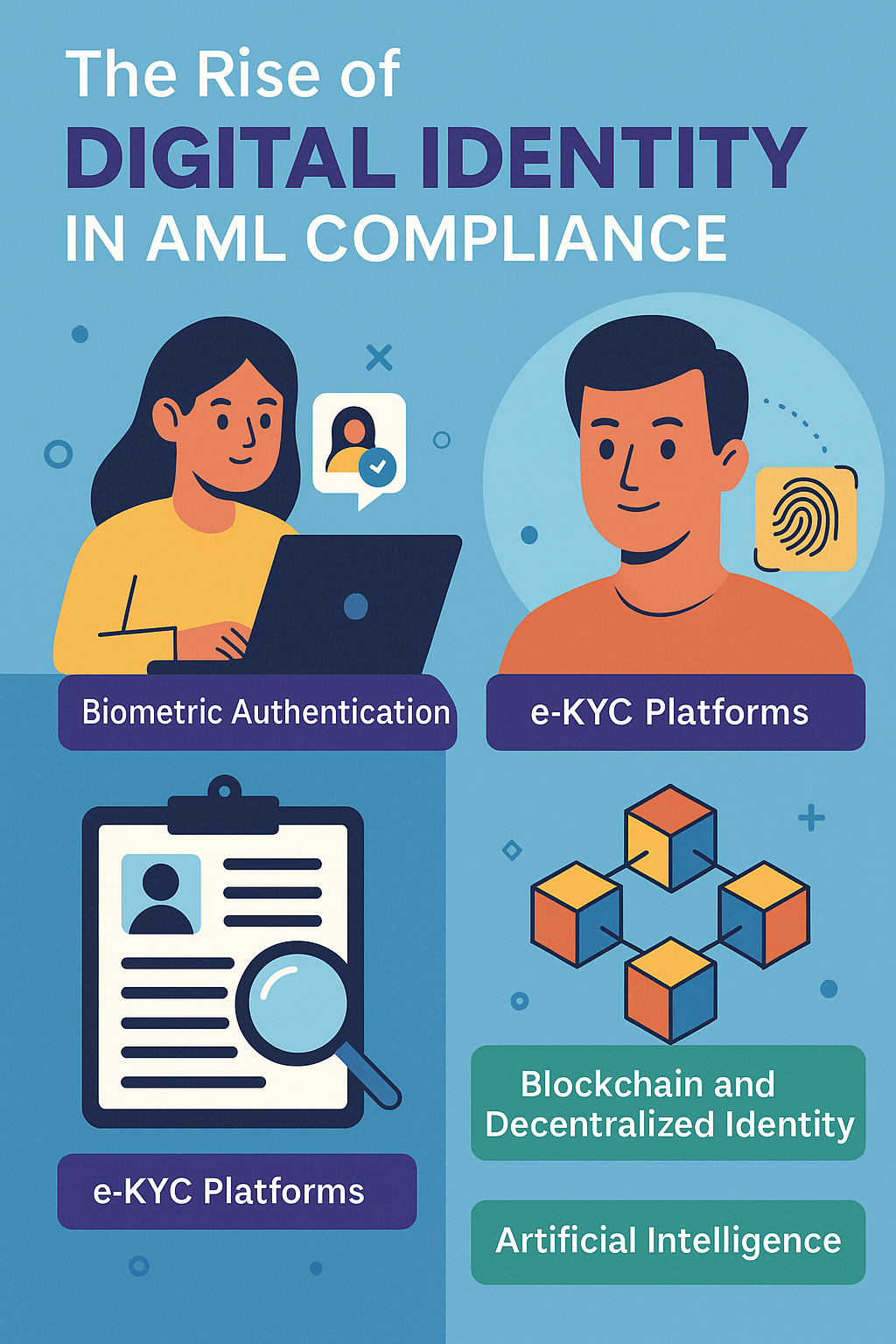
Key Technologies Driving Digital Identity in AML
• Biometric Authentication: Fingerprints, facial recognition, and iris scans for strong identity proofing.
• e-KYC Platforms: Paperless KYC processes integrated with government and credit bureau databases.
• Blockchain and Decentralized Identity: Immutable, tamper-proof digital records for secure identity management.
• Artificial Intelligence (AI): Automated document verification, fraud detection, and behavioral analytics.
________________________________________
Benefits of Digital Identity in AML
1. Enhanced Accuracy – Reduces human error and identity fraud.
2. Improved Customer Experience – Faster onboarding and verification.
3. Regulatory Compliance – Meets evolving global AML requirements.
4. Operational Efficiency – Automates KYC/AML checks, reducing compliance costs.
5. Scalability – Suitable for both large banks and smaller DNFBPs.
________________________________________
Challenges in Adoption
• Data Privacy Concerns – Storing biometric and personal data raises GDPR and UAE PDPL (Federal Decree-Law No. 45 of 2021) challenges.
• High Implementation Costs – Advanced systems require significant investment.
• Standardization Issues – Different countries and regulators use different frameworks.
• Customer Trust – Some customers remain skeptical about sharing biometric and digital data.
________________________________________
Future Outlook
The future of digital identity in AML compliance lies in interoperability and collaboration. Governments, regulators, and private institutions are working toward unified digital identity frameworks. The UAE’s efforts to build a national digital identity infrastructure signal a stronger regulatory ecosystem, where AML compliance becomes both seamless and robust.
________________________________________
Conclusion
Digital identity is transforming AML compliance by making it faster, safer, and more effective. While challenges remain, the rise of digital identity represents a pivotal step in combating financial crime. For DNFBPs and financial institutions in the UAE, adopting digital identity solutions is no longer optional—it is a necessity for long-term compliance and trust.
________________________________________
About Us
At Sheikh Anwar Accounting and Auditing LLC, we help businesses implement robust AML compliance frameworks, including digital identity solutions, transaction monitoring, and regulatory reporting. Our expertise ensures clients remain aligned with UAE laws and international best practices.
📩 Email: info@sa-auditors.com
🌐 Website: www.sa-auditors.com