Technology Adoption in DNFBP AML Compliance
Introduction
Designated Non-Financial Businesses and Professions (DNFBPs)—including jewellers, real estate brokers, lawyers, accountants, and trust or company service providers—play a critical role in the UAE’s economy. However, because of their exposure to high-value transactions and complex cross-border dealings, these sectors face heightened risks of money laundering and terrorist financing (ML/TF).
To meet regulatory obligations under Federal Decree-Law No. 20 of 2018, Cabinet Decision No. 10 of 2019, and sector-specific supervisory guidelines, DNFBPs must strengthen their Anti-Money Laundering (AML) compliance frameworks. The growing complexity of regulatory requirements and the volume of transactions has made technology adoption essential for ensuring efficiency, accuracy, and proactive risk management.
________________________________________
1. The Need for Technology in AML Compliance
Traditional manual compliance methods are no longer sufficient. DNFBPs face challenges such as:
• Large volumes of customer and transaction data requiring accurate monitoring.
• Dynamic global sanctions lists that demand real-time screening.
• Complex ownership structures making Ultimate Beneficial Owner (UBO) identification difficult.
• Increasing regulatory expectations for sophisticated risk-based approaches.
Technology offers solutions that enhance compliance while reducing human error and operational costs.
________________________________________
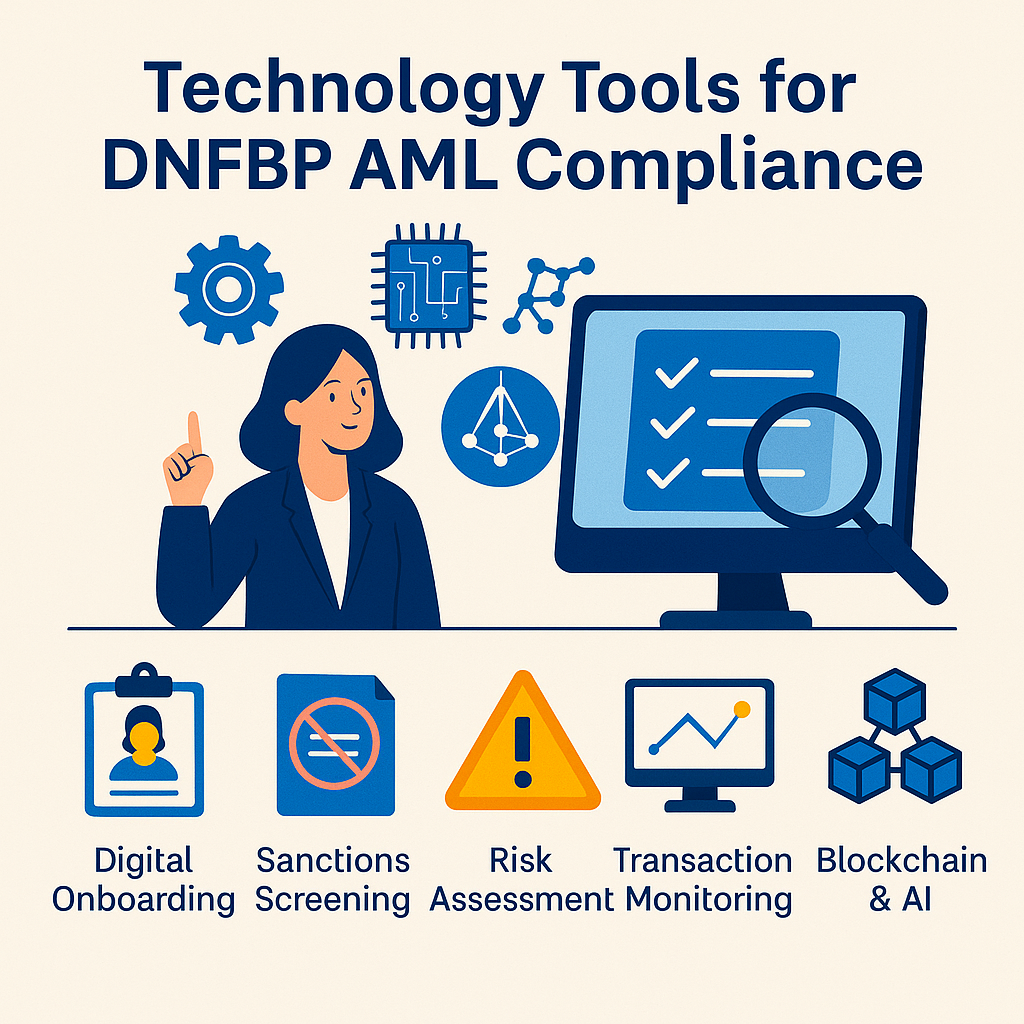
2. Key Technologies in DNFBP AML Compliance
a) Digital Onboarding & e-KYC
• Automated verification of identity documents, passports, and trade licenses.
• Facial recognition and biometric checks to prevent impersonation.
• Integration with government databases for instant verification.
b) Sanctions and PEP Screening
• Real-time screening against global watchlists, sanctions databases, and politically exposed person (PEP) registries.
• Continuous monitoring to capture new designations and alerts.
c) Transaction Monitoring Systems
• AI-driven tools that detect unusual transaction patterns (e.g., cash-heavy dealings, layering of funds, or rapid asset movement).
• Rule-based alerts for high-risk activities, including threshold breaches.
• Customizable risk scenarios for jewellery shops, real estate, and legal services.
d) Risk Assessment Platforms
• Enterprise-wide risk assessment tools to map customer, geographic, and product risks.
• Automated scoring models to categorize customers into low, medium, and high risk.
• Dashboards for regulators and management to track risk exposure.
e) goAML Integration
• Streamlined integration with the goAML platform of the UAE Financial Intelligence Unit (FIU).
• Automated submission of Suspicious Transaction Reports (STRs), Large Cash Transaction Reports (LCTRs), and DPMS Reports.
f) Blockchain & RegTech Solutions
• Blockchain-based record-keeping for immutable audit trails.
• RegTech platforms providing automated regulatory updates and compliance workflows.
________________________________________
3. Benefits of Technology Adoption for DNFBPs
1. Efficiency: Automates repetitive compliance tasks, freeing resources for strategic risk management.
2. Accuracy: Minimizes human error in KYC and transaction reviews.
3. Real-Time Compliance: Continuous monitoring ensures timely detection of suspicious activity.
4. Scalability: Easily accommodates growing transaction volumes.
5. Regulatory Confidence: Demonstrates to authorities a strong commitment to compliance.
6. Enhanced Customer Experience: Faster onboarding without compromising due diligence.
________________________________________
4. Challenges in Implementing AML Technology
While technology brings significant advantages, DNFBPs must also navigate:
• Cost of Implementation: Small firms may find advanced solutions expensive.
• Data Privacy Concerns: Systems must comply with UAE Federal Decree-Law No. 45 of 2021 on Data Protection.
• Integration Issues: Legacy systems may not align smoothly with modern RegTech tools.
• Skilled Workforce: Staff must be trained to use new systems effectively.
________________________________________
5. Best Practices for DNFBPs in Adopting AML Technology
• Adopt a Risk-Based Approach: Invest in technology proportionate to business size and risk exposure.
• Choose Regulator-Recognized Vendors: Ensure compliance tools align with UAE FIU and Ministry of Economy guidelines.
• Train Employees: Regular training to ensure systems are used effectively.
• Conduct Independent Audits: Validate the effectiveness of AML technology solutions.
• Stay Updated: Continuously upgrade systems to match evolving FATF and UAE regulations.
________________________________________
Conclusion
Technology is no longer optional for DNFBPs in the UAE—it is essential. From digital onboarding to advanced AI-driven transaction monitoring, tech solutions provide the speed, efficiency, and precision needed to stay compliant in a highly regulated environment. By adopting these tools, DNFBPs not only avoid heavy penalties but also enhance client trust and contribute to the UAE’s standing as a global leader in financial transparency and compliance.
________________________________________
About Us
Sheikh Anwar Accounting and Auditing LLC is a trusted compliance partner in Dubai, specializing in AML advisory, regulatory technology adoption, corporate tax, VAT, and transfer pricing. We help DNFBPs across jewellery, real estate, law, and professional services sectors implement effective AML systems that meet both UAE and international standards.
📍 Address: Dubai Creek Tower, M 35, Dubai, UAE
📞 Contact: info@sa-auditors.com | +971-XXX-XXXX
🌐 Website: www.sa-auditors.com