Tailoring AML Training for Real Estate Brokers
Introduction
The UAE’s real estate sector has long been considered a high-risk industry for money laundering and terrorist financing. Given the large volume of high-value transactions, cross-border buyers, and cash-intensive deals, real estate brokers are particularly vulnerable to being exploited by criminals. Regulators such as the Ministry of Economy (MOE) and FIU require real estate brokers to undergo regular AML training to ensure compliance with Federal Decree-Law No. 20 of 2018 and Cabinet Decision No. 10 of 2019.
Generic AML training is not sufficient for brokers. Instead, programs must be tailored to the unique risks and red flags in the real estate industry.
________________________________________
1. Why Tailored Training Matters
• Sector-Specific Risks: Real estate is often used for integration of illicit funds through property purchases.
• High-Value Transactions: Large deals can easily hide criminal proceeds if due diligence is weak.
• International Buyers: Cross-border deals increase exposure to high-risk jurisdictions.
• Regulatory Scrutiny: Regulators frequently inspect DNFBPs like brokers for training and awareness gaps.
________________________________________
2. Key AML Risks for Real Estate Brokers
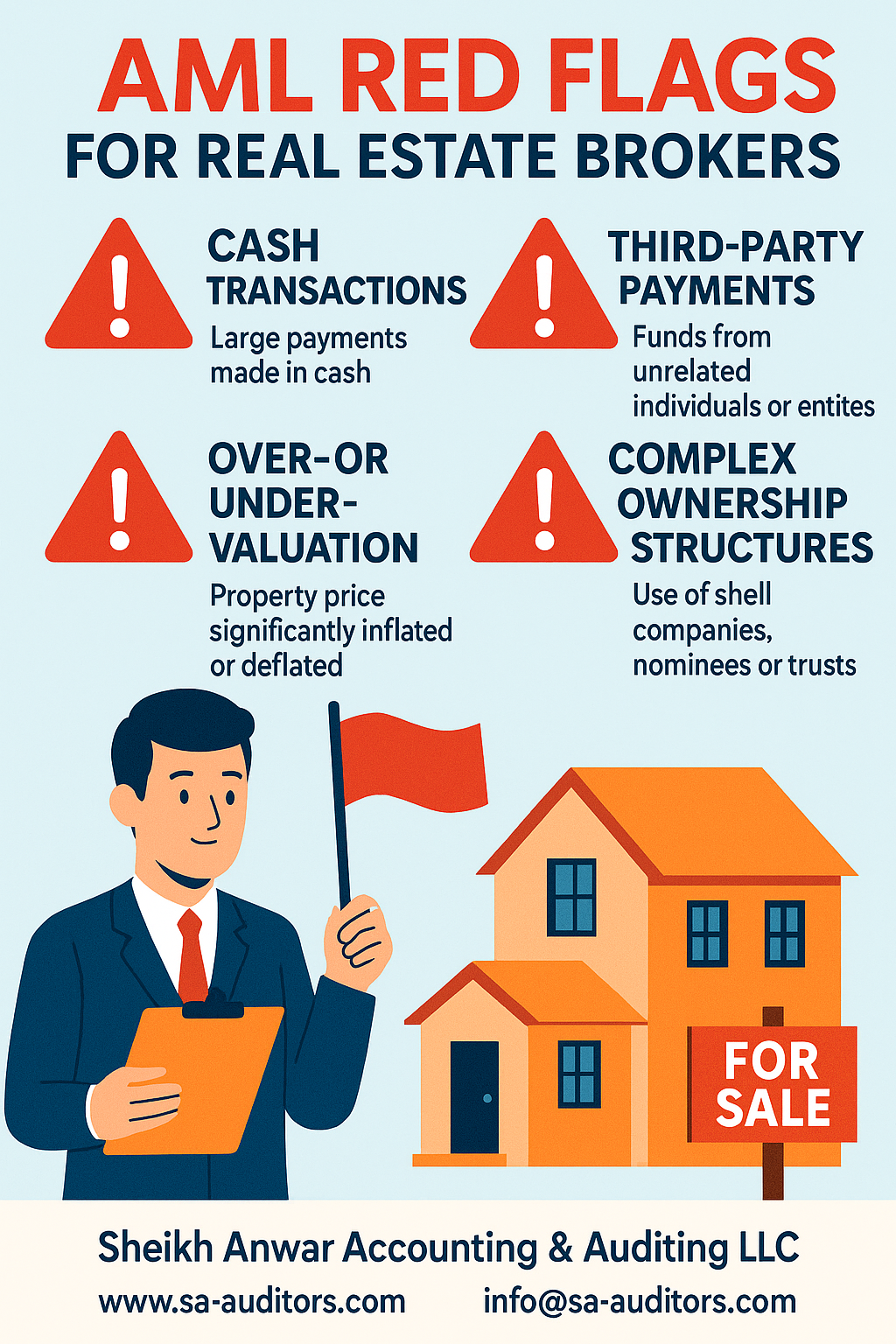
1. Cash Transactions – Buyers paying large amounts in cash without clear source of funds.
2. Third-Party Payments – Payments coming from unrelated accounts or offshore entities.
3. Over- or Under-Valuation – Property prices manipulated to launder funds.
4. Complex Ownership Structures – Use of shell companies, nominees, or trusts to hide beneficial owners.
5. Politically Exposed Persons (PEPs) – High-value purchases by PEPs with unclear wealth.
6. Unusual Customer Behavior – Reluctance to provide KYC, secrecy about occupation, or rushing transactions.
________________________________________
3. What Tailored AML Training Should Cover
• UAE AML Regulations: Specific rules for DNFBPs, goAML reporting obligations, penalties for non-compliance.
• Red Flags in Real Estate: Case studies of suspicious deals, especially cash-intensive and offshore-linked transactions.
• Customer Due Diligence (CDD/EDD): Identifying beneficial ownership, verifying sources of funds, and screening PEPs.
• STR Filing Procedures: When and how brokers should escalate and file suspicious transaction reports.
• Practical Scenarios: Role-play and simulations of real estate deals with hidden risks.
• Record-Keeping: Importance of retaining client and transaction records for at least 5 years.
________________________________________
4. Best Practices for Real Estate Broker Training
• Interactive Workshops: Use sector-specific case studies instead of generic lectures.
• Role-Based Modules: Frontline agents should focus on red flags, while compliance teams dive into STR filing.
• Regular Refreshers: Annual training plus interim updates when laws or FATF guidelines change.
• E-Learning Support: Provide flexible, online refresher modules for busy brokers.
• Collaboration with Regulators: Incorporate materials from MOE and FIU for alignment.
________________________________________
5. Benefits of Tailored Training
• Regulatory Compliance: Reduces the risk of fines, penalties, or license suspension.
• Early Risk Detection: Brokers can identify suspicious activity before completing a transaction.
• Customer Trust: Demonstrates professionalism and safeguards client interests.
• Market Integrity: Helps protect the UAE property market from being used for money laundering.
________________________________________
Conclusion
AML training for real estate brokers must go beyond compliance checklists. It should be practical, interactive, and industry-specific. By tailoring AML training to the unique risks in real estate, brokers can play a proactive role in protecting both their business and the wider UAE economy from illicit financial flows.
________________________________________
📩 For customized AML training programs designed specifically for real estate brokers in the UAE, contact us:
Sheikh Anwar Accounting & Auditing LLC
🌐 www.sa-auditors.com
📧 info@sa-auditors.com