Substance and Transfer Pricing
Introduction
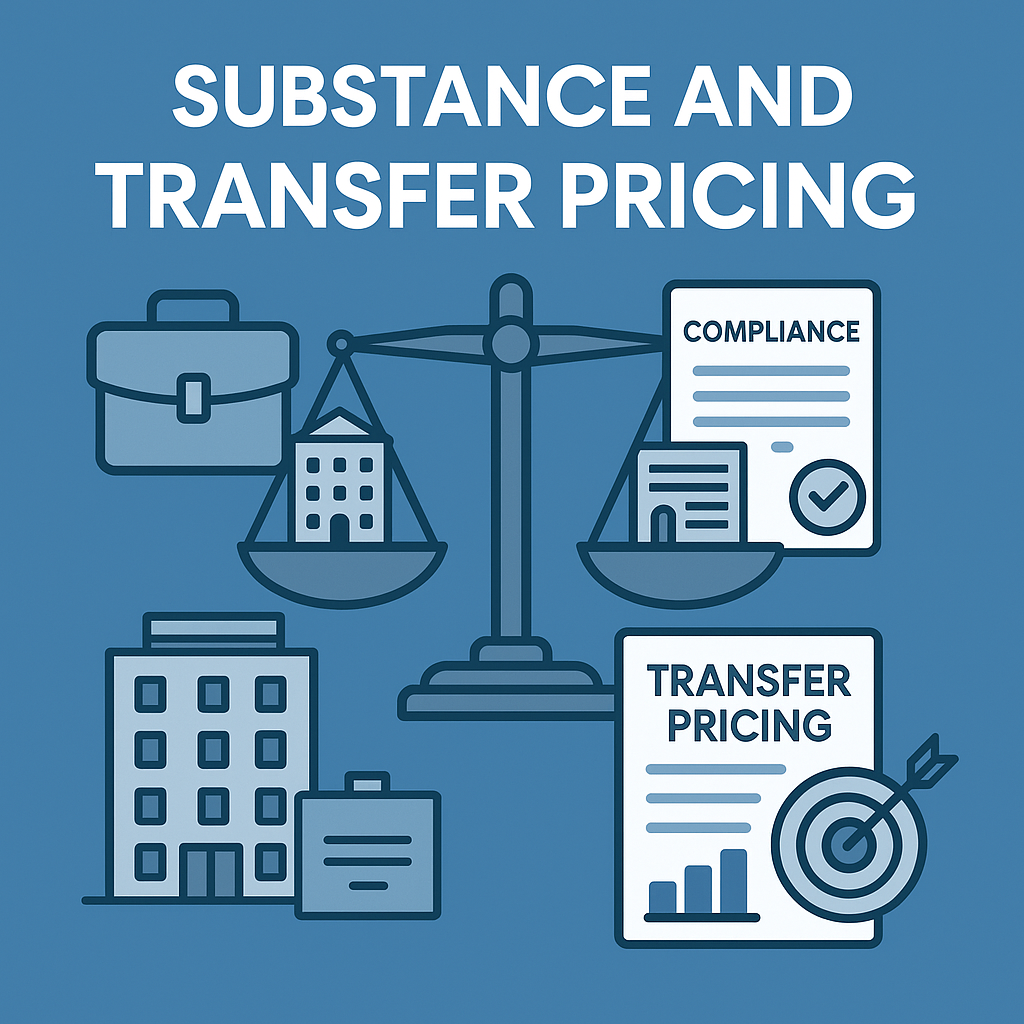
In today’s global tax landscape, the principle of economic substance is closely tied to Transfer Pricing (TP) compliance. Tax authorities worldwide, including the UAE’s Federal Tax Authority (FTA), now look beyond legal agreements to assess whether profits are aligned with the actual functions performed, assets employed, and risks assumed by related entities.
Under the UAE Corporate Tax Law (Federal Decree-Law No. 47 of 2022), Transfer Pricing requirements and substance rules operate together to ensure that multinational groups cannot shift profits artificially into low-tax jurisdictions. For businesses in the UAE, demonstrating substance in intercompany transactions is essential to withstand TP audits.
What is Economic Substance?
Economic substance refers to the genuine business activities carried out by an entity in a jurisdiction. It ensures that companies earning significant income in the UAE also have:
People: Qualified staff who perform key functions.
Assets: Tangible/intangible resources required to perform activities.
Decision-Making: Real control and risk assumption within the jurisdiction.
Without substance, intercompany pricing—even if benchmarked—may be challenged by the FTA.
Link Between Substance and Transfer Pricing
1. Alignment of Profits and Functions
Transfer Pricing requires that profits allocated to an entity reflect the value it contributes. If an entity has no employees or assets but earns large margins, the FTA may reallocate those profits to the entity performing actual work.
Example: A UAE entity booking high service revenues without staff or infrastructure may be challenged as lacking substance.
2. Relevance for Intangibles
Many disputes arise around trademarks, patents, and know-how. Ownership of intangibles on paper is insufficient unless the entity controls the development, enhancement, maintenance, protection, and exploitation (DEMPE) of the intangible.
Risk: Shell entities holding IP rights but lacking substance may lose royalty income allocation.
3. Impact on Financing Transactions
Intercompany loans and guarantees must reflect the risk assumption capacity of the lending entity. A company with no capital or treasury staff cannot justify earning high interest spreads or guarantee fees.
Risk: The FTA can reclassify financing arrangements and deny excessive interest deductions.
4. Interaction with UAE Economic Substance Regulations (ESR)
UAE entities engaged in relevant activities (e.g., holding companies, headquarters, finance, distribution, IP) must comply with ESR in addition to TP.
ESR tests whether there are sufficient employees, premises, and expenditure in the UAE.
TP tests whether intercompany prices reflect market terms.
Together, they ensure substance + pricing alignment.
Risks of Ignoring Substance in TP
Profit Reallocation – FTA may shift taxable income to entities with real substance.
Denial of Deductions – Expenses charged to low-substance entities may be disallowed.
Penalties – Non-compliance with ESR or TP documentation attracts significant fines.
Reputational Damage – Perception of tax avoidance strategies can harm business credibility.
Best Practices for Businesses in the UAE
Conduct a Functional Analysis (FAR)
Map out the functions, assets, and risks of each related entity.
Ensure profit allocation is consistent with actual activities.
Strengthen Local Substance
Maintain offices, employees, and infrastructure proportional to activities.
Document decision-making in UAE board meetings and minutes.
Align TP Documentation with ESR Filings
Consistency between Local File, Master File, and ESR returns is critical.
Review Intangible and Financing Structures
Ensure IP and treasury companies have real staff and decision-making authority.
Consider Advance Pricing Agreements (APAs)
For high-value arrangements, APAs provide certainty that both substance and pricing meet regulatory standards.
Conclusion
Substance and Transfer Pricing are inseparable pillars of tax compliance in the UAE. While TP ensures that related-party transactions are priced at arm’s length, substance rules verify that profits are supported by genuine business activity.
For businesses, especially multinational groups and holding structures in the UAE, maintaining real economic substance alongside robust TP documentation is the best strategy to avoid FTA disputes and ensure long-term compliance.
✍️ Prepared by Sheikh Anwar Accounting and Auditing LLC – Registered Auditor with the Ministry of Economy (Auditor Entry No. 5817, Company Entry No. LC4695-01). We specialize in Corporate Tax, Transfer Pricing, VAT, and AML Compliance, helping businesses align substance with tax planning and compliance frameworks.
🌐 Visit us: www.sa-auditors.com

