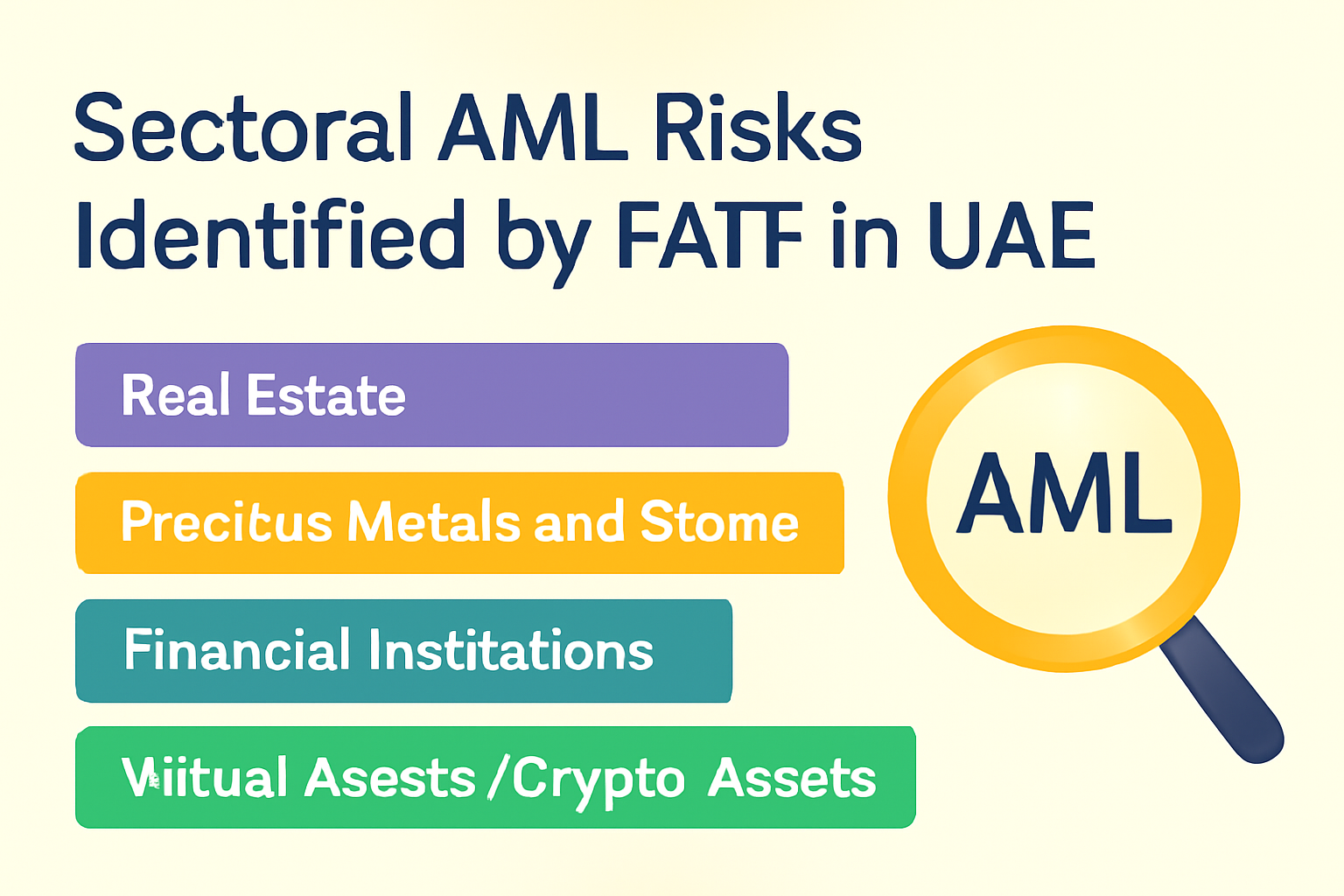
Sectoral AML Risks Identified by FATF in UAE
Introduction
The United Arab Emirates (UAE), as a global financial hub, faces a range of Anti-Money Laundering (AML) and Counter-Terrorist Financing (CFT) risks, particularly across specific sectors. The Financial Action Task Force (FATF) and the UAE authorities have identified high-risk sectors prone to exploitation for money laundering (ML), terrorist financing (TF), and other illicit financial activities. Understanding and addressing these sectoral risks is vital for businesses and professionals to stay compliant with UAE regulations and global standards.
Here, we will examine the AML risks across different sectors identified by FATF and the UAE’s National Risk Assessment (NRA), and offer practical advice on how businesses can manage these risks through robust compliance frameworks.
________________________________________
Key Sectors Identified as High-Risk by FATF in the UAE
The UAE is home to a diverse set of industries that attract both legitimate business and illicit financial activities. Based on FATF assessments and UAE regulations, the following sectors are deemed most vulnerable to money laundering and terrorist financing:
• Real Estate & Real Estate-Related Transactions
• Precious Metals, Stones, and Gold Trading (Dealers in Precious Metals & Stones - DPMS)
• Financial Institutions (Banks, Exchange Houses, Remittance Providers, Investment Firms)
• Virtual Assets and Crypto-Assets (VASPs)
• Designated Non-Financial Businesses & Professions (DNFBPs)
• Trade-Based Money Laundering (TBML) and Cross-Border Trade
• High-Value Commodity Trade & Cash-Intensive Businesses
________________________________________
1. Real Estate Sector: A Target for Money Laundering
Why It’s High-Risk
The UAE’s thriving real estate sector, particularly in cities like Dubai and Abu Dhabi, is known for attracting both legitimate investments and illicit money flows. The large volumes of money involved in property transactions make real estate an attractive target for money laundering. High-value properties can be used to conceal illicit funds, especially through shell companies, third-party intermediaries, and complex ownership structures.
Red Flags
• Purchases through shell companies or nominees
• Large cash payments or use of foreign funds with unclear sources
• Transactions involving off-plan properties or inflated property values
• Frequent buying and selling of properties without clear economic rationale
Compliance Recommendations
• Implement enhanced due diligence (EDD) for high-value transactions
• Conduct thorough source of funds/wealth checks
• Regularly monitor transactions for suspicious activity
• Ensure beneficial ownership transparency and maintain proper documentation for all transactions
________________________________________
2. Precious Metals, Stones, and Gold Trading
Why It’s High-Risk
The precious metals sector, including gold, diamonds, and gemstones, presents significant AML risks due to the high value, portability, and lack of transparency in some transactions. These assets can be easily moved across borders, making them ideal vehicles for layering illicit funds.
Red Flags
• Cash-heavy transactions without proper identification
• Rapid resale of gold, diamonds, or other precious metals
• Frequent transactions with clients from high-risk jurisdictions or politically exposed persons (PEPs)
Compliance Recommendations
• Ensure customer due diligence (CDD) for every client, including verification of source of funds
• Maintain detailed transaction records and documentation on all trades
• Apply EDD for transactions involving cash payments or high-risk clients
• Regularly audit and monitor for unusual trading patterns or inconsistencies
________________________________________
3. Financial Institutions: Banks, Exchange Houses, and Remittance Providers
Why It’s High-Risk
As the backbone of the financial sector, banks and remittance providers handle vast sums of money and are a primary channel for illicit financial flows. These institutions are vulnerable to trade-based money laundering (TBML), cross-border fund transfers, and correspondent banking risks.
Red Flags
• Large, frequent, or unexplained cross-border transactions
• Use of shell companies to obscure ownership
• Sudden or significant changes in transaction volumes or patterns
• Lack of transparency in the business purpose of clients
Compliance Recommendations
• Conduct thorough CDD on all clients, especially high-risk entities or individuals
• Implement transaction monitoring systems to detect unusual activity
• Screen for sanctions lists and PEPs at both onboarding and ongoing monitoring stages
• Regularly conduct AML audits and risk assessments to ensure compliance with FATF standards and local regulations
________________________________________
4. Virtual Assets / Crypto-Assets: Emerging Risks
Why It’s High-Risk
The cryptocurrency sector poses significant AML risks due to its borderless, pseudonymous nature. Cryptocurrencies are increasingly used for money laundering and terrorist financing, especially because they allow for fast and anonymous transfers across jurisdictions.
Red Flags
• Large crypto-to-fiat conversions or vice versa
• Transactions involving mixers, tumblers, or unverified wallets
• Anonymity-based services or peer-to-peer transfers
• High volume or structured transactions without legitimate business justification
Compliance Recommendations
• Implement robust KYC / AML policies for all crypto-asset transactions
• Ensure EDD for high-risk jurisdictions or large transactions
• Regularly monitor wallet addresses and transaction flows
• Ensure compliance with the FATF’s Travel Rule and other global standards for digital assets
________________________________________
5. Designated Non-Financial Businesses & Professions (DNFBPs)
Why It’s High-Risk
DNFBPs, such as law firms, accountants, company formation agents, and trust service providers, play a pivotal role in facilitating complex financial structures, which are often exploited for illicit purposes like money laundering. These businesses may be targeted to obfuscate ownership and enable illicit financial flows.
Red Flags
• Lack of verification of beneficial ownership and client background
• Use of nominee directors, shell companies, or third-party agents
• Unexplained cross-border transfers facilitated by legal or financial intermediaries
Compliance Recommendations
• Ensure CDD procedures are followed for all clients
• Apply EDD for clients involved in high-value transactions or with opaque ownership structures
• Keep detailed records and track all client transactions through internal monitoring systems
• Regularly update staff on AML/CFT regulations and red flag indicators
________________________________________
6. Trade-Based Money Laundering (TBML) and Cross-Border Trade
Why It’s High-Risk
TBML involves manipulating trade documents (invoices, bills of lading, etc.) to disguise the illicit origin of funds. This is common in sectors involving import/export, commodities, and high-value goods.
Red Flags
• Over/under-invoicing or misrepresentation of goods
• Frequent trade with high-risk countries
• Lack of clear documentation for cross-border transactions
Compliance Recommendations
• Implement trade surveillance mechanisms to track trade patterns
• Conduct regular audits and monitor trade transactions for inconsistencies
• Verify invoices, customs documents, and transaction patterns to ensure compliance with AML standards
________________________________________
Conclusion: Ensuring Compliance and Mitigating AML Risks
As identified by FATF and UAE authorities, several sectors within the UAE present unique AML challenges. Businesses operating in these sectors must adopt robust AML compliance frameworks, ensuring proper due diligence, monitoring, and reporting practices are followed.
At Sheikh Anwar Accounting & Auditing LLC, we help businesses navigate the complexities of AML compliance in these high-risk sectors. Whether you are in real estate, financial services, or virtual assets, our team provides tailored risk assessments, AML training, and compliance audits to ensure your operations remain in line with regulatory requirements.
Our Services:
• AML Policy Development
• AML Risk Assessments
• Enhanced Due Diligence (EDD)
• AML Training (via Sheikh Anwar Academy)
• AML Audits and Ongoing Monitoring Support
• goAML Reporting & Filing
Contact Us Today:
• Phone: +971 52 555 6740 | +971 4 123 4567
• Email: info@sa-auditors.com | sheikhanwarca@gmail.com
• Website: www.sa-auditors.com