Sector-Specific AML Training Modules
Introduction
Family-owned businesses are the backbone of the UAE economy, especially in sectors like jewellery, real estate, trading, and hospitality. While these enterprises often enjoy strong reputations and trust within their communities, they are not immune to money laundering and terrorist financing risks. In fact, their informal governance structures, reliance on family trust, and sometimes limited compliance resources can make them particularly vulnerable. To safeguard both their business legacy and regulatory standing, family businesses must prioritize AML awareness and training.
________________________________________
Why AML Awareness is Crucial for Family Businesses
1. Regulatory Requirement
o Under Federal Decree-Law No. 20 of 2018 and Cabinet Decision No. 10 of 2019, Designated Non-Financial Businesses and Professions (DNFBPs)—including jewellers, real estate brokers, accountants, and lawyers—are legally obligated to comply with AML rules.
o Regulators do not make exceptions for family-owned enterprises.
2. Risk of Informal Practices
o Family businesses often rely on personal trust instead of documented processes. This can create gaps in Customer Due Diligence (CDD), record-keeping, and transaction monitoring.
3. Reputation Protection
o A single AML compliance failure can damage a family business’s legacy built over generations.
o AML awareness helps maintain trust with customers, regulators, and financial institutions.
________________________________________
Key Components of AML Awareness for Family-Owned Businesses
1. Governance and Leadership Buy-In
• Senior family members must set the tone from the top, showing commitment to compliance.
• Establishing a dedicated compliance officer (internal or outsourced) ensures accountability.
2. Customized AML Training
• Staff at all levels should be trained on:
o Customer verification and KYC requirements.
o Identifying red flags in high-value transactions.
o How to file Suspicious Transaction Reports (STRs) using the goAML portal.
3. Embedding AML into Business Culture
• Move beyond “tick-box” training—make compliance a core family value.
• Reward employees for identifying risks rather than overlooking them.
4. Adopting a Risk-Based Approach
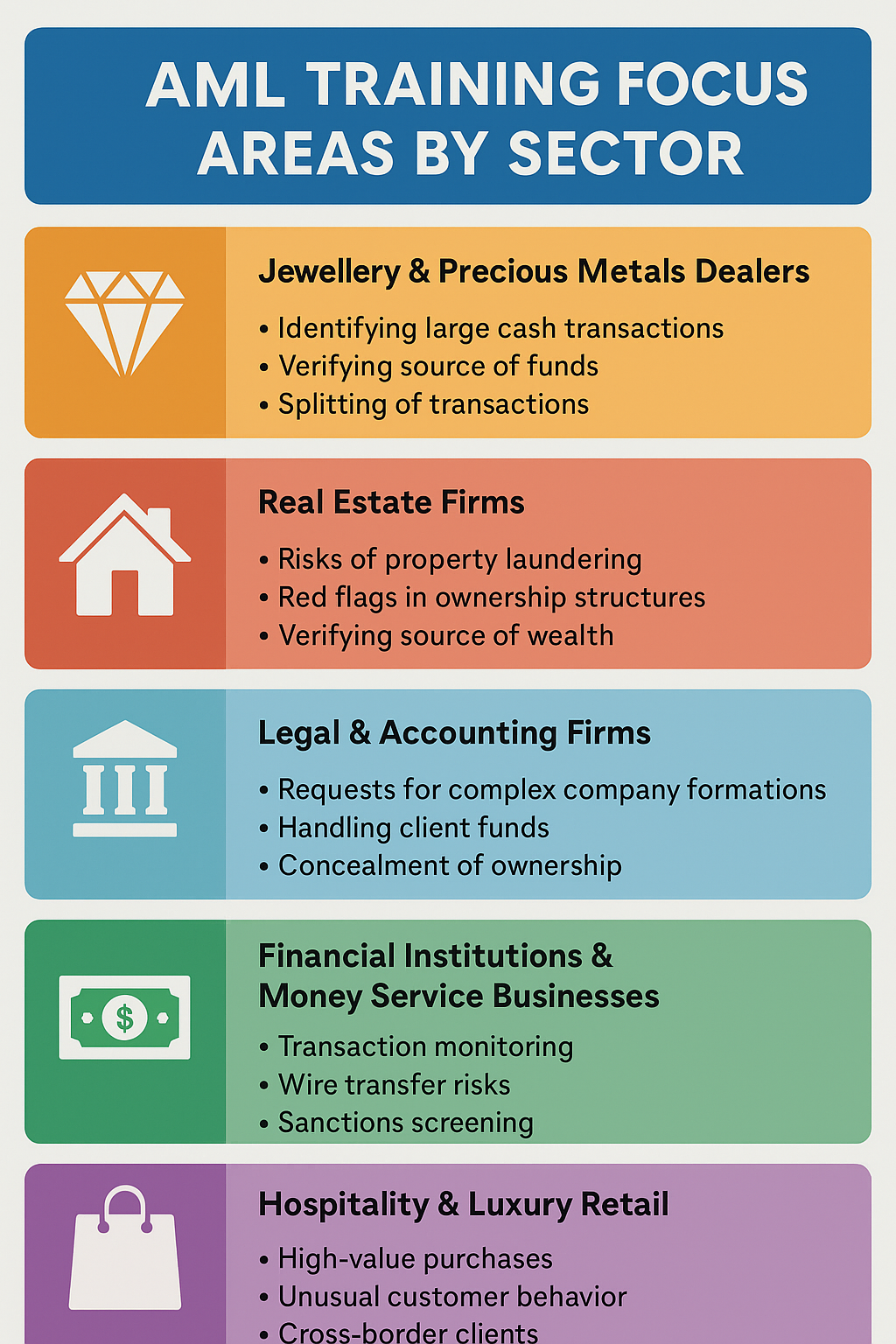
• Assess risks specific to the business sector (e.g., cash purchases in jewellery, offshore ownership in real estate).
• Apply Enhanced Due Diligence (EDD) for high-risk customers.
5. Record-Keeping Discipline
• Maintain transaction and customer records for at least five years, as mandated by UAE law.
• Ensure documentation is accessible for audits and inspections.
6. Periodic Refresher Programs
• Family businesses must conduct regular AML awareness sessions to keep up with regulatory updates and evolving threats.
________________________________________
Practical Benefits of AML Awareness in Family Businesses
• Compliance Readiness – Avoid fines and penalties during inspections.
• Long-Term Sustainability – Protects the family business legacy from regulatory setbacks.
• Improved Risk Management – Early detection of suspicious activity reduces exposure.
• Enhanced Reputation – Builds customer and regulator confidence.
________________________________________
Conclusion
For family-owned businesses in the UAE, AML awareness is not just about meeting a legal requirement—it is about protecting the family name, legacy, and reputation. By investing in governance, training, and a culture of compliance, family businesses can continue to thrive while meeting the highest standards of integrity and accountability.
________________________________________
📌 For customized AML awareness programs designed for family-owned businesses in the UAE, contact:
• Email: info@sa-auditors.com
• Website: www.sa-auditors.com

