Role of Senior Management in AML Training
Introduction
In the UAE, compliance with Anti-Money Laundering (AML) and Counter Financing of Terrorism (CFT) regulations is not just the responsibility of compliance officers. Senior management plays a pivotal role in ensuring that an organization maintains a strong AML framework. Under Federal Decree-Law No. 20 of 2018 and Cabinet Decision No. 10 of 2019, regulators expect boards of directors, CEOs, and senior leaders to take an active role in oversight, governance, and training.
An effective AML program requires tone from the top—a visible commitment by senior management to embedding compliance in business operations.
________________________________________
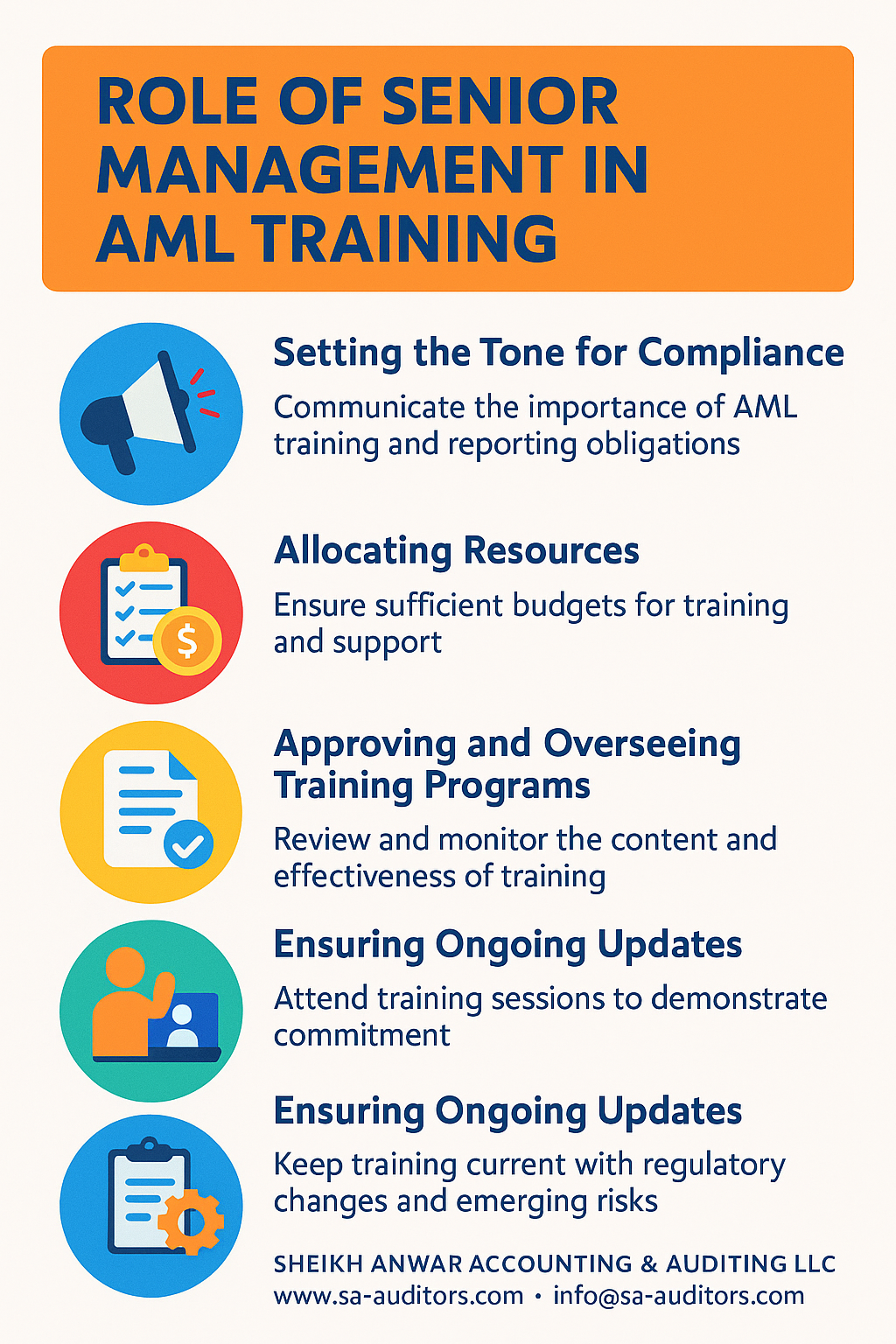
1. Setting the Tone for Compliance
• Senior management must create a compliance-first culture where AML obligations are prioritized.
• Staff must see that compliance is non-negotiable, not a box-ticking exercise.
• Leaders should communicate regularly about the importance of AML training and reporting obligations.
________________________________________
2. Allocating Resources
• AML training requires investment in people, systems, and tools.
• Senior management must ensure adequate budgets for training sessions, e-learning platforms, and case-study workshops.
• Support for compliance officers and MLROs should include manpower, technology, and continuous education.
________________________________________
3. Approving and Overseeing Training Programs
• Management should review the content and frequency of AML training programs.
• Ensure that training addresses sector-specific risks (real estate, gold trade, legal, accounting).
• Monitor whether staff training is effective, measurable, and updated as per regulatory changes.
________________________________________
4. Participation in Training
• Senior leaders should attend AML sessions themselves to demonstrate commitment.
• Participation by management encourages staff to take training seriously.
• Leadership presence during training sends a strong message of accountability.
________________________________________
5. Monitoring and Measuring Effectiveness
• Establish KPIs to assess training effectiveness (completion rates, test scores, incident escalations).
• Review STR filing statistics to see if training improves detection and reporting.
• Encourage feedback from employees to improve training quality.
________________________________________
6. Ensuring Ongoing Updates
• Senior management must ensure training programs adapt to:
o Regulatory changes in UAE AML laws.
o FATF updates and UAE mutual evaluation findings.
o Emerging risks, such as trade-based money laundering or virtual assets misuse.
________________________________________
7. Accountability and Governance
• Regulators hold senior management accountable for AML failures.
• Boards must maintain oversight through compliance committees or direct reporting from the MLRO.
• Documented involvement in AML training oversight protects management during inspections.
________________________________________
8. Long-Term Benefits
• Improved compliance reduces the risk of fines, penalties, and reputational damage.
• Strengthens relationships with banks, regulators, and global partners.
• Embeds AML awareness across the organization, making compliance part of business strategy.
________________________________________
Conclusion
The role of senior management in AML training goes far beyond approving budgets—it is about leadership, accountability, and active involvement. When management sets the tone, allocates resources, and participates in training, it strengthens the entire compliance framework of the organization and ensures alignment with UAE’s regulatory expectations.
________________________________________
📩 For senior management AML training and compliance governance frameworks, contact us:
Sheikh Anwar Accounting & Auditing LLC
🌐 www.sa-auditors.com
📧 info@sa-auditors.com