Role of External Trainers in AML Awareness
Introduction
Building a strong Anti-Money Laundering (AML) compliance culture is a challenge for many businesses, especially in high-risk sectors such as jewellery, real estate, and financial services. While internal compliance teams play a key role, the involvement of external AML trainers has become increasingly important for ensuring staff receive high-quality, unbiased, and up-to-date training.
________________________________________
Why External Trainers Are Valuable
1. Specialized Expertise
External trainers are professionals who focus exclusively on AML laws, regulatory updates, and international best practices (such as FATF recommendations). They bring in specialized knowledge that may go beyond what in-house compliance teams can provide.
2. Regulatory Alignment
In the UAE, AML regulations evolve regularly through Ministry of Economy circulars, Central Bank notices, and Cabinet Decisions. External trainers ensure staff stay updated on the latest compliance requirements, including goAML reporting standards and inspection readiness.
3. Unbiased Perspective
Internal training may sometimes overlook gaps in existing policies. External trainers, being independent, can identify weak points and offer fresh insights on improving controls.
4. Practical, Real-World Scenarios
External trainers often use case studies, role-play, and industry-specific simulations. This makes AML awareness more practical, especially for high-risk DNFBPs handling cash-intensive transactions.
5. Credibility with Regulators
Businesses that engage external trainers demonstrate to regulators a serious commitment to compliance. Training certificates from recognized external bodies can be presented during audits as evidence of staff competence.
________________________________________
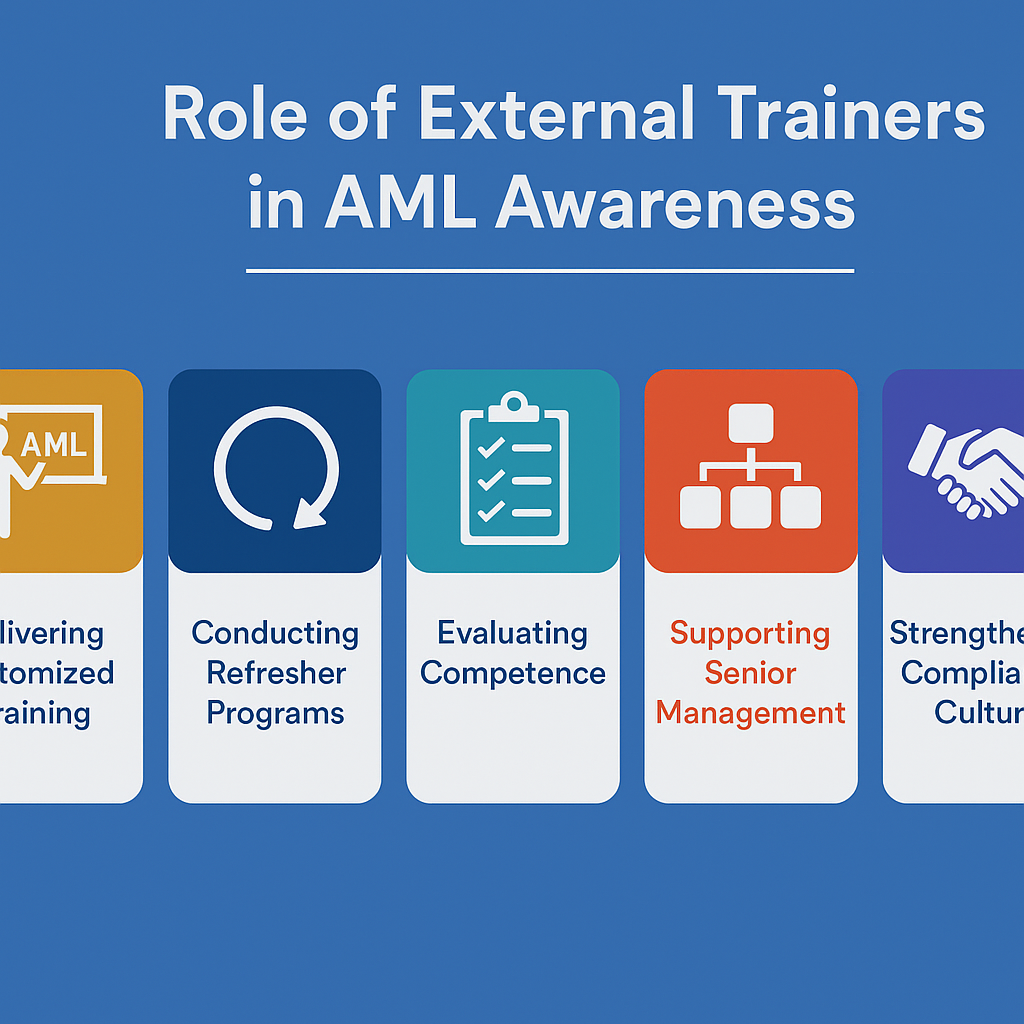
Key Roles External Trainers Play in AML Awareness
1. Delivering Customized Training
Tailoring training content to business lines—jewellery, real estate, or legal firms—so employees learn sector-specific AML red flags.
2. Conducting Refresher Courses
Providing annual or semi-annual sessions to ensure employees remain updated with evolving AML risks.
3. Assessing Staff Competence
External trainers design quizzes, simulations, and tests to evaluate knowledge retention and practical application.
4. Supporting Senior Management
They provide strategic workshops for management and compliance officers, ensuring tone from the top is reinforced.
5. Enhancing Compliance Culture
By engaging staff in interactive formats, external trainers make AML obligations less of a “checklist” and more of an organizational value.
________________________________________
Benefits for Businesses in the UAE
• Improved Compliance Readiness – Fewer gaps during Ministry of Economy inspections.
• Risk Mitigation – Employees can better detect suspicious activity.
• Stronger Reputation – Clients and regulators view the business as trustworthy.
• Cost-Effective – Outsourcing training reduces the need for maintaining full-time trainers in-house.
________________________________________
Conclusion
The role of external trainers in AML awareness extends beyond simply delivering sessions. They provide expertise, ensure compliance with evolving UAE regulations, and foster a lasting culture of vigilance. For businesses in high-risk industries, leveraging external trainers is a strategic move that strengthens both compliance effectiveness and organizational integrity.
________________________________________
📌 For professional AML training and compliance advisory in the UAE, contact:
• Email: info@sa-auditors.com
• Website: www.sa-auditors.com