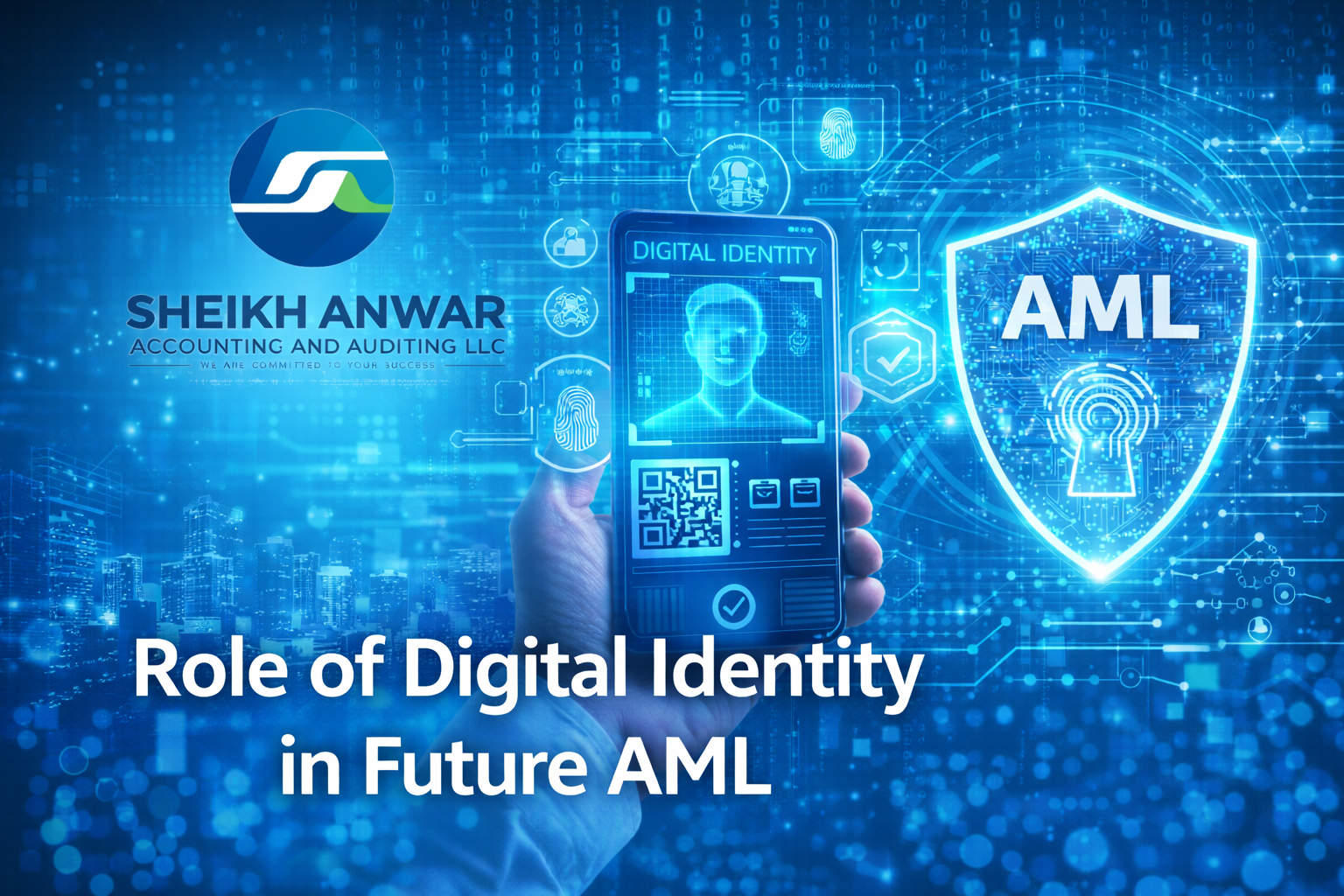
Role of Digital Identity in Future AML
Introduction
As financial systems become more digital and globalized, the need for reliable identity verification has become a critical element of Anti-Money Laundering (AML) compliance. Traditional identity verification methods, such as physical documents and manual verification processes, are increasingly insufficient to address the growing complexity of financial crimes.
Digital identity solutions are emerging as a powerful tool that can strengthen AML frameworks by improving customer identification, enhancing transparency, and enabling real-time verification. In the coming years, digital identity systems will play a significant role in transforming how financial institutions and businesses prevent money laundering and financial crimes.
________________________________________
What is Digital Identity?
Digital identity refers to the electronic representation of an individual or entity’s identity that can be verified online. It includes verified personal information such as:
• Name and date of birth
• Biometric data (fingerprints, facial recognition)
• Government-issued identification records
• Digital credentials and authentication data
These digital identity systems allow organizations to verify customers quickly and securely while maintaining compliance with regulatory requirements.
________________________________________
1. Strengthening Know Your Customer (KYC) Processes
Customer Due Diligence (CDD) and Know Your Customer (KYC) procedures are fundamental components of AML compliance. Digital identity systems enable financial institutions to verify customers more accurately and efficiently.
With digital identity technologies, organizations can:
• Verify identities instantly through secure databases
• Reduce the risk of identity fraud
• Conduct remote onboarding for customers
• Improve the accuracy of customer verification processes
This significantly enhances the effectiveness of AML compliance programs.
________________________________________
2. Faster and Secure Customer Onboarding
Traditional onboarding processes often require customers to submit physical documents and attend in-person verification procedures. Digital identity solutions simplify this process by allowing customers to verify their identity remotely.
Advanced technologies such as biometric authentication and facial recognition enable businesses to onboard customers quickly while maintaining strong security controls. This is particularly important for financial institutions, fintech companies, and digital platforms that serve customers across multiple jurisdictions.
________________________________________
3. Improved Transaction Monitoring and Risk Assessment
Digital identity systems provide accurate and verified customer information that can be integrated with AML monitoring tools. This enables organizations to conduct better risk assessments and detect suspicious activities more effectively.
By linking verified digital identities with transaction data, institutions can:
• Monitor customer behavior more accurately
• Detect unusual transaction patterns
• Identify high-risk individuals or entities
Such capabilities significantly strengthen AML monitoring frameworks.
________________________________________
4. Prevention of Identity Fraud and Financial Crime
Identity fraud is one of the most common methods used by criminals to conduct money laundering activities. Digital identity solutions reduce this risk by using advanced authentication technologies such as:
• Biometric verification
• Multi-factor authentication
• Blockchain-based identity systems
These technologies make it extremely difficult for criminals to create fake identities or misuse personal information.
________________________________________
5. Cross-Border Identity Verification
Global financial transactions often involve customers from multiple jurisdictions. Verifying identities across borders can be challenging for businesses.
Digital identity systems can enable standardized and globally recognized identity verification methods. This allows financial institutions to verify customers from different countries while maintaining compliance with international AML regulations.
________________________________________
6. Integration with Artificial Intelligence and Blockchain
The future of AML compliance will likely involve the integration of digital identity with emerging technologies such as Artificial Intelligence (AI) and blockchain.
AI can analyze digital identity data to detect suspicious patterns, while blockchain technology can create secure and tamper-proof identity records. Together, these technologies will significantly strengthen AML compliance systems.
________________________________________
Future of Digital Identity in AML Compliance
Many governments and regulatory authorities are already investing in national digital identity programs. In the future, digital identity systems may become a mandatory requirement for financial transactions and compliance processes.
Such systems will improve transparency, reduce financial crime risks, and enable more efficient regulatory oversight.
________________________________________
Conclusion
Digital identity is set to play a crucial role in the future of AML compliance. By enabling secure and accurate identity verification, digital identity systems will strengthen KYC processes, prevent identity fraud, and enhance financial transparency.
As financial systems continue to evolve, organizations that adopt digital identity technologies will be better equipped to combat financial crime and meet evolving regulatory requirements.
________________________________________
Sheikh Anwar Accounting & Auditing LLC
Specialists in AML Compliance, Corporate Tax Advisory, VAT Consulting, and Risk Management Services in the UAE.
🌐 Website: www.sa-auditors.com
📧 Email: info@sa-auditors.com
📞 Phone: +971 50 941 7664
📍 Address: Dubai Creek Tower, M-35, Dubai, United Arab Emirates