Risk Appetite in AML – How to Define It
Introduction
An effective Anti-Money Laundering (AML) program begins with understanding your organization’s risk appetite — the level and type of risk your business is willing to accept while pursuing its objectives.
In the UAE, under Federal Decree-Law No. 20 of 2018 and Cabinet Decision No. 10 of 2019, all financial institutions and Designated Non-Financial Businesses and Professions (DNFBPs) are required to apply a Risk-Based Approach (RBA). At the core of this approach lies a clear and well-documented AML Risk Appetite Statement, which guides compliance decisions and helps ensure proportionate, consistent risk management.
It explains what AML risk appetite means, why it’s essential, and how to define it effectively within your organization.
________________________________________
1. What is Risk Appetite in AML?
Risk appetite refers to the amount and type of money laundering and terrorist financing risk an organization is willing to tolerate in the pursuit of its business goals.
It serves as a strategic boundary, ensuring that business growth does not compromise compliance or integrity.
Example:
• A gold trading company may decide it will accept only low to medium-risk customers, excluding clients from high-risk jurisdictions or those dealing in virtual assets.
• An accounting firm may set a risk appetite that allows working with PEPs (Politically Exposed Persons) only under strict Enhanced Due Diligence (EDD) procedures.
________________________________________
2. Why Defining Risk Appetite Matters
A defined AML risk appetite ensures that every business decision—customer onboarding, product offering, or transaction approval—is guided by measurable, consistent standards.
Key Benefits:
• Aligns AML risk management with business strategy.
• Supports the Risk-Based Approach required by FATF and UAE regulators.
• Enhances governance and accountability.
• Reduces exposure to penalties or reputational damage.
• Ensures clear guidance for employees and compliance officers.
In short, a well-defined risk appetite strengthens both operational resilience and regulatory credibility.
________________________________________
3. Regulatory Expectation in the UAE
The UAE Ministry of Economy (MOE), along with regulators like Central Bank, SCA, DFSA, and FSRA, expects entities to:
• Define and approve a formal Risk Appetite Statement (RAS) at the Board or senior management level.
• Integrate it into their Enterprise-Wide Risk Assessment (EWRA) and AML Policy.
• Review and update it annually or whenever significant business or regulatory changes occur.
________________________________________
4. Components of an AML Risk Appetite Statement
A comprehensive Risk Appetite Statement should cover qualitative and quantitative parameters, clearly outlining the risk boundaries.
Component Description
Purpose Defines why the organization is setting AML risk boundaries.
Scope Specifies the business lines, products, or jurisdictions covered.
Risk Tolerance Levels Quantifies acceptable limits (e.g., % of high-risk clients, volume of EDD cases).
Prohibited Relationships Identifies types of customers or transactions the firm will not accept.
Governance Defines approval and escalation processes for exceptions.
Monitoring and Reporting Explains how adherence to the RAS will be tracked and reviewed.
________________________________________
5. Steps to Define AML Risk Appetite
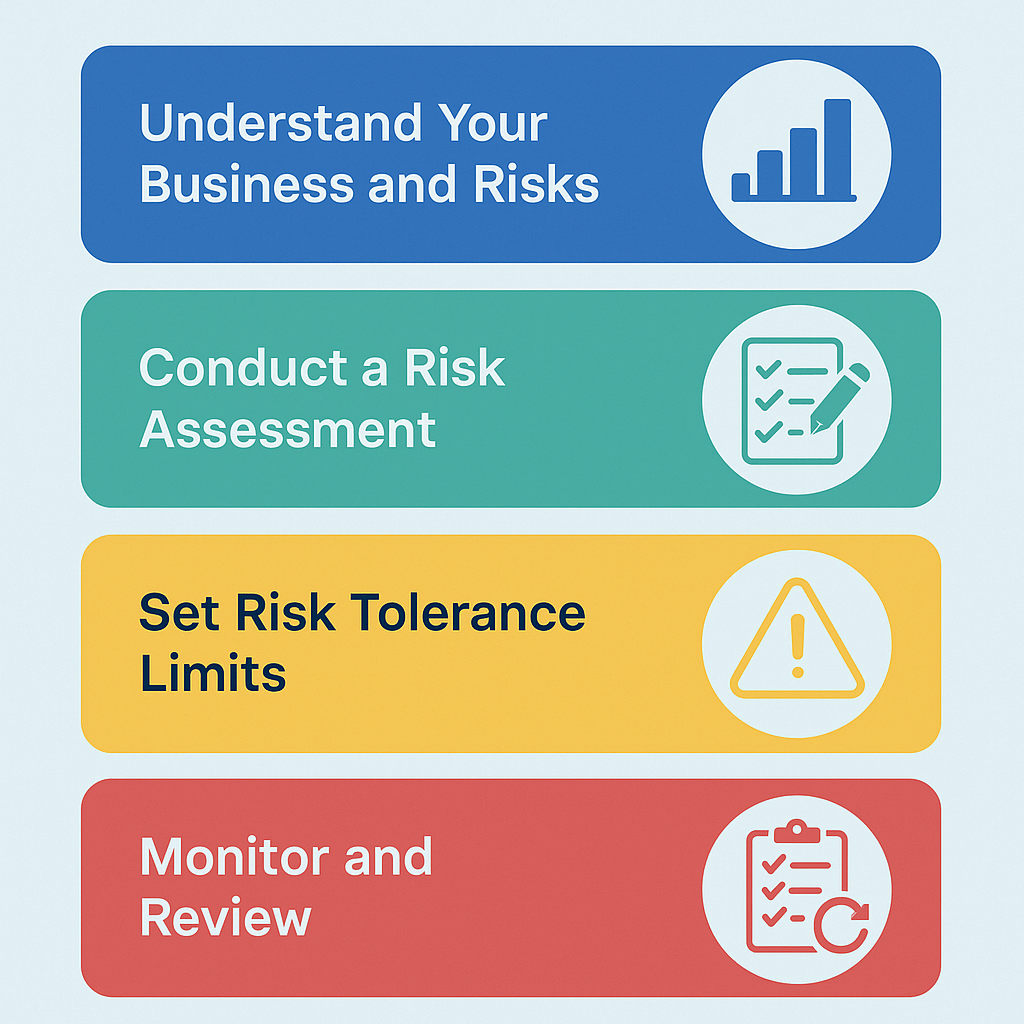
Step 1: Understand Your Business and Regulatory Context
Assess the nature, size, and complexity of your operations. Consider:
• Types of customers (retail, corporate, PEPs).
• Products/services offered (cash-based, trade, real estate, corporate formation).
• Geographic exposure (domestic, regional, global).
• Delivery channels (face-to-face, online, intermediaries).
Step 2: Conduct a Risk Assessment
Use your Enterprise-Wide Risk Assessment (EWRA) to determine the inherent risks and control effectiveness across categories.
This will help define how much risk your company can realistically manage.
Step 3: Classify Risks into Categories
Define Low, Medium, and High-Risk categories, supported by measurable indicators:
• Customer Type (individual, corporate, offshore).
• Country of Residence (FATF high-risk or not).
• Nature of Product (cash-intensive or regulated).
• Delivery Channel (in-person vs. remote).
Step 4: Set Risk Tolerance Limits
Set quantifiable limits such as:
• “High-risk customers should not exceed 5% of total client base.”
• “Cash transactions above AED 50,000 require senior approval.”
• “No business relationships with sanctioned jurisdictions.”
These thresholds make the risk appetite measurable and enforceable.
Step 5: Obtain Board Approval
The final Risk Appetite Statement should be reviewed and approved by Senior Management or the Board of Directors, demonstrating top-level accountability.
Step 6: Communicate and Implement
Once approved:
• Integrate the RAS into AML policies and onboarding procedures.
• Train staff to understand acceptable and unacceptable risks.
• Embed it within customer risk scoring and monitoring systems.
Step 7: Monitor, Review, and Update
Continuously monitor adherence to the RAS and update it annually or after:
• Launching new products.
• Entering new markets.
• FATF or MOE regulatory updates.
• Material changes in risk exposure.
________________________________________
6. Example of a Simplified AML Risk Appetite Statement
“Our firm is committed to maintaining a low-to-medium AML risk profile.
We will not engage with customers from sanctioned or FATF-blacklisted countries, nor with businesses dealing in virtual assets or untraceable funds.
All politically exposed persons (PEPs) or clients involving complex ownership structures will be subject to Enhanced Due Diligence (EDD) and senior management approval.
The total exposure to high-risk clients shall not exceed 5% of our customer base.
This Risk Appetite Statement will be reviewed annually by the Compliance Committee.”
This example provides a clear, measurable, and practical framework suitable for DNFBPs.
________________________________________
7. Linking Risk Appetite to the Risk-Based Approach (RBA)
Your AML Risk-Based Approach (RBA) relies on risk appetite as its foundation.
It determines:
• How you identify and categorize risks.
• The intensity of due diligence applied.
• The allocation of compliance resources.
• The tone of AML governance from the top.
Without a defined risk appetite, your AML framework lacks direction and consistency.
________________________________________
8. Common Mistakes When Setting Risk Appetite
❌ Copying another company’s RAS without tailoring it.
❌ Defining risk appetite too broadly (“We accept all clients subject to CDD”).
❌ Lack of Board involvement in approval.
❌ No linkage to actual control capabilities or EWRA results.
❌ Failure to monitor adherence or review regularly.
Avoiding these mistakes ensures your RAS remains effective, realistic, and defensible.
________________________________________
9. Role of the MLRO in Risk Appetite Management
The Money Laundering Reporting Officer (MLRO) plays a key role in:
• Drafting and reviewing the RAS.
• Advising management on acceptable risk thresholds.
• Ensuring business practices align with stated risk appetite.
• Reporting breaches or deviations to senior management.
The MLRO bridges the gap between policy and practice, ensuring that compliance decisions are consistent with declared risk levels.
________________________________________
10. Conclusion
Defining your AML Risk Appetite is essential to balancing business growth and regulatory compliance.
It sets the tone for your risk culture, ensures proportional resource allocation, and demonstrates to regulators that your organization understands its exposure and manages it responsibly.
In the UAE’s evolving AML landscape, businesses that clearly define and document their risk appetite not only comply with the law but also strengthen trust with banks, regulators, and clients.
________________________________________
By Sheikh Anwar Accounting & Auditing LLC
AML & Compliance Experts in the UAE
📞 +971 4 876 9890 | ✉️ info@sa-auditors.com | 🌐 www.sa-auditors.com