Red Flags in Trade Finance Transactions
Introduction
Trade finance is one of the most vulnerable areas for money laundering (ML) and terrorist financing (TF) risks. Due to the complex structures, multiple parties involved, and cross-border nature of trade, financial institutions and DNFBPs (Designated Non-Financial Businesses and Professions) must be vigilant in identifying red flags. Filing Suspicious Transaction Reports (STRs) when these indicators are detected is not only a regulatory obligation but also a critical defense mechanism in protecting the financial system.
________________________________________
1. Importance of Red Flags in Trade Finance
Red flags act as early warning signals that a transaction may involve illicit activity. They help compliance officers detect anomalies before they escalate into regulatory breaches or reputational damage. Identifying these red flags ensures timely filing of STRs with the Financial Intelligence Unit (FIU).
________________________________________
2. Common Red Flags in Trade Finance Transactions
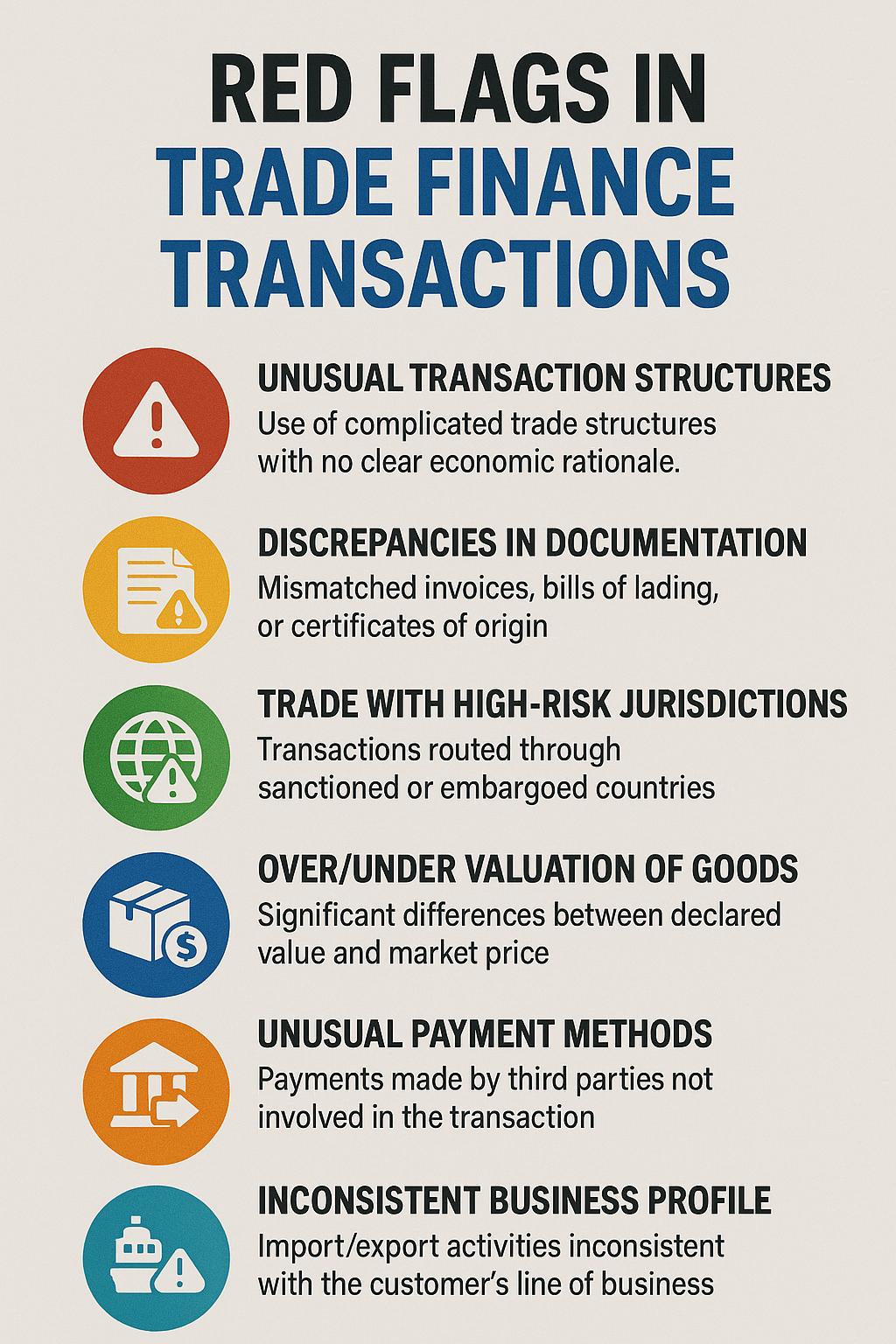
a) Unusual Transaction Structures
• Use of complicated trade structures with no clear economic rationale.
• Back-to-back letters of credit involving related parties.
• Circular transactions where goods return to the original exporter.
b) Discrepancies in Documentation
• Mismatched invoices, bills of lading, or certificates of origin.
• Over- or under-invoicing of goods beyond market norms.
• Falsified or forged documents presented to banks.
c) Trade with High-Risk Jurisdictions
• Transactions routed through sanctioned or embargoed countries.
• Counterparties from jurisdictions with weak AML/CFT regulations.
d) Over/Under Valuation of Goods
• Significant differences between declared value and market price.
• High-value goods being traded at unreasonably low prices or vice versa.
e) Unusual Payment Methods
• Payments made by third parties not involved in the transaction.
• Requests for payments to unrelated accounts in offshore jurisdictions.
f) Inconsistent Business Profile
• Import/export activities inconsistent with the customer’s line of business.
• Newly incorporated companies engaging in high-value trade transactions.
g) Physical Red Flags
• Goods shipped through unusual routes or to risky ports.
• Same goods repeatedly exported and imported between the same parties.
________________________________________
3. Role of STRs in Red Flag Detection
When red flags are identified, institutions must escalate the case internally and assess whether it warrants the filing of an STR. STRs serve multiple purposes:
• Alerting Regulators: They provide actionable intelligence to FIUs.
• Preventing Financial Crime: STRs disrupt ML/TF before funds are integrated into the financial system.
• Protecting Reputation: Early reporting reduces exposure to fines and reputational damage.
• Regulatory Compliance: Filing STRs is a legal requirement under UAE Federal Decree-Law No. 20 of 2018 and Cabinet Decision No. 10 of 2019.
________________________________________
4. Best Practices for Businesses
• Establish robust KYC and CDD procedures.
• Train employees to recognize and escalate red flags.
• Use automated monitoring tools for trade finance.
• Maintain clear internal policies on STR filing.
________________________________________
📩 For professional AML compliance support, contact us:
Sheikh Anwar Accounting & Auditing LLC
🌐 www.sa-auditors.com