Pre-Incorporation Expenses Treatment
Introduction
When a business is being set up, certain costs are incurred even before the company is officially incorporated. These are known as pre-incorporation expenses. As these expenses arise during the period before the legal entity is formed, it can be unclear how to treat them from an accounting and tax perspective. Proper handling of these expenses is crucial for accurate financial reporting and compliance.
Here we will explore pre-incorporation expenses, how they should be treated in the financial statements, and the implications for tax reporting.
What Are Pre-Incorporation Expenses?
Pre-incorporation expenses refer to the costs incurred by the promoters, founders, or initial directors during the formation of a company, but before it is legally incorporated. These expenses are essential for getting the business up and running but occur before the company officially exists as a legal entity.
Common pre-incorporation expenses include:
• Legal fees for drafting incorporation documents (Memorandum of Association, Articles of Association)
• Registration fees
• Business setup consultancy
• Expenses related to the acquisition of initial assets (such as office equipment)
• Market research and feasibility study costs
• Advertising costs to promote the company
• Initial administrative expenses (e.g., renting a business address, utility setup)
• Travel expenses for company formation
How Should Pre-Incorporation Expenses Be Treated?
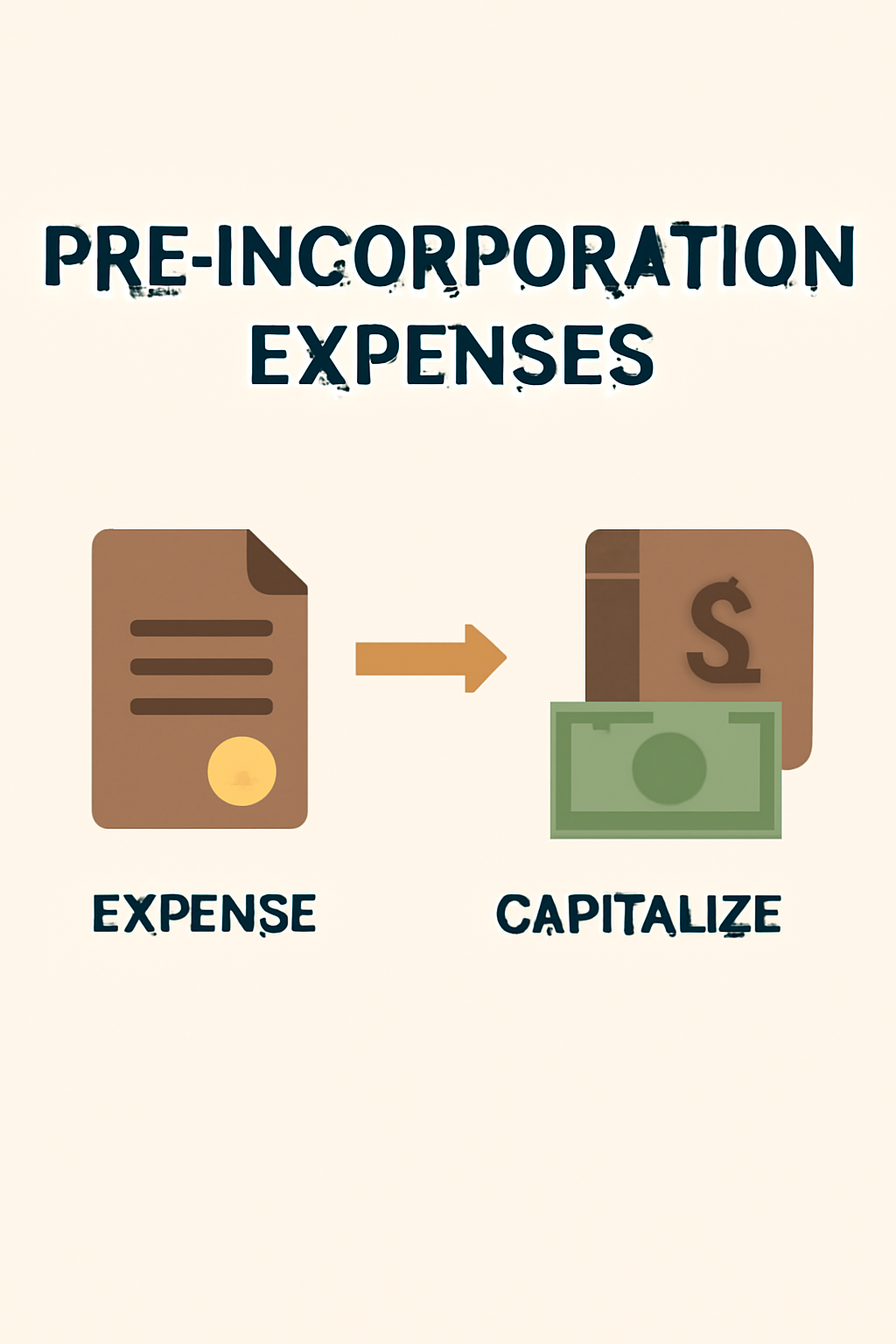
The treatment of pre-incorporation expenses depends on accounting principles, legal requirements, and the jurisdiction in which the company operates. There are generally two approaches to handling pre-incorporation costs:
1. Expense Treatment
One method is to treat these expenses as an expense in the year they are incurred. However, under this treatment, pre-incorporation expenses cannot be capitalized as part of the company’s assets because the company did not yet exist. These expenses would therefore be recorded as operating expenses on the income statement of the year they were incurred.
Example:
If the total pre-incorporation expenses are AED 50,000, they will be recognized as a business expense in the financial records of the promoter or founder, even though they were incurred before the company's official registration.
2. Capitalization and Reimbursement
Alternatively, pre-incorporation expenses can be capitalized and treated as a loan to the company or reimbursable expenses once the company is incorporated. In this case, the promoter or founder can later claim reimbursement from the company, effectively transferring the expenses to the business's balance sheet.
• Capitalization as part of the company's assets: When pre-incorporation costs are capitalized, they are treated as an asset (usually under "prepaid expenses" or "other assets") on the company’s balance sheet.
• Reimbursement of pre-incorporation expenses: The company may choose to reimburse the promoters for the expenses once it is incorporated. This reimbursement will be reflected as a liability (typically under "amounts due to promoters" or similar accounts).
Example:
If the promoters spent AED 50,000 on legal fees, market research, and other setup costs, the company can recognize this amount as a liability and later reimburse the promoters once the company is legally established.
When to Capitalize Pre-Incorporation Expenses?
In most cases, pre-incorporation expenses can be capitalized if they meet the following criteria:
• The company is legally incorporated after the expenses have been incurred.
• The expenses are directly attributable to the setup of the business (e.g., legal fees, registration costs).
• The expenses are reasonable and necessary for the formation of the business.
However, the accounting treatment may vary based on the jurisdiction. In some countries, the capitalized pre-incorporation expenses can be amortized over several years.
Tax Implications of Pre-Incorporation Expenses
The treatment of pre-incorporation expenses for tax purposes depends on local tax laws. Generally:
• Deductible Expenses: In some jurisdictions, pre-incorporation expenses may be deductible for tax purposes in the year they are incurred, even if the company has not yet been formed.
• Non-deductible Expenses: In some cases, certain pre-incorporation expenses may not be immediately deductible and may need to be capitalized and amortized over a set period.
For tax purposes, the nature of the expense (whether it is an ordinary business expense or an investment) will determine how it is treated in the company's tax filings. Businesses should consult local tax regulations or seek guidance from a tax advisor to ensure compliance with tax laws.
Pre-Incorporation Expenses in the UAE:
In the UAE, companies are required to follow the International Financial Reporting Standards (IFRS) for financial accounting. Under IFRS, pre-incorporation expenses typically must be treated as expenses unless there is a clear, demonstrable benefit to capitalizing them as assets. However, the final treatment depends on the specific circumstances surrounding the formation of the company.
Steps for Treating Pre-Incorporation Expenses:
1. Identify the Expenses: Review all expenses incurred before the company is officially incorporated.
2. Classify the Expenses: Determine whether the expenses are one-time (legal fees, consultancy) or related to ongoing operational costs.
3. Expense or Capitalize: Decide whether the expenses should be capitalized (as a loan or asset) or treated as an expense based on your accounting policy.
4. Consult Tax Regulations: Review the relevant tax laws for pre-incorporation expenses to ensure compliance and optimize tax treatment.
5. Reimbursement to Promoters: If applicable, reimburse the promoters for capitalized expenses once the company is incorporated.
Conclusion:
The treatment of pre-incorporation expenses is a critical aspect of setting up a new business. Whether these costs are expensed immediately or capitalized depends on the company’s accounting practices and local tax regulations. Regardless of the approach taken, it’s essential for businesses to keep accurate records of these expenses and ensure that their financial and tax reporting aligns with the applicable laws.
By properly managing pre-incorporation expenses, businesses can optimize their tax benefits and set a solid financial foundation for their future operations. Always consult with your accountant or financial advisor to ensure proper treatment in accordance with the relevant accounting standards and tax regulations.
For any assistance with managing your pre-incorporation expenses, please reach out to Sheikh Anwar Accounting and Auditing LLC at:
📧 Email us at info@sa-auditors.com
🌐 Visit our website: www.sa-auditors.com