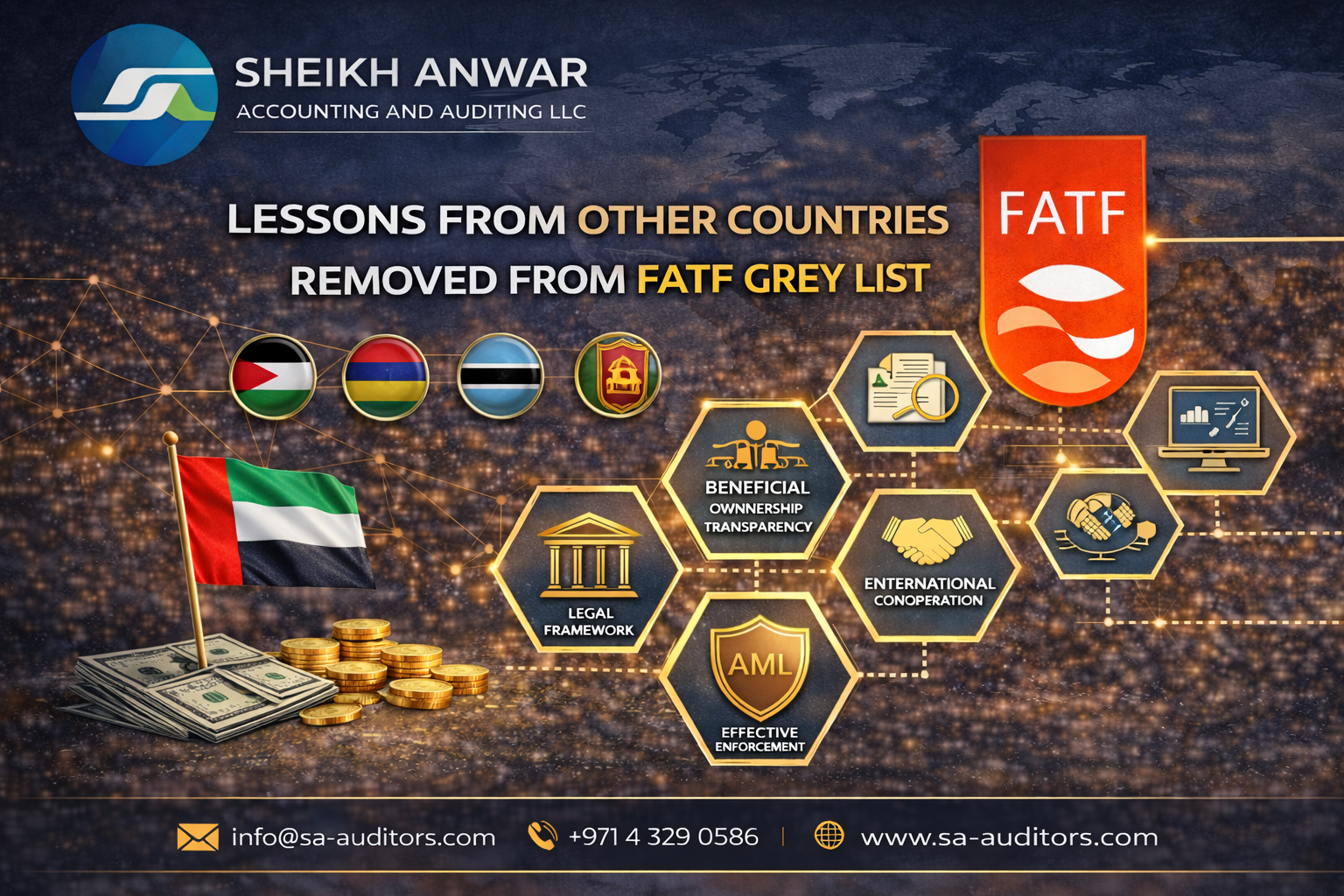
Lessons from Other Countries Removed from Grey List
Introduction
The Financial Action Task Force (FATF) grey list is a classification for countries that have strategic deficiencies in their Anti-Money Laundering (AML) and Counter-Terrorism Financing (CFT) frameworks but are actively working towards compliance with global standards. Being removed from the FATF grey list is a significant achievement for any country, as it demonstrates improvements in regulatory frameworks and international cooperation.
For the United Arab Emirates (UAE), learning from the experiences of countries that have successfully exited the grey list is crucial to strengthening its own AML and CFT framework. In this blog, we explore the lessons from countries that have recently been removed from the FATF grey list, highlighting key steps that can be taken by the UAE to further improve its compliance efforts and reinforce its position as a secure and transparent global financial hub.
________________________________________
Understanding the FATF Grey List
FATF monitors the implementation of AML and CFT measures across the globe. When a country is placed on the grey list, it means that while the country is taking significant steps to address deficiencies, there is still work to be done to meet FATF’s stringent standards. Countries on the grey list are under heightened scrutiny, and this status can lead to reputational risks and potential economic consequences.
Being removed from the grey list signifies:
• Significant improvement in regulatory practices
• Stronger compliance with international AML and CFT standards
• Increased international trust and better business relations
________________________________________
Key Steps Taken by Countries Removed from the FATF Grey List
Several countries have successfully exited the FATF grey list in recent years by addressing the specific deficiencies highlighted in their Mutual Evaluations. Below are the critical steps and lessons from these countries:
________________________________________
1. Strengthening Legal and Regulatory Frameworks
A common thread among countries that have been removed from the grey list is the overhaul of their legal frameworks. FATF places significant emphasis on having strong laws in place to criminalize money laundering and terrorist financing.
Key Actions Taken:
• Revising existing AML/CFT laws to ensure they align with FATF’s 40 Recommendations.
• Introducing new laws that define criminal activity, enhance penalties, and provide legal tools to combat financial crimes.
• Establishing clear guidelines for regulated entities on how to conduct due diligence, report suspicious transactions, and cooperate with authorities.
For example, the Pakistan government implemented changes to its anti-money laundering laws and improved the effectiveness of the Financial Monitoring Unit (FMU).
Lesson for the UAE:
The UAE has made significant strides in strengthening its legal framework with the enactment of Federal Decree-Law No. 20 of 2018. Continuing to enhance laws and keeping up with global standards will solidify the country’s efforts to stay off the grey list.
________________________________________
2. Improving Beneficial Ownership Transparency
FATF stresses the need for countries to have transparent mechanisms for identifying the ultimate beneficial owners (UBOs) of companies, trusts, and other legal entities. This helps to prevent the misuse of complex corporate structures to hide illicit financial activity.
Key Actions Taken:
• Implementing public or semi-public beneficial ownership registers that require businesses to disclose who ultimately owns or controls them.
• Tightening KYC regulations to ensure that financial institutions have detailed information on the beneficial owners of their clients.
Countries like Sri Lanka and Myanmar took significant steps to increase UBO transparency to comply with FATF requirements.
Lesson for the UAE:
The UAE has also made progress by strengthening the Beneficial Ownership Regulations and establishing more robust systems for transparency. Continuing to enhance transparency regarding UBOs will be crucial for the UAE as it strives to maintain compliance.
________________________________________
3. Building Robust AML Compliance and Enforcement Mechanisms
FATF requires countries to not only have laws in place but also to demonstrate effective enforcement of these regulations. Countries that successfully exited the grey list enhanced their AML enforcement mechanisms to ensure compliance by businesses and institutions.
Key Actions Taken:
• Establishing or enhancing financial intelligence units (FIUs) that collect, analyze, and share financial intelligence.
• Improving training and resources for law enforcement and regulatory bodies to detect and investigate financial crimes.
• Imposing severe penalties for non-compliance with AML and CFT regulations.
Mauritius, for example, strengthened its FIU and AML supervision over key sectors like banking and insurance, which improved its compliance score with FATF.
Lesson for the UAE:
The UAE has been strengthening its Financial Intelligence Unit (FIU), including through the goAML platform, which facilitates easier reporting of suspicious transactions. However, continued investment in training enforcement bodies and ensuring full compliance across sectors will be important for long-term success.
________________________________________
4. Enhancing International Cooperation and Information Sharing
An essential part of the FATF framework is the ability of countries to work together and share financial intelligence. Countries removed from the grey list showed considerable progress in improving international cooperation, particularly with FATF members and global law enforcement agencies.
Key Actions Taken:
• Active participation in global networks like the Egmont Group of Financial Intelligence Units (FIUs), INTERPOL, and UNODC.
• Improving the speed and quality of international cooperation, including the sharing of financial data, asset recovery, and cross-border investigations.
Countries such as Jordan and Mauritius made significant strides in enhancing international cooperation, enabling better tracking of illicit financial flows and collaboration with international bodies.
Lesson for the UAE:
The UAE has strong international ties and is already a member of the Egmont Group and various other global AML networks. Further strengthening this cooperation and ensuring timely sharing of financial intelligence will be vital for maintaining trust in the UAE’s financial system.
________________________________________
5. Ensuring Ongoing Monitoring and Reporting
Countries that successfully exited the grey list have committed to ongoing monitoring and reporting of their AML/CFT progress. FATF expects these countries to continuously improve their compliance efforts and submit regular updates on their progress.
Key Actions Taken:
• Establishing independent bodies to assess compliance with AML regulations regularly.
• Reporting progress to FATF on improvements made and any new deficiencies that may arise.
For instance, Botswana committed to maintaining its improved status by providing regular updates on its AML progress.
Lesson for the UAE:
The UAE has already demonstrated strong efforts in meeting FATF’s criteria, and continuing to monitor the effectiveness of its AML/CFT framework will ensure long-term success. Regular reporting to FATF and maintaining a proactive approach to emerging financial crime trends will be essential.
________________________________________
Key Takeaways for Businesses in the UAE
As the UAE works to meet the FATF Action Plan requirements, businesses in the country must stay compliant with evolving regulations. Key actions businesses can take include:
• Ensuring robust KYC (Know Your Customer) and CDD (Customer Due Diligence) procedures are in place.
• Monitoring transactions for suspicious activity and reporting them promptly.
• Updating internal policies to align with the latest AML and CFT regulations.
• Maintaining transparency regarding beneficial ownership information.
• Training employees on compliance procedures and FATF regulations.
Failure to comply with these regulations can lead to financial penalties, legal action, and damage to business reputation.
________________________________________
About Sheikh Anwar Accounting & Auditing LLC
Sheikh Anwar Accounting & Auditing LLC is a professional advisory firm based in the United Arab Emirates, providing expert services in tax, accounting, auditing, and regulatory compliance.
Our services include:
• AML and CFT advisory
• VAT advisory and compliance
• Corporate tax advisory
• Accounting and bookkeeping
• External auditing
• Business setup and corporate structuring
We assist businesses in ensuring compliance with UAE regulations, international standards, and FATF guidelines.
For professional advisory support, contact us at:
Sheikh Anwar Accounting & Auditing LLC
📧 info@sa-auditors.com
📞 +97143290586
🌐 www.sa-auditors.com