Key Elements of an Effective AML Training Program
Introduction
An effective Anti-Money Laundering (AML) training program is a cornerstone of compliance for financial institutions and Designated Non-Financial Businesses and Professions (DNFBPs) in the UAE. Regulators, including the Ministry of Economy and free zone authorities, expect businesses to provide regular, structured, and role-specific training. Beyond meeting regulatory obligations, AML training empowers employees to act as the first line of defense against money laundering (ML) and terrorist financing (TF).
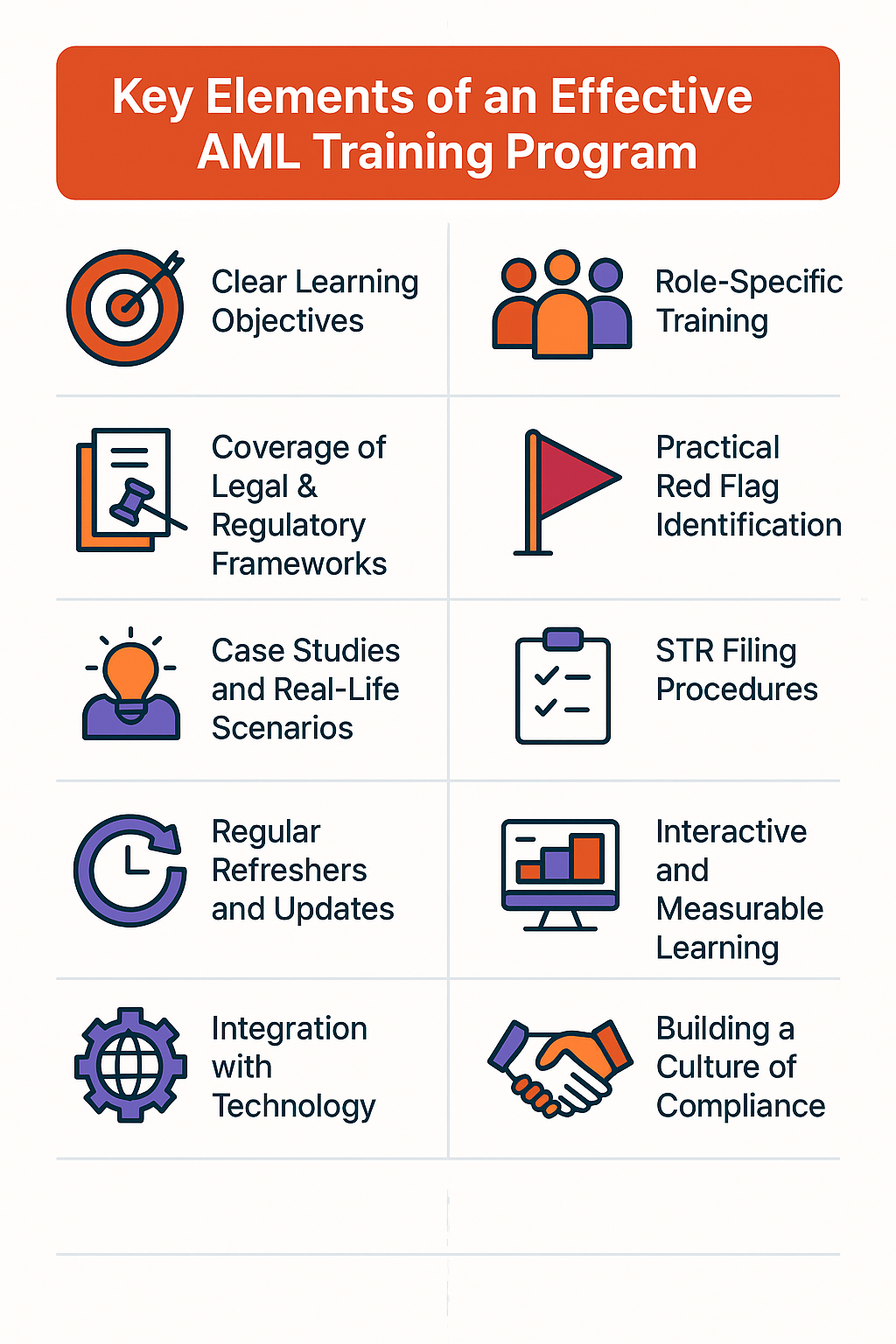
Below are the key elements that make AML training programs successful.
________________________________________
1. Clear Learning Objectives
Every AML training program should begin with well-defined goals:
• Familiarize staff with UAE AML laws and FATF standards.
• Ensure awareness of red flags and suspicious behaviors.
• Equip employees to file Suspicious Transaction Reports (STRs) effectively.
• Instill a culture of compliance across all levels of the organization.
________________________________________
2. Role-Specific Training
Not all employees face the same risks. Training must be tailored to roles:
• Frontline Staff: Identifying red flags during onboarding and transactions.
• Compliance Officers: STR filing, ongoing monitoring, and regulatory updates.
• Management/Board: Oversight responsibilities and accountability for AML governance.
________________________________________
3. Coverage of Legal & Regulatory Frameworks
• UAE Federal Decree-Law No. 20 of 2018 and Cabinet Decision No. 10 of 2019.
• FATF recommendations and international best practices.
• Sector-specific requirements for DNFBPs (real estate, precious metals, legal, accounting).
• goAML reporting procedures and confidentiality obligations.
________________________________________
4. Practical Red Flag Identification
• Customer-related red flags: reluctance to provide KYC, inconsistent information.
• Transaction-related red flags: large cash payments, unusual payment methods, dealings with high-risk jurisdictions.
• Sector-specific red flags: trade-based money laundering, shell companies, nominee shareholders.
________________________________________
5. Case Studies and Real-Life Scenarios
Practical examples help staff connect theory with practice:
• Examples of penalties imposed on UAE DNFBPs.
• International enforcement cases highlighting poor AML compliance.
• “What would you do?” exercises to test decision-making in real-world situations.
________________________________________
6. STR Filing Procedures
Training must emphasize:
• When suspicion is strong enough to file an STR.
• Internal escalation processes before reporting.
• How to use the goAML portal for submissions.
• The importance of confidentiality in reporting.
________________________________________
7. Regular Refreshers and Updates
• Annual mandatory training sessions.
• Ad-hoc sessions when new regulations or FATF recommendations are issued.
• Continuous updates on new ML/TF typologies.
________________________________________
8. Interactive and Measurable Learning
• Use quizzes, workshops, and role-play exercises.
• Track employee understanding through assessments.
• Provide certificates of completion to build accountability.
________________________________________
9. Integration with Technology
• Training on AML monitoring systems and transaction screening tools.
• Demonstrating how alerts and red flags are generated.
• Encouraging effective use of compliance dashboards.
________________________________________
10. Building a Culture of Compliance
The ultimate goal of AML training is not just awareness, but cultural transformation:
• Encourage staff to escalate concerns without fear.
• Reward employees who demonstrate diligence.
• Foster leadership involvement in compliance initiatives.
________________________________________
📩 For customized AML training programs designed for UAE DNFBPs and financial institutions, contact us:
Sheikh Anwar Accounting & Auditing LLC
🌐 www.sa-auditors.com
📧 info@sa-auditors.com