Importance of KYC in AML Framework
Introduction
Know Your Customer (KYC) is the foundation of Anti-Money Laundering (AML) compliance. It enables businesses to identify, verify, and understand their clients, ensuring that transactions are legitimate and not linked to money laundering or terrorist financing activities. For entities operating in the UAE, especially DNFBPs (gold and diamond traders, accountants, real estate brokers, and law firms), a robust KYC framework is not only a regulatory requirement but also a critical risk management tool.
________________________________________
1. What is KYC?
KYC refers to the process of verifying the identity of a customer before and during the course of a business relationship. It is mandated under Federal Decree-Law No. 20 of 2018 and Cabinet Decision No. 10 of 2019, aligning with FATF Recommendations.
The key objectives of KYC are to:
• Establish customer identity.
• Assess the nature and purpose of the business relationship.
• Monitor ongoing transactions for consistency with the customer profile.
________________________________________
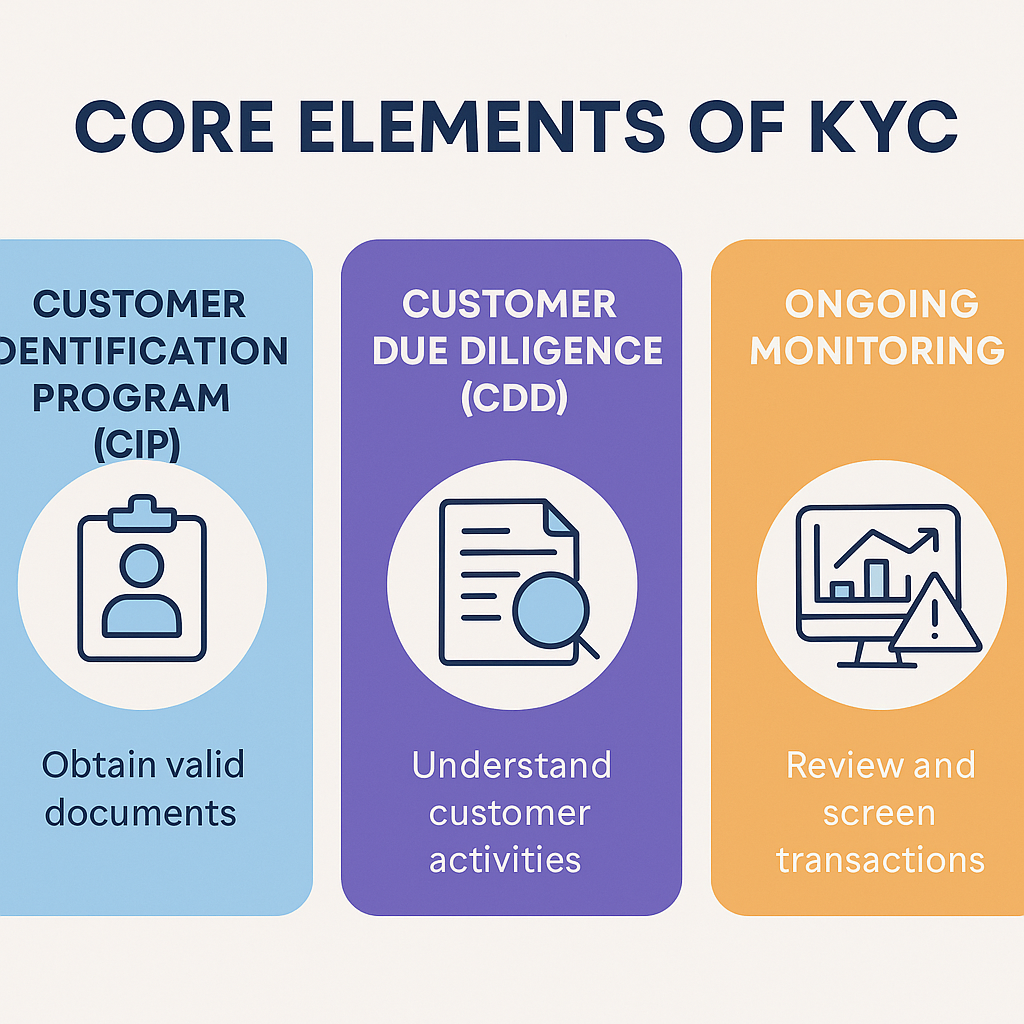
2. Core Elements of KYC
A. Customer Identification Program (CIP)
• Obtain valid documents such as passport, Emirates ID, and trade license.
• Verify beneficial ownership details.
• Conduct face-to-face or reliable digital verification.
B. Customer Due Diligence (CDD)
• Collect information on customer activities, sources of funds, and business purpose.
• Apply standard CDD for low-risk clients.
• Apply Enhanced Due Diligence (EDD) for high-risk clients such as PEPs or clients from high-risk jurisdictions.
C. Ongoing Monitoring
• Regularly review customer profiles.
• Screen customers against sanctions and PEP lists.
• Monitor transactions to identify suspicious or unusual activity.
________________________________________
3. Why KYC is Critical in the AML Framework
1. Prevents Financial Crime – Stops criminals from exploiting businesses for money laundering or terrorist financing.
2. Regulatory Compliance – Demonstrates adherence to UAE AML laws and FATF standards.
3. Protects Reputation – Builds trust with regulators, banks, and clients.
4. Supports Risk-Based Approach – Helps businesses focus resources on high-risk customers.
5. Facilitates Investigations – Accurate records assist authorities in tracing suspicious activities.
________________________________________
4. Best Practices for Effective KYC
• Integrate digital KYC solutions for efficiency.
• Train staff to identify red flags during onboarding.
• Maintain comprehensive records for at least 5 years.
• Conduct periodic risk reviews of high-value clients.
• Align KYC processes with global best practices while ensuring compliance with UAE-specific requirements.
________________________________________
5. Consequences of Weak KYC
Failure to implement strong KYC procedures can lead to:
• Heavy fines and regulatory penalties.
• Increased exposure to fraud and money laundering risks.
• Loss of business relationships with banks and partners.
• Reputational damage in the market.
________________________________________
Conclusion
KYC is the first line of defense in the AML framework. By implementing strong identification, due diligence, and monitoring processes, businesses can safeguard themselves against financial crime, meet UAE regulatory obligations, and maintain credibility in the marketplace.
________________________________________
📌 About Us
Sheikh Anwar Accounting and Auditing LLC is a MOE-approved auditing and compliance firm in the UAE. We specialize in KYC frameworks, AML policies, MLRO services, training, and goAML reporting. Our experts ensure your business remains compliant and protected against financial crime risks.
🌐 www.sa-auditors.com
📧 info@sa-auditors.com
📍 Dubai Creek Tower, M 35, Dubai, UAE