Impact of VAT on Small Businesses in the UAE
Introduction
Since the introduction of Value Added Tax (VAT) in the UAE on 1 January 2018, businesses across the country have been required to comply with new financial and administrative obligations. While larger corporations often have dedicated teams to handle tax matters, small businesses face unique challenges—and opportunities.
________________________________________
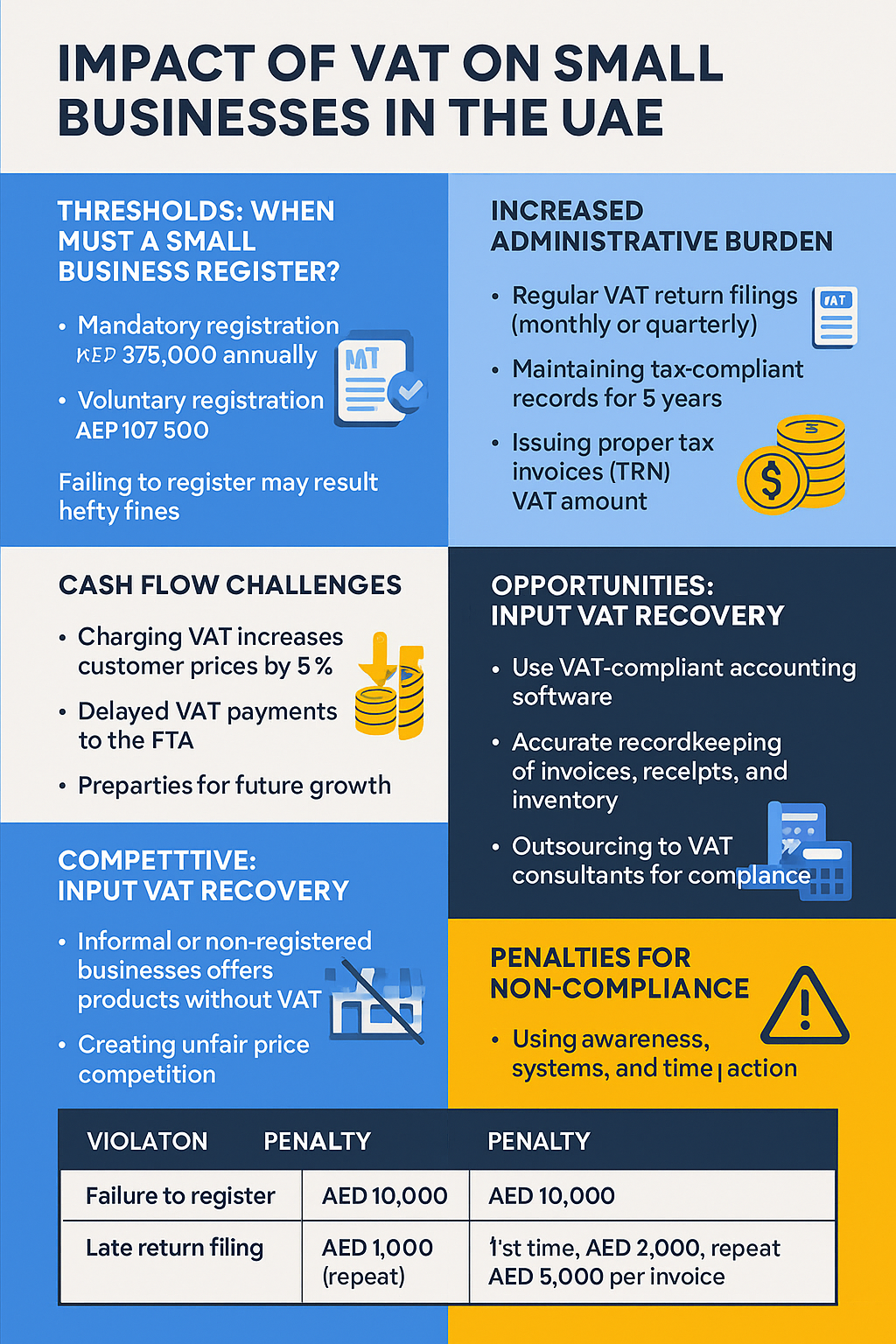
1. Thresholds: When Must a Small Business Register?
Small businesses must register for VAT if:
• Mandatory Registration: Turnover exceeds AED 375,000 annually
• Voluntary Registration: Turnover or expenses exceed AED 187,500
Failing to register when required can result in hefty fines from the FTA.
________________________________________
2. Increased Administrative Burden
For many small businesses, VAT brings:
• Regular VAT return filings (monthly or quarterly)
• Requirement to maintain tax-compliant records for 5 years
• Issuing proper tax invoices with all required fields (TRN, VAT amount, etc.)
These obligations demand time and financial resources that small businesses may find burdensome.
________________________________________
3. Cash Flow Challenges
Charging VAT increases customer prices by 5%. If a small business does not manage its cash inflows and outflows properly, it may:
• Delay VAT payments to the FTA
• Face penalties and interest
• Struggle with working capital issues
________________________________________
4. Competitive Pressure
Non-registered or informal businesses may offer similar products without VAT, creating unfair price competition for VAT-registered small businesses. This especially impacts industries with thin profit margins.
________________________________________
5. Opportunities: Input VAT Recovery
On the positive side, small businesses that register for VAT can:
• Claim VAT on business-related purchases
• Improve professional credibility with suppliers and clients
• Prepare themselves for future growth
VAT registration can position the business as compliant and trustworthy.
________________________________________
6. Importance of Accounting and Software
To meet VAT compliance:
• Use accounting software that is VAT-compliant
• Ensure accurate recordkeeping of invoices, receipts, and inventory
• Consider outsourcing to VAT consultants for regular compliance
________________________________________
7. Penalties for Non-Compliance
Common VAT penalties include:
Violation Penalty
Failure to register AED 10,000
Late return filing AED 1,000 (1st time), AED 2,000 (repeat)
Issuing incorrect invoice AED 5,000 per invoice
Avoiding penalties requires awareness, systems, and timely action.
________________________________________
Conclusion
VAT has undoubtedly added complexity for small businesses in the UAE. However, with the right tools, professional advice, and timely compliance, small businesses can turn VAT into an advantage—not just a burden.
If you’re a small business owner in the UAE and need help with VAT registration, return filing, or software solutions, reach out to Sheikh Anwar Accounting and Auditing LLC today.