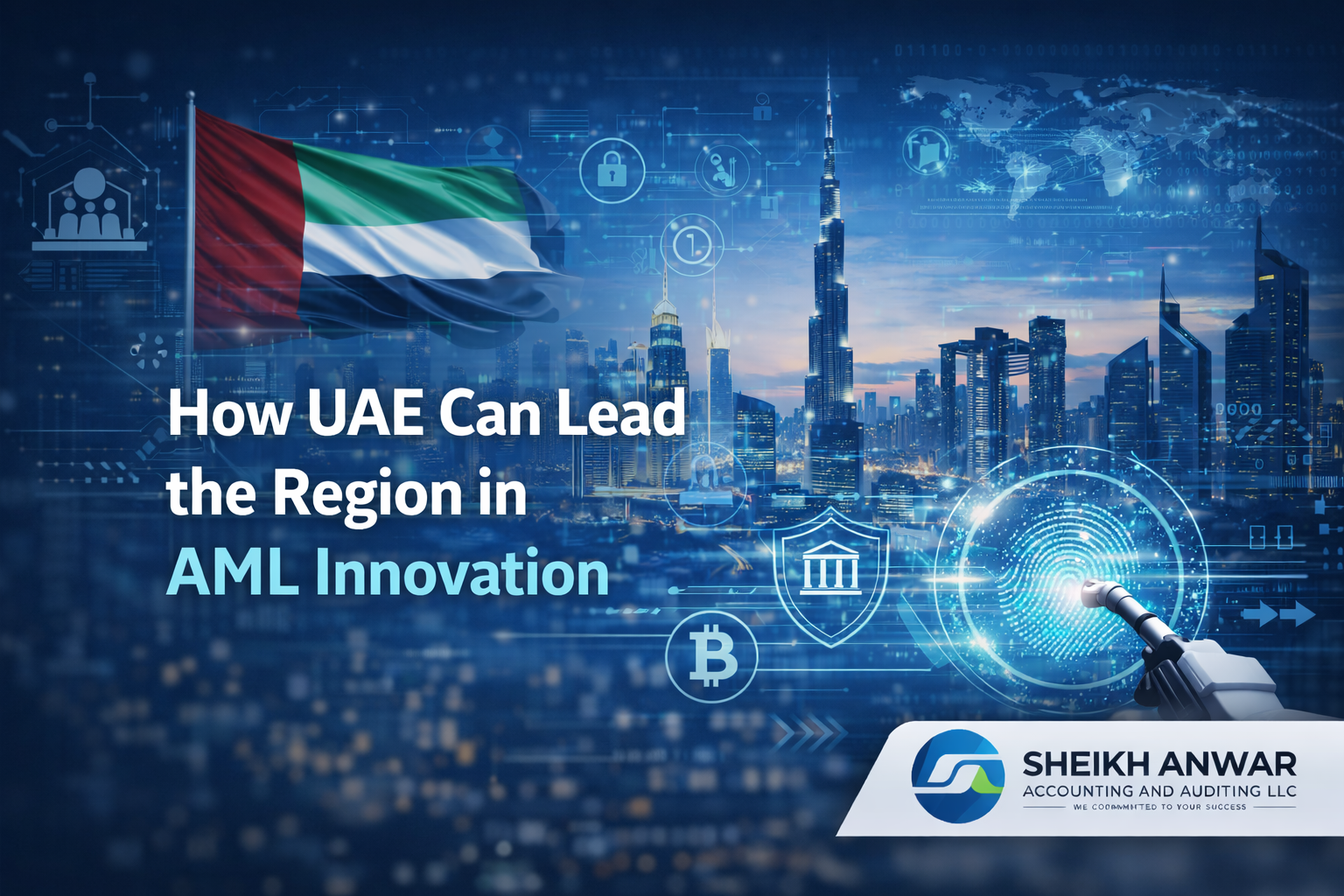
How UAE Can Lead the Region in AML Innovation
Introduction
The United Arab Emirates (UAE) has rapidly emerged as one of the most influential financial and trade hubs in the Middle East. With its strategic location, strong regulatory framework, and commitment to financial transparency, the UAE is well-positioned to lead the region in Anti-Money Laundering (AML) innovation. As financial crime evolves through digital channels, cryptocurrency, and cross-border transactions, innovative AML strategies are becoming essential.
By adopting advanced technologies, strengthening regulatory frameworks, and encouraging collaboration between regulators and private sector institutions, the UAE can set a global benchmark in AML compliance and financial crime prevention.
1. Adoption of Advanced Technology in AML Compliance
Technology will play a critical role in shaping the future of AML compliance. The UAE has already taken significant steps in integrating digital solutions into its financial system. Future innovation may include:
Artificial Intelligence (AI) for transaction monitoring
Machine learning algorithms for detecting suspicious financial patterns
Blockchain analytics for tracing cryptocurrency transactions
Advanced data analytics for identifying high-risk customers and transactions
These technologies can significantly improve the efficiency and accuracy of AML detection systems.
2. Strengthening the Regulatory Framework
The UAE has continuously improved its AML legal framework to align with international standards. Key laws such as Federal Decree-Law No. 20 of 2018 on Anti-Money Laundering and Combating the Financing of Terrorism have strengthened the country’s compliance environment.
Future regulatory developments may focus on:
Stronger supervision of high-risk sectors
Enhanced reporting requirements for suspicious transactions
Stricter enforcement against non-compliant entities
Improved coordination between regulatory authorities
These steps will ensure that financial institutions and businesses maintain robust AML compliance systems.
3. Promoting Public-Private Collaboration
A strong partnership between regulators and the private sector is essential for effective AML implementation. Financial institutions, fintech companies, auditors, and compliance professionals must work together to detect and prevent financial crime.
Collaboration initiatives may include:
Information-sharing platforms between regulators and financial institutions
Joint AML training programs and workshops
Industry-specific AML guidance for high-risk sectors
Development of shared financial intelligence frameworks
Such cooperation strengthens the entire financial ecosystem and improves early detection of suspicious activities.
4. Development of RegTech and FinTech Solutions
The UAE is already a regional leader in financial technology innovation. By encouraging the development of Regulatory Technology (RegTech) solutions, the country can further strengthen AML compliance.
Examples of RegTech innovation include:
Automated AML compliance software
Real-time transaction monitoring platforms
Digital identity verification systems
Risk scoring models powered by artificial intelligence
These solutions can help businesses reduce compliance costs while maintaining strong regulatory oversight.
5. Enhancing AML Training and Professional Development
Another key factor in AML innovation is the development of skilled professionals. The UAE can strengthen AML capabilities by promoting specialized training programs, certifications, and professional development initiatives.
Educational institutions, training academies, and regulatory bodies can work together to build a highly skilled AML workforce capable of addressing emerging financial crime risks.
6. Focus on High-Risk Sectors
Certain industries in the UAE require enhanced AML supervision due to their higher exposure to financial crime risks. These sectors include:
Gold and precious metals trading
Real estate transactions
Virtual assets and cryptocurrency platforms
Cross-border trade and logistics
By implementing sector-specific AML frameworks, regulators can better manage risks and prevent misuse of financial systems.
Conclusion
The UAE has already made remarkable progress in strengthening its AML framework and aligning with international compliance standards. By embracing technological innovation, strengthening regulatory oversight, and promoting collaboration between regulators and businesses, the UAE can become a regional leader in AML innovation.
Such leadership will not only enhance financial security but also strengthen investor confidence and support the UAE’s vision of becoming a trusted global financial center.
About the Company
Sheikh Anwar Accounting & Auditing LLC is a Dubai-based professional advisory firm specializing in regulatory compliance, financial consulting, and audit services.
The firm provides expert services in:
AML / CFT Compliance
Corporate Tax Advisory
VAT Consultancy
Audit & Assurance Services
Risk Assessment and Regulatory Compliance
The company supports businesses across sectors including gold & jewellery trading, real estate, fintech, and financial services in meeting UAE regulatory requirements.
📍 Address: Dubai Creek Tower, M-35, Dubai, UAE
🌐 Website: www.sa-auditors.com
📧 Email: info@sa-auditors.com
📞 Phone: +971 50 625 2031