How to Train Staff to Identify Red Flags
Introduction
One of the most effective ways to strengthen an organization’s anti-money laundering (AML) framework is by training staff to identify red flags. Employees are the first line of defense in detecting suspicious activities. Proper training ensures they can recognize unusual patterns, escalate concerns, and file Suspicious Transaction Reports (STRs) where necessary.
________________________________________
1. Importance of Training in Red Flag Detection
• Awareness Building: Staff become more alert to unusual or suspicious behaviors in clients and transactions.
• Early Detection: Timely spotting of anomalies prevents escalation into financial crime.
• Regulatory Compliance: Regulators in the UAE, under Federal Decree-Law No. 20 of 2018 and Cabinet Decision No. 10 of 2019, require entities to train employees on AML obligations.
• Risk Reduction: Minimizes reputational, financial, and legal risks associated with non-compliance.
________________________________________
2. Core Areas to Cover in Staff Training
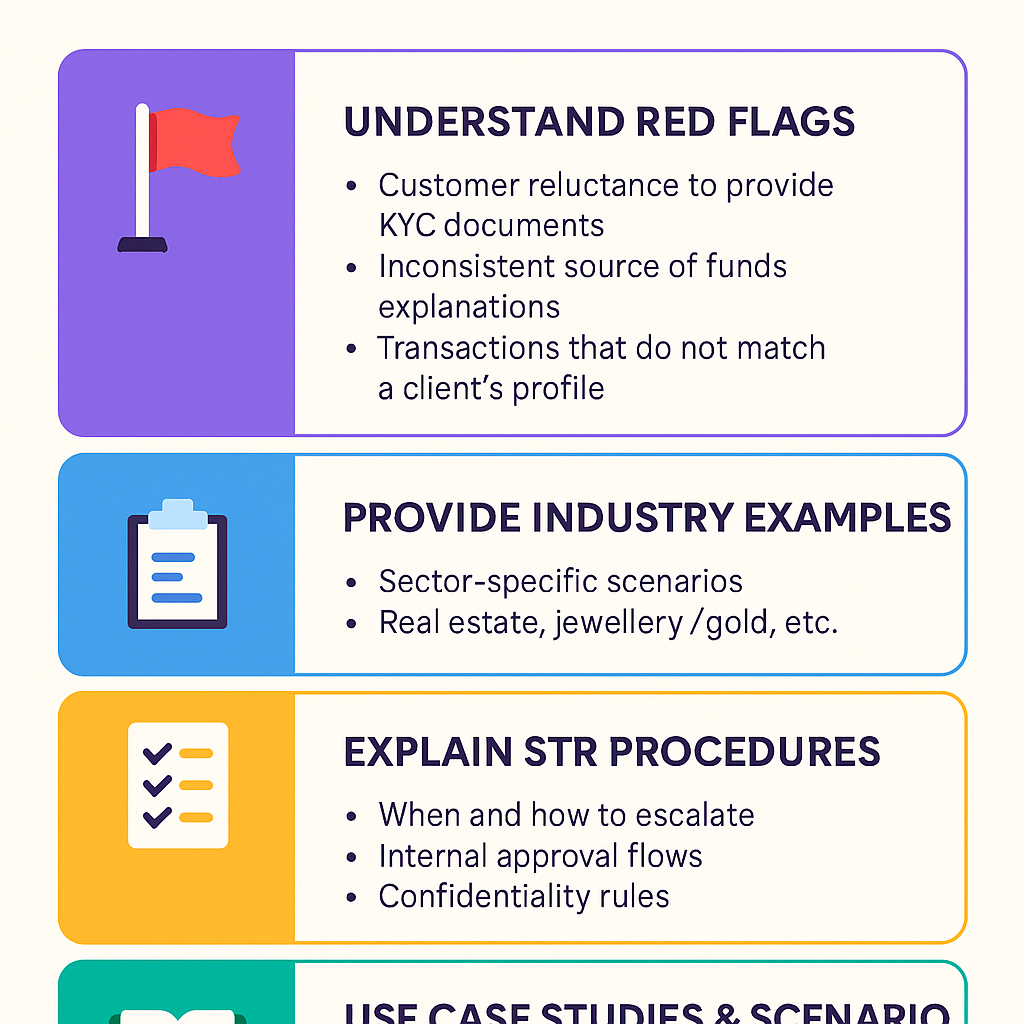
a) Understanding Red Flags
• Suspicious client behavior (unwillingness to provide documents, inconsistent information).
• Unusual financial transactions (large cash payments, rapid movement of funds).
• High-risk jurisdictions or politically exposed persons (PEPs).
b) Industry-Specific Scenarios
• Trade Finance: Over/under invoicing, inconsistent shipping routes.
• Real Estate: Purchases without clear source of funds.
• Jewellery/Gold Trade: Large cash deals, unusual demand for high-value products.
c) STR Filing Procedures
• How to escalate concerns internally.
• Timelines and thresholds for reporting.
• Maintaining confidentiality while filing STRs.
d) Case Studies
• Real-world AML breaches and fines.
• Practical examples relevant to the company’s sector.
________________________________________
3. Best Practices for Effective Training
1. Role-Based Training: Tailor content for frontline staff, compliance officers, and management.
2. Interactive Sessions: Use quizzes, role-plays, and scenario-based learning.
3. Continuous Refreshers: Provide regular updates on new regulations and typologies.
4. Technology Integration: Introduce automated red flag detection tools to support human judgment.
5. Feedback & Assessment: Evaluate understanding and measure training effectiveness.
________________________________________
4. Creating a Culture of Compliance
Training should not be a one-time exercise. Organizations must foster a culture where employees feel responsible and confident to raise concerns. Encouraging open communication, rewarding diligence, and reinforcing the importance of AML compliance are critical to long-term success.
________________________________________
📩 For AML training and compliance support, contact us:
Sheikh Anwar Accounting & Auditing LLC
🌐 www.sa-auditors.com
📧 info@sa-auditors.com