How to Track Input VAT for Claiming in the UAE
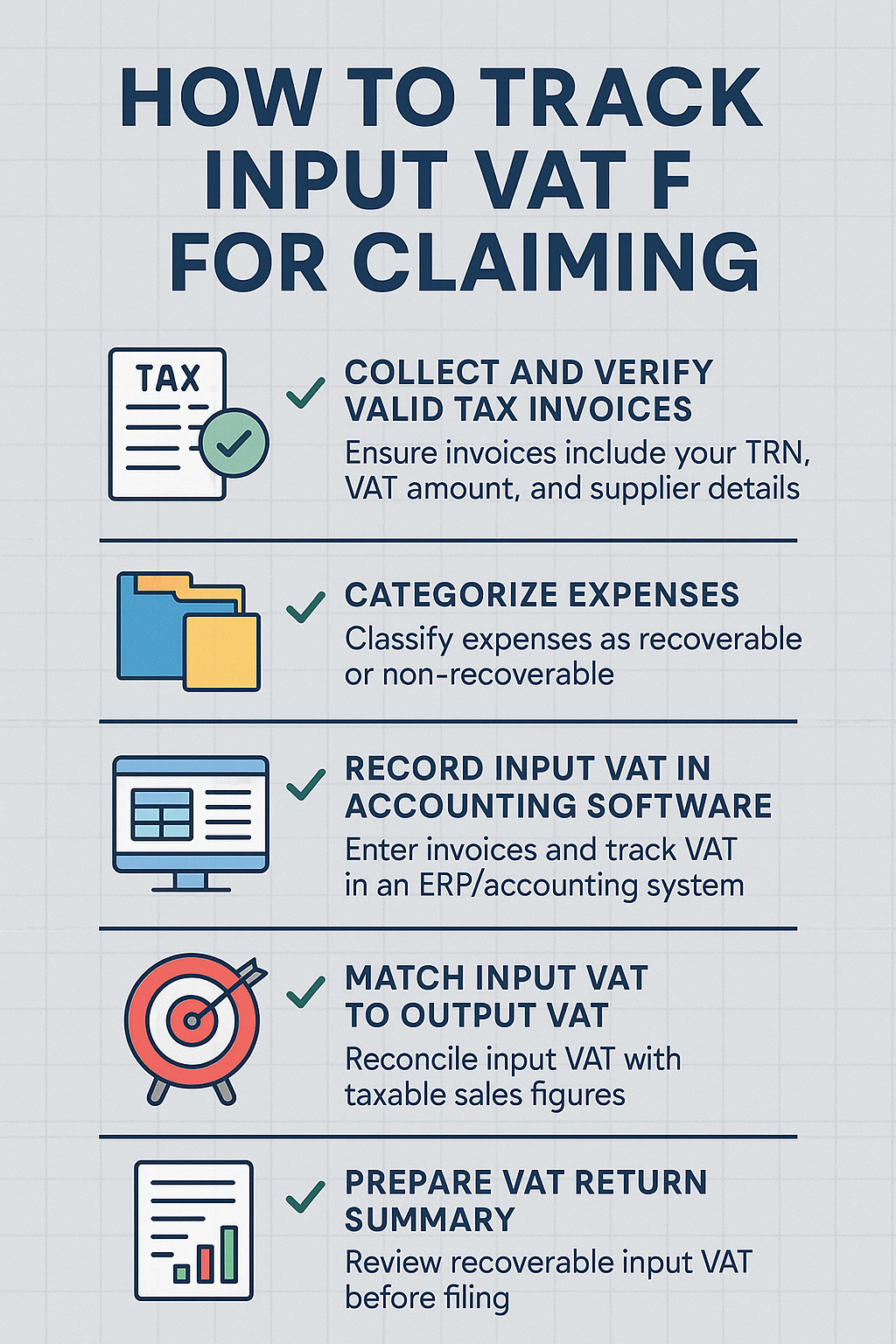
Tracking input VAT accurately is essential for businesses to ensure they only claim the VAT they're entitled to—and avoid penalties for incorrect claims. The Federal Tax Authority (FTA) has strict rules around recoverable input VAT, and maintaining a clear system for tracking, verifying, and claiming it is key to VAT compliance.
we explain how to track input VAT properly, what documents you need, and common errors to avoid.
________________________________________
✅ What Is Input VAT?
Input VAT is the value-added tax a business pays on purchases or expenses related to its taxable supplies. You can usually recover this VAT by claiming it in your VAT return, as long as:
• The purchase is for business purposes.
• You have a valid tax invoice.
• The expense is not in the list of non-recoverable VAT (e.g., entertainment expenses).
________________________________________
🔍 Step-by-Step: How to Track Input VAT for Claiming
1. Collect and Verify Valid Tax Invoices
Make sure each invoice includes:
• Supplier's name and TRN
• Your company’s details and TRN
• Invoice date, number, and VAT amount
• Description of goods/services
📁 Only claim VAT supported by FTA-compliant invoices.
________________________________________
2. Categorize Expenses
Group expenses into:
• Recoverable (e.g., rent, raw materials, services)
• Non-recoverable (e.g., staff entertainment, passenger vehicles for personal use)
🧾 Maintain an expense matrix to classify purchases consistently.
________________________________________
3. Record Input VAT in Accounting Software
Use ERP/accounting systems to:
• Enter supplier invoices with line-item VAT details
• Link payments to invoices
• Generate real-time input VAT summaries
💻 Tools like Finabooks, Zoho Books, or QuickBooks help automate tracking.
________________________________________
4. Match Input VAT to Output VAT
Reconcile input VAT with taxable sales (output VAT):
• Excess input VAT may be carried forward or refunded.
• Ensure VAT periods match.
📊 This helps avoid over-claiming and keeps your VAT return accurate.
________________________________________
5. Prepare VAT Return Summary
Before filing:
• Review all recoverable input VAT entries.
• Attach any supporting documents (in case of audits).
• Use FTA’s EmaraTax return form (Box 9) for input VAT claim.
🧮 Cross-check totals against bank statements and vendor ledgers.
________________________________________
⚠️ Common Mistakes to Avoid
• Claiming VAT on blocked expenses (e.g., entertainment, non-business use)
• Using invalid or missing invoices
• Ignoring reverse charge mechanism for imports
• Claiming VAT on exempt supplies
________________________________________
📌 Final Thoughts
Tracking input VAT is not just about reclaiming tax—it’s about protecting your business from compliance issues and fines. A structured approach and reliable software make the process smooth and accurate.
Need help setting up your input VAT tracking system or reviewing claims? Contact Sheikh Anwar Accounting & Auditing LLC for VAT advisory and bookkeeping services.