How to Measure AML Training Outcomes
Introduction
Investing in Anti-Money Laundering (AML) training is essential, but organizations often struggle with a critical question: How do we measure whether AML training is truly effective? Regulators in the UAE, including the Ministry of Economy and the Central Bank, expect not only proof of training but also evidence of its impact on compliance effectiveness. Measuring AML training outcomes ensures that employees are not just attending sessions but are actually translating knowledge into practice.
________________________________________
Why Measuring AML Training Outcomes Matters
• Regulatory Expectation: Inspections frequently request training records, assessments, and evidence of knowledge retention.
• Risk Mitigation: Identifies whether staff can detect suspicious activity and apply proper procedures.
• Return on Investment (ROI): Confirms that resources spent on training are contributing to compliance improvements.
• Continuous Improvement: Highlights areas needing additional focus or refresher training.
________________________________________
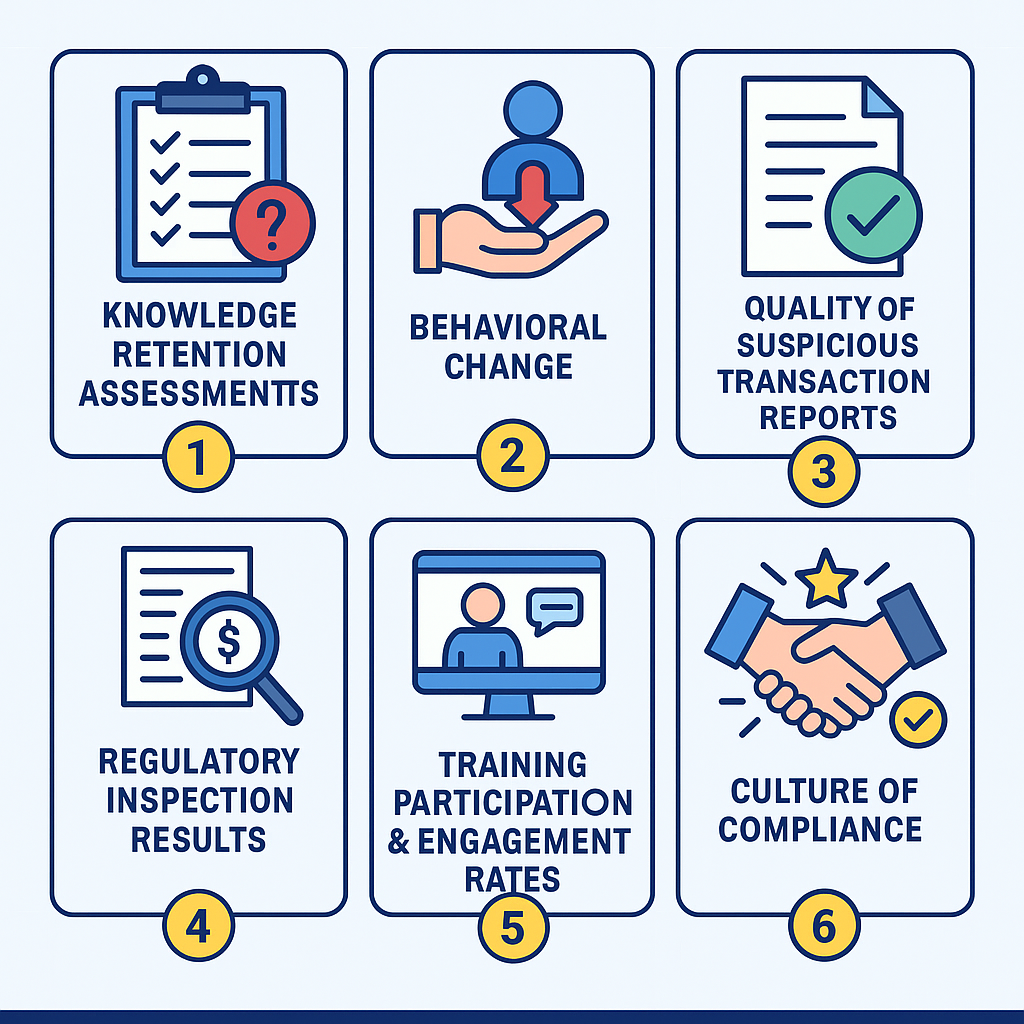
Key Metrics to Measure AML Training Outcomes
1. Knowledge Retention Assessments
• Conduct pre- and post-training tests to measure improvement.
• Use scenario-based quizzes to assess application, not just theory.
• Example: Testing employees’ ability to identify suspicious red flags in customer profiles.
2. Behavioral Change
• Monitor whether staff apply training in daily tasks:
o Are KYC forms being completed correctly?
o Are red flags escalated promptly?
o Are employees asking customers for additional documentation when necessary?
3. Quality of Suspicious Transaction Reports (STRs)
• Increased accuracy and timeliness of STR filings is a strong indicator of training effectiveness.
• Fewer regulator rejections of STRs shows better staff competency.
4. Regulatory Inspection Results
• Positive outcomes during audits or inspections often indicate training effectiveness.
• Key evidence: well-maintained records, correct CDD implementation, and staff awareness interviews.
5. Training Participation & Engagement Rates
• Track attendance, completion rates, and employee feedback.
• High engagement suggests relevance, while low participation highlights areas needing adjustment.
6. Operational Compliance Indicators
• Fewer compliance breaches.
• Reduction in transaction monitoring backlogs.
• Improved internal audit scores related to AML.
7. Culture of Compliance
• Employees demonstrate proactive attitudes toward compliance.
• Increased willingness to report issues internally before escalation.
________________________________________
Best Practices for Measuring AML Training
• Use Practical Case Studies: Assess staff on real-world examples relevant to UAE sectors like jewellery, real estate, or auditing.
• Conduct Regular Refresher Training: Measure outcomes annually to ensure knowledge remains current.
• Benchmark Across Departments: Compare outcomes between frontline, compliance officers, and management.
• Leverage Technology: E-learning platforms provide analytics on completion, scores, and time spent.
________________________________________
Conclusion
AML training cannot be measured by attendance alone. By applying a combination of quantitative (tests, STR data) and qualitative (behavioral observation, compliance culture) methods, businesses can evaluate whether training is truly effective. In the UAE, where regulators closely monitor DNFBPs and financial institutions, demonstrating measurable training outcomes is not only best practice but a compliance necessity.
________________________________________
📌 For tailored AML training programs with measurable outcomes, contact:
• Email: info@sa-auditors.com
• Website: www.sa-auditors.com