How to Document AML Training for Regulators
Introduction
Financial regulators worldwide, including in the UAE, require businesses and outsourcing firms to not only conduct Anti-Money Laundering (AML) training but also to maintain clear evidence that such training has taken place. Documentation is the bridge between compliance practice and regulatory assurance. Without well-structured training records, even the best AML program may be viewed as incomplete or non-compliant during inspections.
________________________________________
Why Documentation of AML Training Matters
1. Regulatory Compliance
Authorities such as the UAE’s Ministry of Economy, Central Bank, and free zone regulators expect auditable records. Failure to maintain proper evidence can lead to penalties.
2. Proof of Ongoing Compliance Culture
Documented training shows regulators that the business fosters a compliance-driven environment, not just a one-time exercise.
3. Risk Mitigation
If a money laundering case arises, training records provide proof that staff were adequately equipped to detect and report suspicious activities.
4. Client and Stakeholder Trust
Outsourcing firms with strong training documentation reassure clients of their professionalism and regulatory readiness.
________________________________________
Key Elements to Document in AML Training
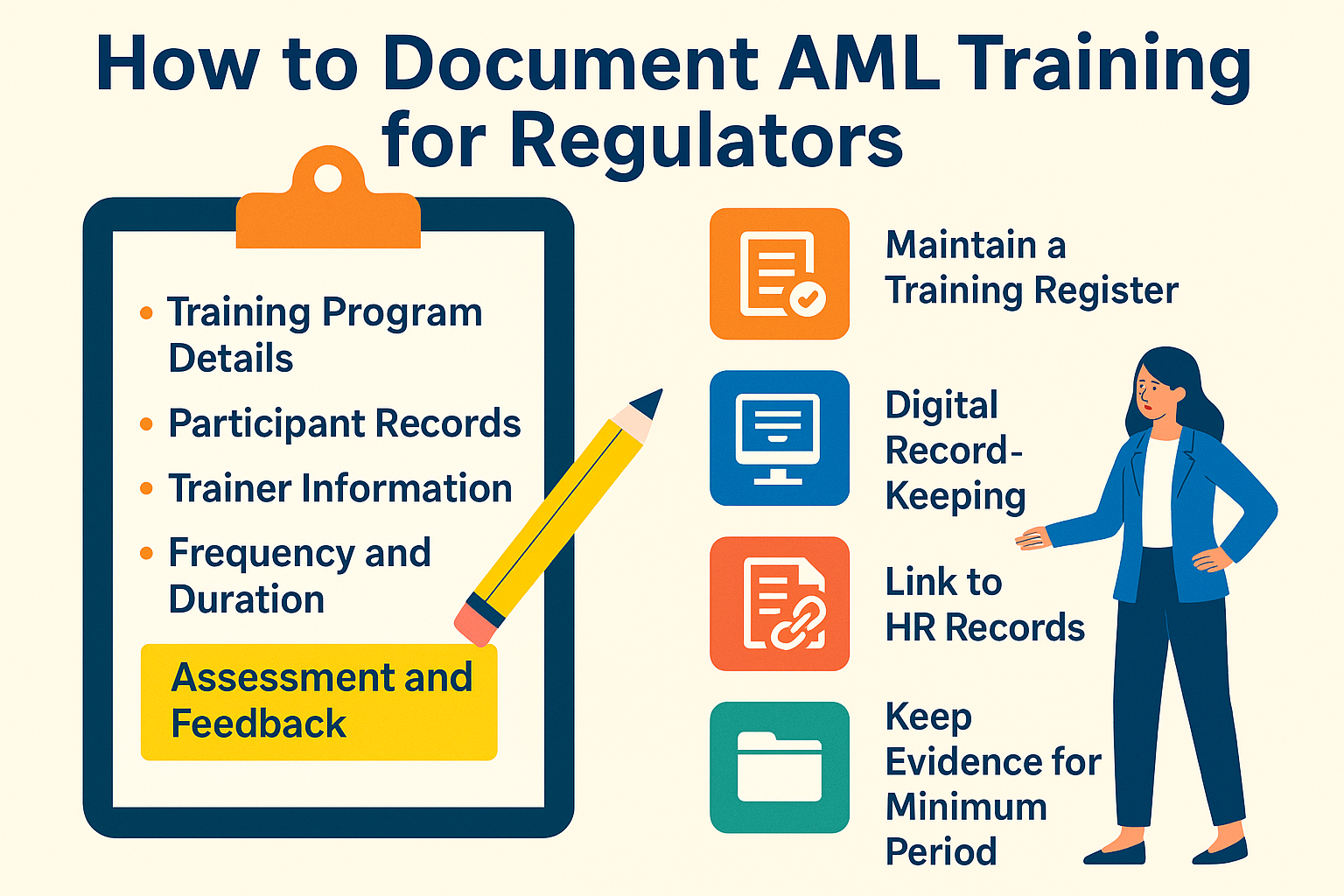
1. Training Program Details
• Training agenda, topics covered (CDD, STR reporting, sector-specific risks).
• Mode of delivery (in-person, online, workshops, simulations).
• Training materials used (slides, case studies, handouts).
2. Participant Records
• Full list of employees and outsourced staff trained.
• Attendance sheets signed (physical or digital).
• Certificates of completion where applicable.
3. Trainer Information
• Trainer’s name, qualifications, and experience.
• Whether internal or external trainers were engaged.
4. Frequency and Duration
• Dates of training sessions.
• Duration (hours/days).
• Refresher or advanced sessions logged separately.
5. Assessment and Feedback
• Test results or quizzes to evaluate staff understanding.
• Participant feedback forms for continuous improvement.
6. Compliance Sign-Off
• MLRO (Money Laundering Reporting Officer) or Compliance Officer’s sign-off confirming the program was delivered effectively.
• Evidence of board/senior management acknowledgment where required.
________________________________________
Best Practices in Documenting AML Training
1. Maintain a Centralized Training Register
Keep a master log of all AML training activities with dates, participants, and outcomes.
2. Digital Record-Keeping
Use learning management systems (LMS) or compliance software to store records securely and ensure easy retrieval during audits.
3. Link to HR Records
Integrate training documentation with staff employment records to demonstrate staff competency over time.
4. Keep Evidence for Minimum Period
Retain AML training documentation for at least 5 years (in line with UAE AML record-keeping requirements).
5. Prepare Audit-Ready Files
Have summarized training reports ready for regulators, including:
o Number of sessions held
o Staff participation rates
o Training completion percentages
________________________________________
Example of Training Documentation Template
• Training Title: AML Awareness for Frontline Staff
• Date: 10 March 2025
• Duration: 3 hours
• Trainer: John Doe, ACAMS Certified
• Participants: 25 employees (attendance sheet attached)
• Topics Covered: KYC/CDD, Red Flags, STR Reporting
• Assessment: Quiz – 90% average score
• Approval: MLRO signed on 12 March 2025
• Evidence Stored: LMS records, signed attendance, training slides
________________________________________
Conclusion
Documenting AML training is not just a clerical exercise — it is a compliance safeguard. Properly recorded training activities demonstrate to regulators that an organization takes AML obligations seriously, invests in staff awareness, and sustains a culture of compliance. By building a systematic documentation process, firms can confidently face audits, avoid penalties, and enhance trust with both regulators and clients.
________________________________________
About Us
Sheikh Anwar Accounting and Auditing LLC is a UAE-based auditing and compliance advisory firm. We specialize in AML compliance, outsourced MLRO services, and training programs for DNFBPs and financial institutions. Our tailored AML training is backed by detailed documentation support to keep your business regulator-ready.
📧 Email: info@sa-auditors.com
🌐 Website: www.sa-auditors.com
☎️ Contact: +971 4 123 4567