How to Avoid Over-Reporting in STRs
Introduction
Filing a Suspicious Transaction Report (STR) is a legal obligation under FATF standards and UAE’s AML laws (Federal Decree-Law No. 20 of 2018 and Cabinet Decision No. 10 of 2019). However, over-reporting—filing STRs for transactions that are not genuinely suspicious—can overwhelm regulators, weaken the effectiveness of AML frameworks, and strain business operations.
Striking the right balance between under-reporting (which risks penalties) and over-reporting (which wastes resources) is essential for compliance.
________________________________________
1. Why Over-Reporting Happens
• Fear of Non-Compliance: Staff may over-report to avoid liability.
• Lack of Training: Employees may not understand what truly constitutes a suspicious transaction.
• Unclear Policies: Organizations without clear internal guidance tend to file excessive reports.
• Confusion Between Unusual and Suspicious: Not all unusual transactions are suspicious.
________________________________________
2. FATF and UAE Guidance
FATF clarifies that an STR should be filed when there are reasonable grounds to suspect ML/TF, not merely because a transaction is unusual.
• Unusual ≠ Suspicious: A high-value transaction may be unusual but legitimate if supported by KYC documents.
• Suspicion Requires Context: The red flag should be linked to customer profile, business activity, or risk indicators.
________________________________________
3. Best Practices to Avoid Over-Reporting
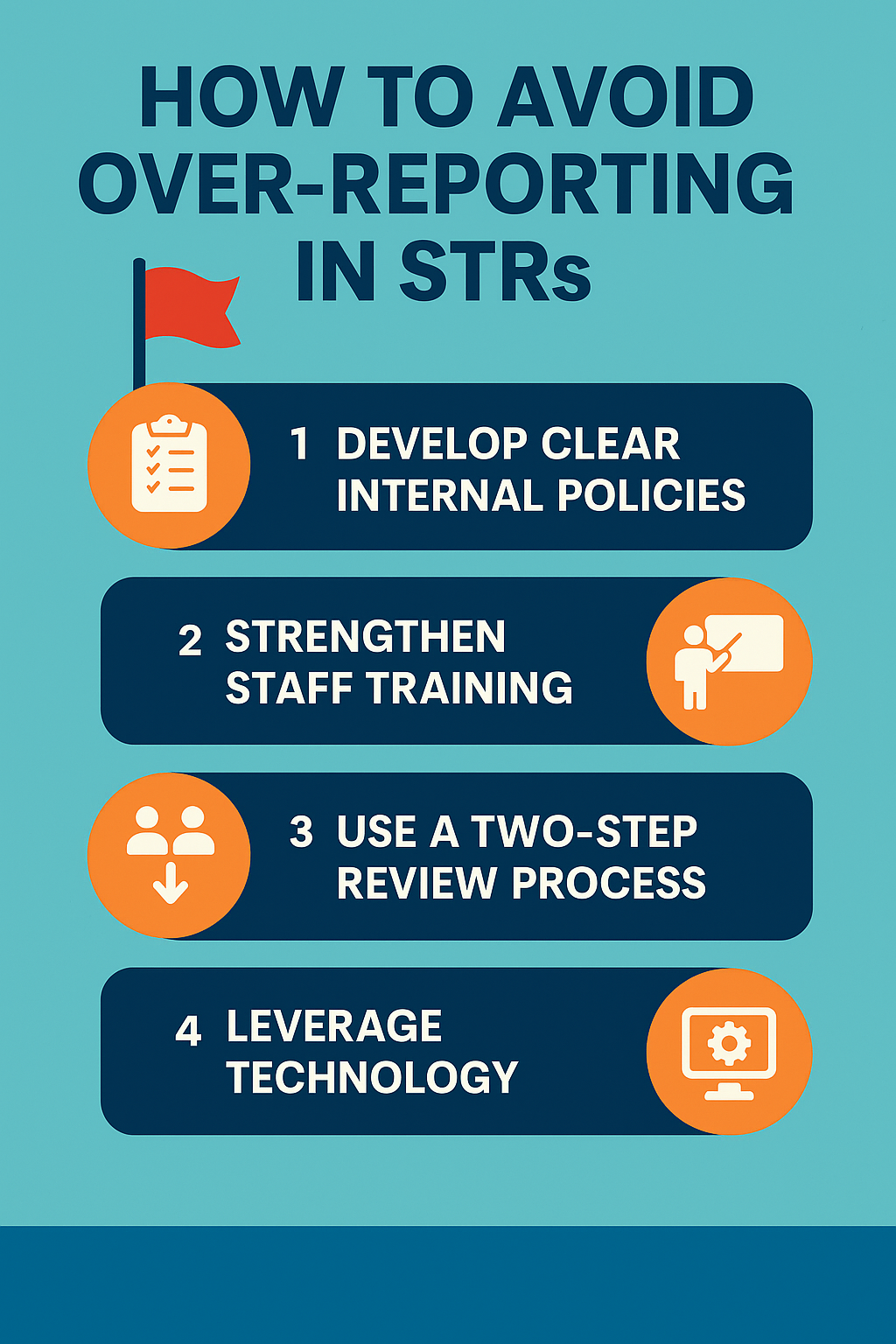
a) Develop Clear Internal Policies
• Define thresholds for escalation.
• Distinguish between alerts (to be reviewed) and reportable suspicions.
• Create sector-specific risk indicators (real estate, gold trade, legal services, etc.).
b) Strengthen Staff Training
• Teach staff the difference between “unusual” and “suspicious.”
• Provide case studies of real STR-worthy situations.
• Ensure employees understand confidentiality and reporting obligations.
c) Use a Two-Step Review Process
• First Line: Staff detect red flags and escalate.
• Second Line: Compliance/MLRO reviews before submitting an STR to FIU.
d) Leverage Technology
• Implement automated transaction monitoring with customizable thresholds.
• Use data analytics to reduce false positives.
e) Maintain Ongoing CDD and EDD
• Update client profiles regularly.
• Reassess risk ratings based on customer behavior.
• Verify whether transactions align with known customer activity.
________________________________________
4. Benefits of Balanced Reporting
• Regulatory Efficiency: FIU receives focused, high-quality reports.
• Operational Efficiency: Saves compliance resources and staff time.
• Reduced Risk: Avoids regulatory penalties for over- or under-reporting.
• Reputation Protection: Demonstrates a mature, risk-based compliance framework.
________________________________________
5. Final Takeaway
Avoiding over-reporting is not about lowering vigilance—it is about applying a risk-based approach. STRs should be filed when there are genuine, documented grounds for suspicion. With strong internal policies, staff training, and robust review mechanisms, DNFBPs and financial institutions can ensure quality over quantity in STR reporting.
________________________________________
📩 For AML training, STR policy frameworks, and compliance support, contact us:
Sheikh Anwar Accounting & Auditing LLC
🌐 www.sa-auditors.com
📧 info@sa-auditors.com