How Often Should Companies Update AML Training?
Introduction
In today’s evolving regulatory and financial crime landscape, AML training cannot be a one-off activity. Both the FATF and UAE regulators, including the Ministry of Economy, emphasize the need for regular and updated training for all relevant staff. The frequency of updates depends on regulatory expectations, industry risks, and the company’s internal compliance framework.
________________________________________
1. Regulatory Expectations in the UAE
• Under Federal Decree-Law No. 20 of 2018 and Cabinet Decision No. 10 of 2019, companies must ensure their employees receive ongoing AML/CFT training.
• Regulators expect companies to demonstrate that training is current, relevant, and aligned with evolving risks.
• Free zones (DMCC, ADGM, DIFC, RAKEZ, etc.) also require DNFBPs to show evidence of regular refreshers during inspections.
________________________________________
2. Recommended Frequency of Updates
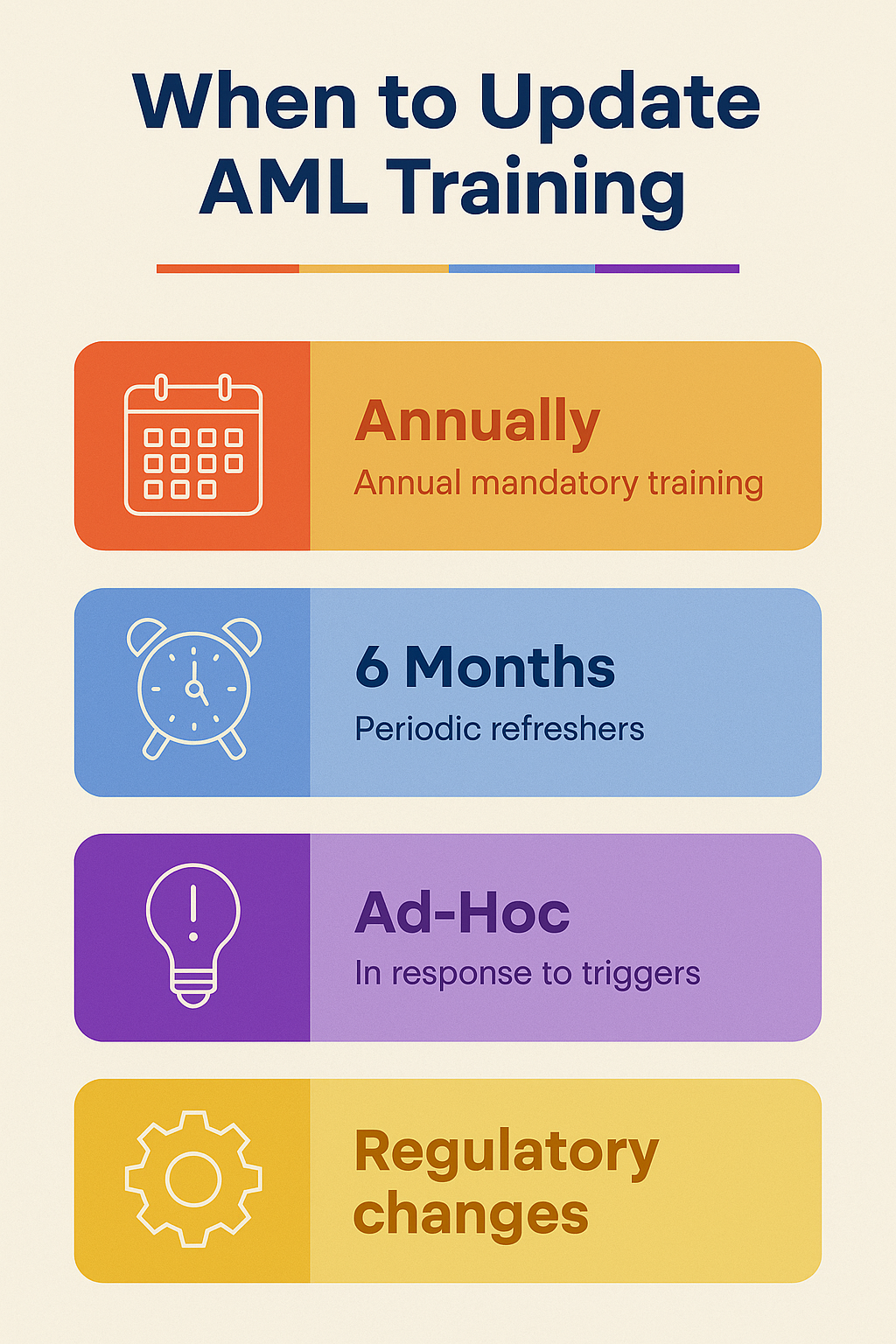
Annual Mandatory Training
• Every employee in a high-risk role should receive at least one structured AML training session per year.
• This ensures a minimum compliance benchmark.
Ad-Hoc Updates
• Training should be updated whenever there are regulatory changes (e.g., new Cabinet Decisions, FIU guidelines, FATF updates).
• Case in point: After FATF’s 2020 review of the UAE, many businesses revised training content to reflect updated obligations.
Periodic Refreshers
• Shorter sessions every 6 months keep employees alert to key red flags.
• E-learning modules or quizzes can reinforce awareness between formal sessions.
________________________________________
3. Triggers That Require Immediate Training Updates
• Regulatory Changes: New UAE AML/CFT laws or FATF recommendations.
• Internal Policy Changes: Updates to company CDD/EDD or STR filing processes.
• Emerging Typologies: New methods of ML/TF such as virtual assets misuse or trade-based laundering trends.
• Inspection Findings: Weaknesses identified during audits or regulatory inspections.
• Sector-Specific Risks: For example, increased monitoring in gold and diamond trading, or real estate.
________________________________________
4. Tailored Training Frequency
• Frontline Staff: Regular refreshers (quarterly micro-sessions or 6-monthly).
• Compliance Officers / MLROs: More frequent, in-depth updates (quarterly or whenever regulations change).
• Senior Management: Annual governance-focused training plus updates on major regulatory developments.
________________________________________
5. Benefits of Regular Training Updates
• Regulatory Compliance: Avoids fines, penalties, or license suspension.
• Improved Risk Management: Staff can detect and escalate suspicious activity faster.
• Enhanced Reputation: Demonstrates a proactive compliance culture to regulators and partners.
• Operational Efficiency: Reduces over-reporting and ensures STRs are filed appropriately.
________________________________________
Conclusion
Companies in the UAE should treat AML training as a living, evolving program. While annual training is the minimum standard, businesses should introduce ad-hoc and refresher sessions to remain compliant with regulatory changes and emerging risks. The key is ensuring that training is continuous, practical, and risk-based—not just a one-time exercise.
________________________________________
📩 For AML training updates tailored to your business sector, contact us:
Sheikh Anwar Accounting & Auditing LLC
🌐 www.sa-auditors.com
📧 info@sa-auditors.com