How Long Should You Keep VAT Invoices?
📂 How Long Should You Keep VAT Invoices in the UAE?
Maintaining proper records is a crucial part of VAT compliance in the UAE. One of the most common questions businesses have is:
"How long should we keep our VAT invoices and related documents?"
Whether you're a small business, freelancer, or large corporation, keeping accurate and complete VAT records ensures you’re prepared for audits and helps you avoid penalties.
________________________________________
✅ Legal Requirement Under UAE VAT Law
According to the Federal Decree-Law No. 8 of 2017 on Value Added Tax and the Tax Procedures Law (Federal Law No. 7 of 2017):
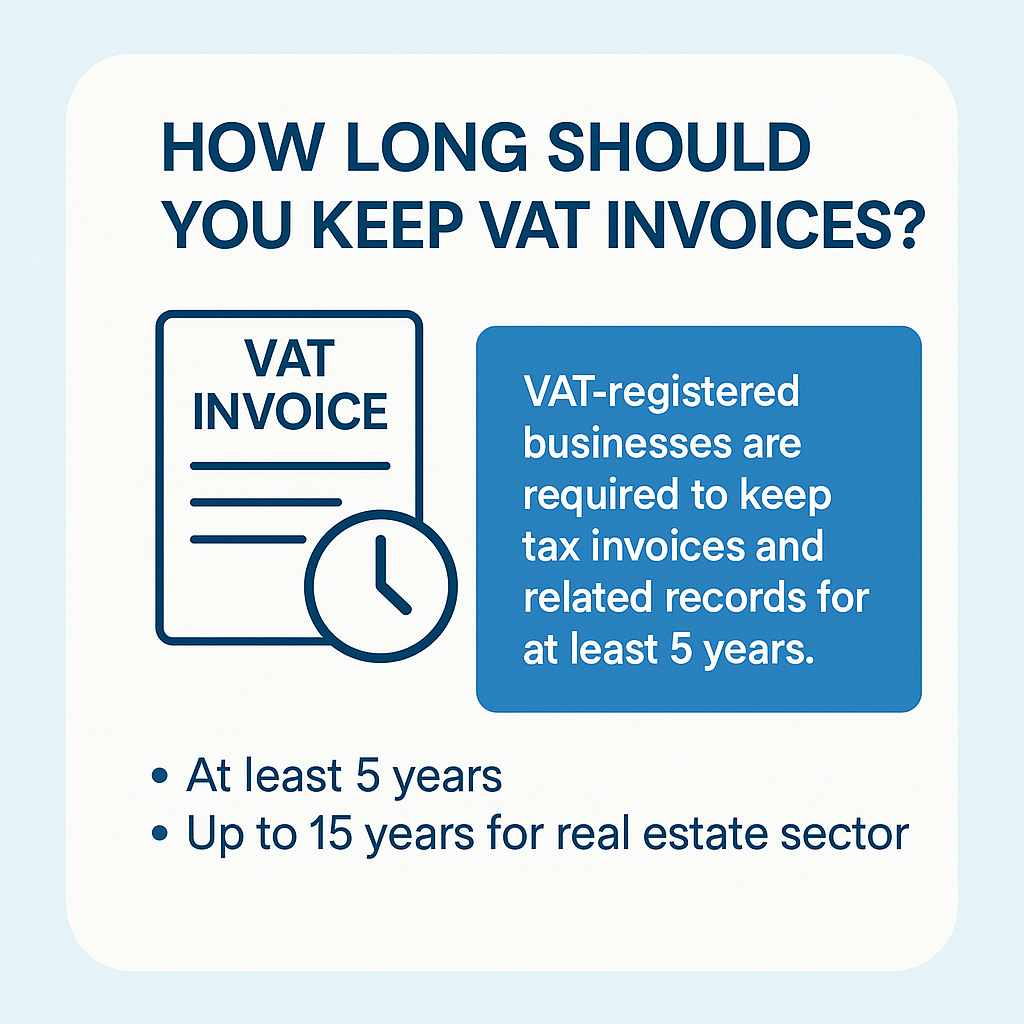
VAT-registered businesses in the UAE are required to keep tax invoices and related records for at least 5 years.
For certain sectors like real estate, the retention period extends up to 15 years.
________________________________________
🧾 What VAT Records Should You Keep?
The Federal Tax Authority (FTA) mandates businesses to retain the following:
• Tax invoices issued to customers
• Tax invoices received from suppliers
• Debit and credit notes
• VAT return filings
• Accounting books and ledgers
• Contracts and agreements relevant to taxable transactions
• Import/export documentation
• Bank statements related to VAT transactions
• Customs declarations (if applicable)
________________________________________
📍 Retention Period Breakdown
Type of Record Retention Period
Standard VAT records 5 years
Real estate-related records 15 years
Import/export documentation 5 years
VAT returns and backup 5 years
________________________________________
📂 Storage Formats Allowed
You can keep VAT records in:
• Paper format (hard copies)
• Electronic format (PDF, Excel, accounting software)
However, records must be:
• Clear and legible
• Organized and accessible upon FTA request
• Stored within the UAE (or accessible from within the UAE)
________________________________________
🔍 Why Keeping VAT Invoices Is Important
1. FTA Audits & Inspections: The FTA can request to review your invoices and records at any time within the retention period.
2. Input VAT Claims: You need proper documentation to claim input VAT.
3. Dispute Resolution: In case of errors, overpayments, or disputes, having records is crucial.
4. Avoiding Penalties: Failure to maintain records may result in administrative fines.
________________________________________
⚠️ Penalties for Non-Compliance
As per Cabinet Decision No. 75 of 2023, administrative penalties for failure to keep required records can be AED 10,000 for the first offense and AED 20,000 for repeated offenses.
________________________________________
📝 Final Thoughts
To stay on the right side of the law, ensure your business maintains complete, accurate, and secure records for at least 5 years (or longer if dealing with real estate). Invest in a VAT-compliant accounting system and regularly back up your data.
If you’re unsure about your VAT documentation procedures, it’s wise to consult a professional.
________________________________________
💼 Need VAT Compliance Support?
At Sheikh Anwar Accounting & Auditing LLC, we help businesses manage and maintain their VAT records in line with UAE law. Our experts ensure your documentation is audit-ready and penalty-proof.
📞 Contact us today at www.sa-auditors.com to schedule a VAT health check!