Gamification in AML Training Programs
Introduction
AML (Anti-Money Laundering) training is essential for regulated businesses in the UAE, including financial institutions and DNFBPs such as jewellers, auditors, and real estate firms. However, one of the biggest challenges companies face is ensuring that employees engage with training content and retain knowledge over time. This is where gamification plays a powerful role—transforming traditional compliance training into an interactive and effective learning experience.
________________________________________
What is Gamification in AML Training?
Gamification refers to the use of game-like elements in non-game contexts. In AML training, this means applying features such as:
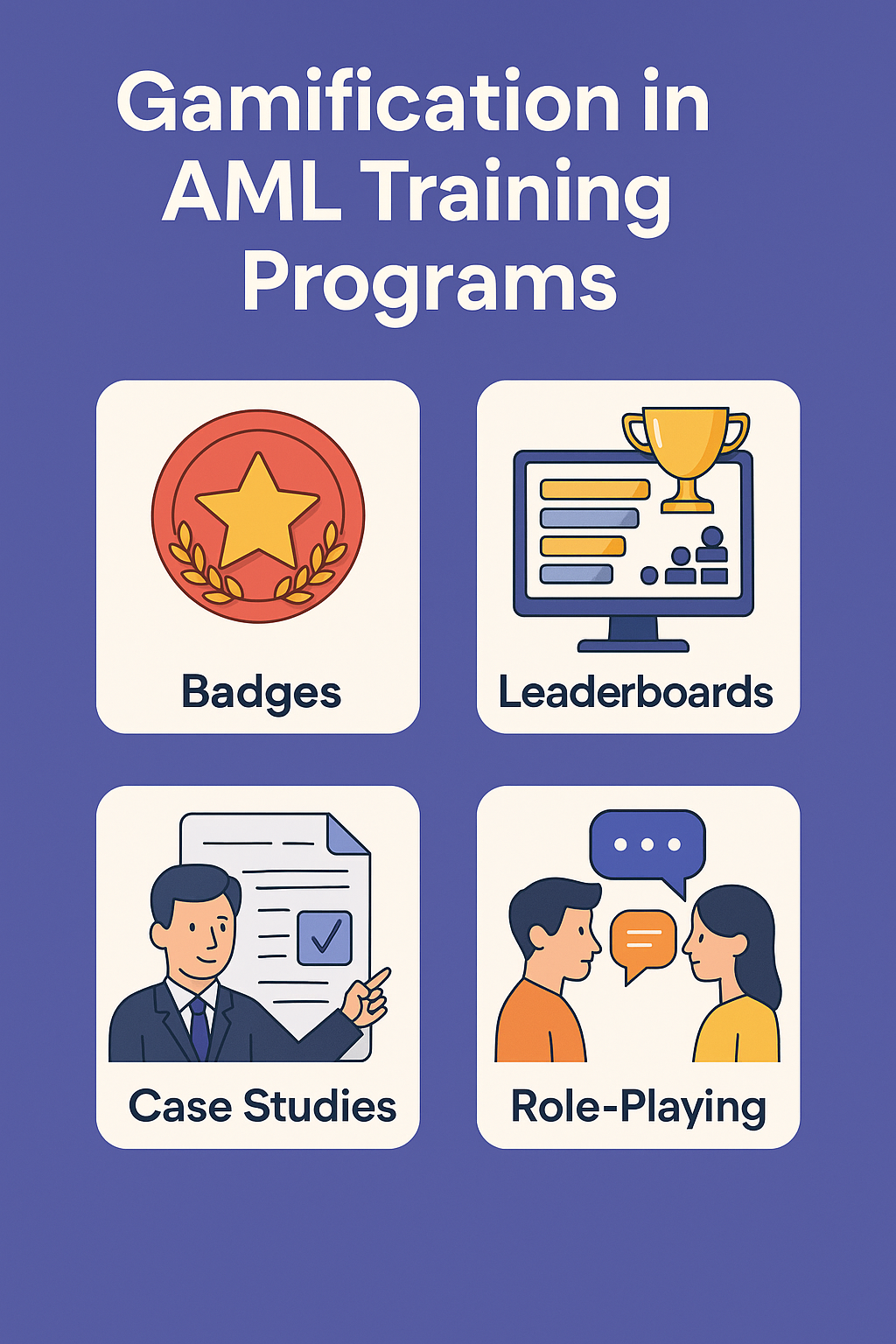
• Points, badges, and leaderboards to reward progress.
• Interactive scenarios and case studies that simulate real compliance challenges.
• Timed quizzes and challenges that test quick decision-making.
• Storytelling and role-play that immerse employees in realistic AML situations.
Instead of passively reading regulations, staff participate actively—making learning both enjoyable and effective.
________________________________________
Why Gamification Improves AML Training Outcomes
1. Increased Engagement
Employees are more likely to focus on training when it includes competitive or interactive elements. This reduces training fatigue and increases completion rates.
2. Better Knowledge Retention
Studies show that interactive, scenario-based learning improves long-term memory. By "playing through" AML situations, employees are more likely to recall rules and procedures.
3. Application of Real-World Skills
Gamified simulations allow staff to practice identifying red flags, conducting CDD, and filing STRs without the risk of real-world errors.
4. Encourages a Compliance Culture
Recognition systems (badges, points, certificates) motivate employees and encourage healthy competition, reinforcing a company-wide culture of compliance.
5. Measurable Results
Training managers can track scores, participation, and progress across teams—providing regulators with concrete evidence of training effectiveness.
________________________________________
Examples of Gamification in AML Training
• Case Study Simulation: Staff role-play as compliance officers and must decide whether to approve, reject, or escalate a customer transaction.
• Red Flag Challenge: A timed quiz where employees identify suspicious behaviors in customer profiles.
• Leaderboard Competitions: Departments compete in compliance knowledge tests, with top performers recognized.
• Interactive Storylines: Employees navigate a storyline (e.g., a jewellery transaction gone suspicious) and face choices with compliance consequences.
________________________________________
Benefits for UAE Businesses
• Regulatory Compliance – Meets the Ministry of Economy’s expectation for ongoing, practical AML training.
• Cost-Effective Learning – Reduces the need for repeated training sessions by improving first-time effectiveness.
• Employee Satisfaction – Makes training less of a burden and more of a rewarding activity.
• Demonstrable Impact – Provides audit-ready data on training participation and performance.
________________________________________
Conclusion
Gamification is transforming AML training from a checklist exercise into an interactive compliance culture tool. For UAE businesses, especially DNFBPs and financial institutions, adopting gamified training ensures employees are not only informed but also motivated, engaged, and ready to act when faced with suspicious activities.
________________________________________
📌 For customized AML training programs—including gamified e-learning solutions—contact:
• Email: info@sa-auditors.com
• Website: www.sa-auditors.com