FATF Sanctions and Their Impact on UAE Businesses
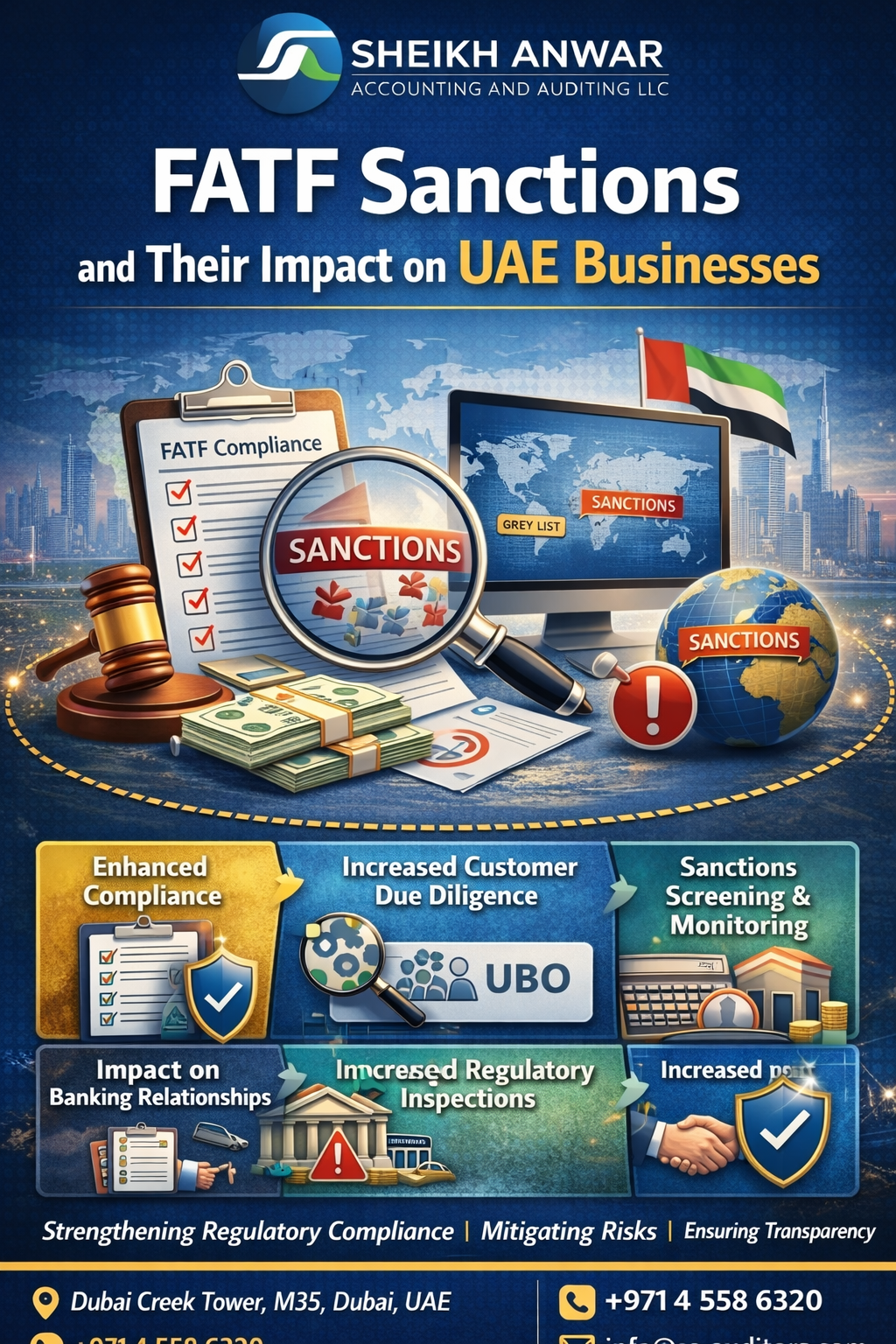
FATF Sanctions and Their Impact on UAE Businesses
The Financial Action Task Force (FATF) plays a critical role in safeguarding the global financial system from abuse related to money laundering, terrorism financing, and other financial crimes. One of the key mechanisms used by FATF to encourage global compliance is the implementation of sanctions and monitoring measures against jurisdictions that fail to meet international standards.
For businesses operating in the United Arab Emirates (UAE), FATF sanctions and compliance requirements have significant implications. These measures influence regulatory policies, financial transactions, and business relationships, particularly for companies engaged in international trade and financial services.
________________________________________
Understanding FATF Sanctions
FATF sanctions are not traditional economic sanctions like those imposed by governments or international bodies. Instead, FATF uses a monitoring and listing mechanism to identify jurisdictions with deficiencies in their Anti-Money Laundering (AML) and Counter-Terrorism Financing (CFT) frameworks.
These include:
• Grey List (Jurisdictions under Increased Monitoring)
• Black List (High-Risk Jurisdictions Subject to a Call for Action)
Countries placed on these lists face increased scrutiny from financial institutions and global regulators.
________________________________________
Why FATF Compliance Matters for UAE Businesses
The UAE has made substantial progress in strengthening its AML and CFT frameworks to align with FATF standards. These reforms directly affect businesses by increasing regulatory oversight and compliance requirements.
Businesses must now ensure that their operations meet international compliance standards to maintain credibility and avoid potential regulatory risks.
________________________________________
Key Impacts of FATF Sanctions on UAE Businesses
1. Enhanced Compliance Requirements
Companies operating in regulated sectors must implement strong AML and compliance programs. Businesses are expected to conduct proper due diligence on customers, verify identities, and maintain transaction records.
Industries such as gold and precious metals trading, real estate, accounting firms, and corporate service providers are particularly affected.
________________________________________
2. Increased Customer Due Diligence
UAE businesses must perform Customer Due Diligence (CDD) and Know Your Customer (KYC) procedures. This includes identifying the Ultimate Beneficial Owner (UBO) and assessing customer risk profiles.
Enhanced due diligence is especially required for clients from high-risk or sanctioned jurisdictions.
________________________________________
3. Sanctions Screening and Monitoring
Businesses must screen clients and transactions against international sanctions lists, including those issued by:
• United Nations Security Council (UNSC)
• UAE Local Terrorist List
• International regulatory bodies
Regular screening helps prevent transactions with sanctioned individuals or entities.
________________________________________
4. Impact on Banking Relationships
Banks in the UAE are required to apply strict compliance measures. As a result, businesses may face additional scrutiny when opening or maintaining bank accounts.
Financial institutions often require:
• Detailed documentation about business activities
• Source of funds verification
• Ownership and management details
• Transaction explanations
Companies that fail to meet compliance standards may face delays or restrictions in banking services.
________________________________________
5. Increased Regulatory Inspections
UAE authorities have increased inspections and enforcement actions to ensure businesses comply with AML and FATF standards. Businesses may be required to demonstrate:
• AML policies and procedures
• Risk assessment frameworks
• Compliance training programs
• Suspicious transaction reporting mechanisms
Failure to comply can result in significant fines, penalties, or operational restrictions.
________________________________________
Opportunities for Businesses
While FATF compliance introduces stricter regulations, it also strengthens the UAE’s position as a trusted global financial hub. Businesses that implement strong compliance frameworks benefit from:
• Improved credibility with international partners
• Stronger banking relationships
• Reduced regulatory risks
• Enhanced corporate governance
Transparent and compliant businesses are more likely to attract global investors and international clients.
________________________________________
Practical Compliance Measures for UAE Businesses
To align with FATF standards, businesses should consider implementing the following measures:
• Establish a documented AML/CFT policy
• Conduct risk-based customer due diligence
• Implement sanctions screening systems
• Maintain proper transaction records
• Train employees on AML and sanctions compliance
• Report suspicious transactions to the Financial Intelligence Unit (FIU)
These steps help protect businesses from financial crime risks while ensuring compliance with UAE regulatory requirements.
________________________________________
Conclusion
FATF sanctions and monitoring mechanisms play an essential role in maintaining transparency and integrity within the global financial system. For UAE businesses, compliance with FATF standards is critical to maintaining strong banking relationships, avoiding regulatory penalties, and sustaining international business operations.
By adopting robust AML and compliance frameworks, UAE businesses can strengthen their reputation and contribute to a secure and transparent financial environment.
________________________________________
About Our Company
Sheikh Anwar Accounting & Auditing LLC is a professional consulting and advisory firm based in Dubai, United Arab Emirates. The firm specializes in:
• AML/CFT Compliance Advisory
• FATF Compliance Implementation
• UAE Corporate Tax Consultancy
• VAT Advisory and Compliance
• External Audit and Risk Advisory
Our experts assist businesses in implementing effective compliance frameworks aligned with FATF standards and UAE regulatory requirements.
Company Details
Sheikh Anwar Accounting & Auditing LLC
📍 Dubai Creek Tower, M35, Dubai, UAE
📞 +971 4 558 6320
📧 info@sa-auditors.com
🌐 www.sa-auditors.com

