FATF’s Role in Trade-Based Money Laundering
Introduction
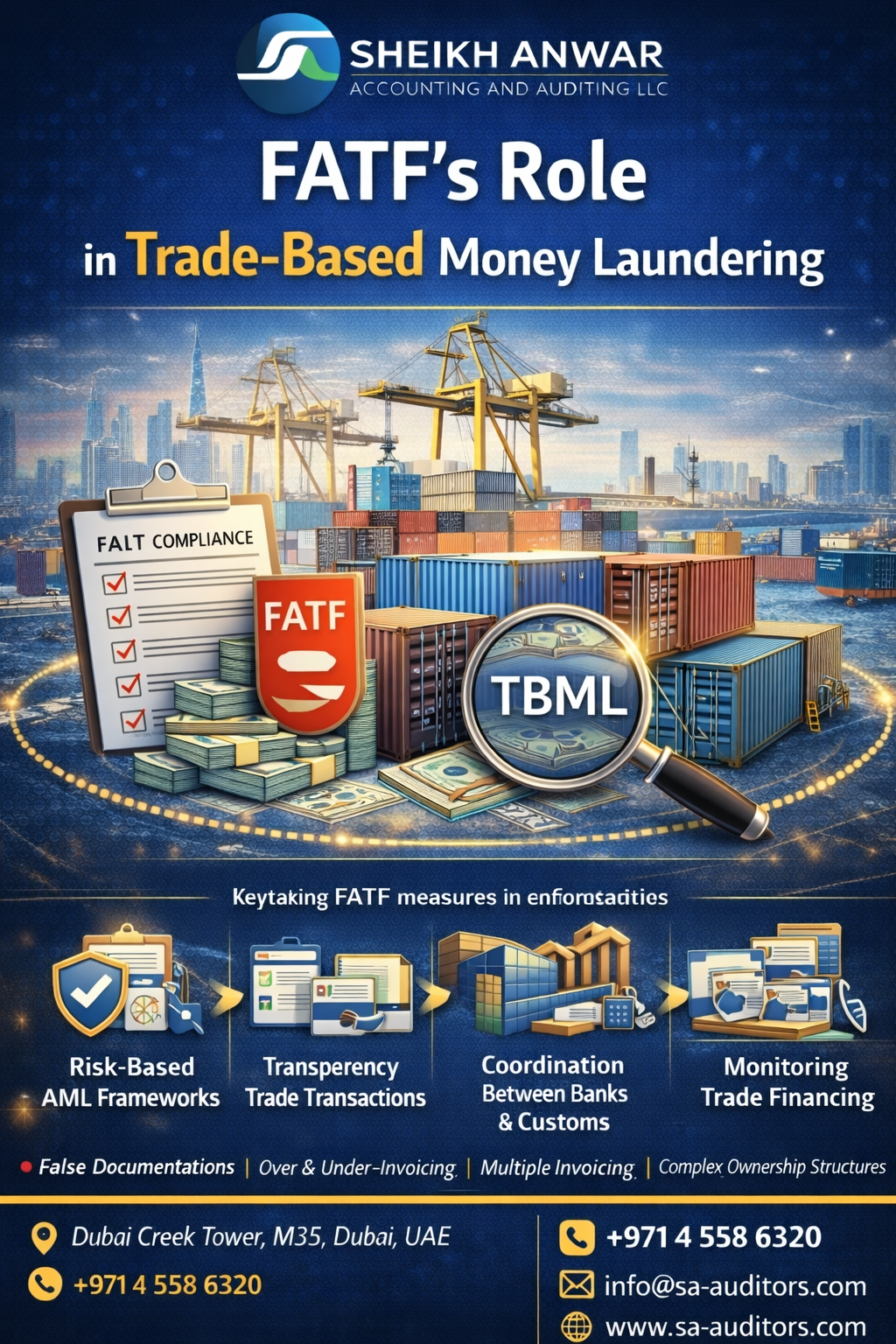
Trade-Based Money Laundering (TBML) is one of the most complex and challenging forms of financial crime. It involves disguising illicit funds through international trade transactions such as over-invoicing, under-invoicing, multiple invoicing, or misrepresentation of goods. Because global trade involves multiple jurisdictions, financial institutions, and intermediaries, detecting TBML can be extremely difficult.
The Financial Action Task Force (FATF) plays a critical role in combating trade-based money laundering by developing international standards, providing guidance to countries, and encouraging cooperation between regulators, customs authorities, and financial institutions.
________________________________________
Understanding Trade-Based Money Laundering
Trade-Based Money Laundering refers to the process of disguising illicit funds through the manipulation of international trade transactions. Criminal networks often use legitimate trade activities to move money across borders while hiding the illegal origin of funds.
Common TBML techniques include:
• Over-Invoicing of Goods: Inflating the value of goods to move excess funds abroad
• Under-Invoicing: Declaring lower values to hide profits or move funds illegally
• Multiple Invoicing: Using several invoices for the same shipment
• False Description of Goods: Misrepresenting the quality or quantity of goods
• Phantom Shipments: Creating fake shipments that never occur
These practices allow criminals to transfer value internationally without moving physical cash.
________________________________________
FATF Guidance on Trade-Based Money Laundering
Recognizing the risks associated with international trade, FATF has issued guidance to help governments and financial institutions identify and prevent TBML activities.
1. Strengthening Risk-Based AML Frameworks
FATF encourages countries to adopt a risk-based approach to identify sectors and industries that are particularly vulnerable to trade-based money laundering.
Industries such as:
• Precious metals and stones
• Electronics trading
• Textile imports and exports
• High-value commodities
are often considered higher risk due to the volume and complexity of trade transactions.
________________________________________
2. Improving Transparency in Trade Transactions
FATF recommends greater transparency in trade documentation, including:
• Accurate invoices
• Bills of lading
• Customs declarations
• Shipping documentation
Financial institutions and regulators must ensure that trade documentation reflects the true nature and value of transactions.
________________________________________
3. Cooperation Between Financial Institutions and Customs Authorities
One of the most effective ways to combat TBML is through cooperation between banks, customs authorities, and law enforcement agencies.
Financial institutions may detect suspicious payment patterns, while customs authorities may identify discrepancies in trade documentation. Sharing this information helps authorities detect potential money laundering schemes.
________________________________________
4. Monitoring Trade Financing Activities
Trade financing instruments such as letters of credit, trade loans, and export financing can sometimes be used to facilitate TBML activities.
FATF recommends that banks implement strong monitoring systems to detect unusual patterns in trade financing transactions.
________________________________________
5. International Cooperation
Since trade-based money laundering often involves multiple countries, FATF emphasizes the importance of cross-border cooperation between regulators and financial intelligence units.
International information sharing allows authorities to identify suspicious trade flows and investigate complex financial crime networks.
________________________________________
UAE’s Role in Combating Trade-Based Money Laundering
The United Arab Emirates is a major global trade hub, with significant import and export activity across various industries. As a result, the UAE has strengthened its AML framework to address TBML risks.
Authorities such as the UAE Financial Intelligence Unit (FIU), Ministry of Economy, and Customs authorities work together to monitor trade transactions and identify suspicious activities.
Businesses operating in trading sectors are required to implement strong compliance measures including:
• Customer Due Diligence (CDD)
• Beneficial ownership verification
• Transaction monitoring
• Suspicious transaction reporting
These measures help protect the UAE’s trade system from misuse.
________________________________________
Red Flags of Trade-Based Money Laundering
FATF guidance highlights several warning signs that businesses and financial institutions should monitor:
• Significant discrepancies between invoice values and market prices
• Unusual routing of goods through multiple countries
• Repeated transactions involving the same goods
• Complex ownership structures for trading companies
• Payments involving high-risk jurisdictions
Recognizing these red flags is essential for preventing financial crime.
________________________________________
Importance for Businesses
Companies involved in international trade, particularly trading companies, logistics providers, and precious metals dealers, must remain vigilant against TBML risks.
Implementing strong AML compliance frameworks helps businesses:
• Reduce financial crime exposure
• Maintain banking relationships
• Avoid regulatory penalties
• Protect their reputation in international markets
Businesses that demonstrate strong compliance also contribute to maintaining transparency in the global trading system.
________________________________________
Conclusion
Trade-Based Money Laundering remains one of the most sophisticated financial crimes affecting global trade. Through its international standards and guidance, FATF plays a vital role in helping countries and businesses detect and prevent TBML activities.
For global trade hubs like the UAE, strengthening AML frameworks and enhancing cooperation between regulators, financial institutions, and businesses is essential to maintaining the integrity of the financial system.
By implementing robust compliance measures, businesses can play a critical role in protecting the global economy from illicit financial flows.
________________________________________
About Our Company
Sheikh Anwar Accounting & Auditing LLC is a professional consulting and advisory firm based in Dubai, United Arab Emirates. The firm specializes in:
• AML/CFT Compliance Advisory
• FATF Compliance Implementation
• UAE Corporate Tax Consultancy
• VAT Advisory and Compliance
• External Audit and Risk Advisory
Our experts assist businesses in implementing effective compliance frameworks aligned with FATF standards and UAE regulatory requirements.
Company Details
Sheikh Anwar Accounting & Auditing LLC
📍 Dubai Creek Tower, M35, Dubai, UAE
📞 +971 4 558 6320
📧 info@sa-auditors.com
🌐 www.sa-auditors.com