FATF Mutual Evaluation of UAE – Key Findings
Introduction
The Financial Action Task Force (FATF) conducts Mutual Evaluations to assess how effectively countries implement measures to combat money laundering (AML), terrorist financing (CFT), and proliferation financing. These evaluations are essential to ensure that jurisdictions maintain strong financial integrity and comply with global standards.
The United Arab Emirates (UAE) has undergone extensive evaluation by FATF to assess its regulatory framework, institutional effectiveness, and international cooperation mechanisms in tackling financial crimes. The evaluation highlighted both strengths and areas requiring improvement, prompting significant reforms within the UAE’s financial regulatory system.
________________________________________
Understanding FATF Mutual Evaluations
A Mutual Evaluation is a comprehensive assessment conducted by FATF to measure how effectively a country implements the 40 FATF Recommendations.
The evaluation focuses on two key aspects:
Technical Compliance
This assesses whether a country’s laws and regulations align with FATF standards.
Effectiveness
This measures how well authorities implement those laws in practice, including:
• Risk assessment
• Financial intelligence gathering
• AML supervision
• Criminal investigations
• International cooperation
The goal is to ensure that countries not only establish strong legal frameworks but also enforce them effectively.
________________________________________
UAE’s Commitment to AML and CFT
Over the past decade, the UAE has made substantial efforts to strengthen its AML framework.
The core legislation supporting AML compliance in the UAE includes:
• Federal Decree-Law No. 20 of 2018 on Anti-Money Laundering and Combating the Financing of Terrorism and Illegal Organizations
• Cabinet Decision No. 10 of 2019 implementing AML regulations
These laws establish strict obligations for financial institutions and designated non-financial businesses and professions (DNFBPs).
________________________________________
Key Findings of the FATF Mutual Evaluation of the UAE
The FATF evaluation highlighted several important findings regarding the UAE’s AML system.
________________________________________
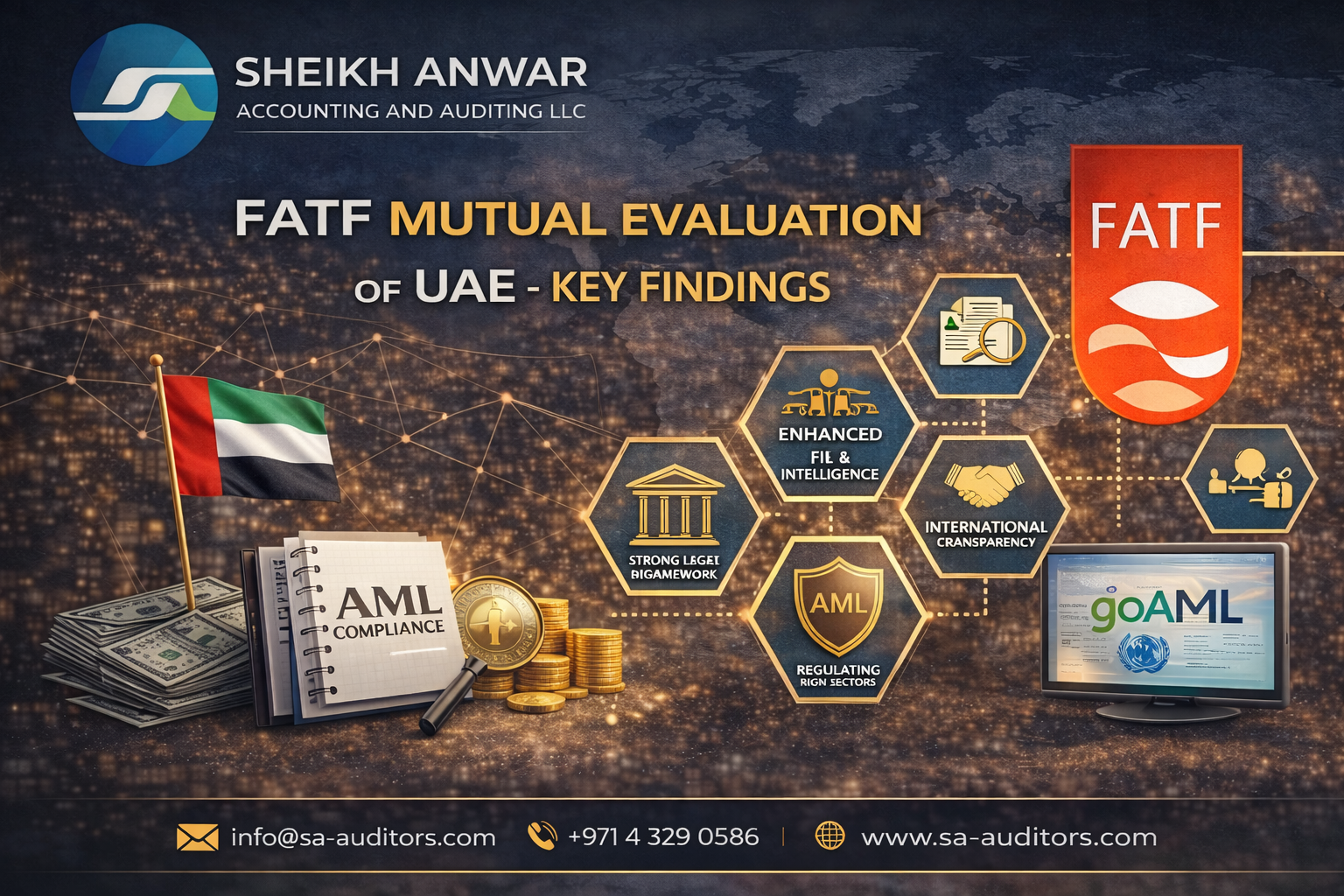
1. Strong Legislative Framework
The evaluation recognized that the UAE has developed a comprehensive legal framework aligned with FATF standards.
Key elements include:
• Criminalization of money laundering and terrorist financing
• Strong AML supervisory authorities
• Regulations for financial institutions and DNFBPs
• Mechanisms for international cooperation
This framework provides the legal foundation for combating financial crimes.
________________________________________
2. Financial Intelligence Unit (FIU) Strengthening
The FATF evaluation noted improvements in the UAE Financial Intelligence Unit (FIU).
The FIU plays a critical role in:
• Receiving Suspicious Transaction Reports (STRs)
• Analyzing financial intelligence
• Sharing information with law enforcement agencies
The UAE FIU also operates the goAML platform, which enables regulated entities to report suspicious financial activities efficiently.
________________________________________
3. Improved International Cooperation
The UAE has strengthened its cooperation with international partners.
Authorities actively collaborate with:
• FATF
• Egmont Group of Financial Intelligence Units
• INTERPOL
• Foreign regulatory authorities
This cooperation enables the UAE to trace cross-border financial crimes and recover illicit assets.
________________________________________
4. Regulation of High-Risk Sectors
The evaluation emphasized the importance of regulating sectors that may be vulnerable to money laundering.
These sectors include:
• Real estate
• Precious metals and stones trading
• Company formation services
• Financial institutions
• Virtual asset service providers
The UAE has introduced stricter regulatory requirements to enhance supervision in these industries.
________________________________________
5. Beneficial Ownership Transparency
FATF highlighted the need to strengthen transparency regarding Ultimate Beneficial Owners (UBOs).
To address this, the UAE introduced regulations requiring companies to maintain registers of beneficial owners and disclose ownership information to authorities.
This measure helps prevent the misuse of corporate structures for illicit financial activities.
________________________________________
6. Increased AML Supervision and Enforcement
Regulators in the UAE have increased their focus on AML supervision and enforcement actions.
Authorities now conduct:
• Regular compliance inspections
• Financial penalties for AML violations
• Enhanced monitoring of regulated entities
These efforts aim to ensure stronger compliance across the financial sector.
________________________________________
Reforms Implemented by the UAE After FATF Evaluation
Following FATF recommendations, the UAE implemented several reforms to strengthen its AML framework.
Key initiatives include:
• Establishment of the Executive Office for AML/CFT
• Strengthening of financial intelligence capabilities
• Increased international cooperation
• Enhanced supervision of DNFBPs
• Greater transparency in company ownership structures
These reforms demonstrate the UAE’s commitment to improving its AML system.
________________________________________
Implications for Businesses Operating in the UAE
Businesses operating in the UAE must now ensure stronger AML compliance.
Companies should implement:
• Robust Know Your Customer (KYC) procedures
• Customer Due Diligence (CDD) frameworks
• Transaction monitoring systems
• Internal AML compliance policies
• Suspicious transaction reporting
Failure to comply with AML regulations may result in significant financial penalties and reputational damage.
Professional advisory firms can help businesses develop effective compliance frameworks aligned with UAE regulations and FATF standards.
________________________________________
UAE’s Progress and Future Outlook
Since the FATF evaluation, the UAE has made significant progress in strengthening its AML system.
Authorities continue to focus on:
• Improving financial intelligence sharing
• Strengthening regulatory supervision
• Enhancing beneficial ownership transparency
• Combating emerging financial crime risks
These efforts support the UAE’s goal of maintaining its position as a secure and transparent global financial center.
________________________________________
About Sheikh Anwar Accounting & Auditing LLC
Sheikh Anwar Accounting & Auditing LLC is a professional advisory firm based in the United Arab Emirates, providing expert services in taxation, accounting, auditing, and regulatory compliance.
The firm offers a wide range of services including:
• VAT advisory and compliance
• Corporate tax advisory
• Accounting and bookkeeping
• External audit and assurance
• AML compliance advisory
• Business setup and corporate structuring
Our experienced team helps businesses understand regulatory obligations and implement compliance frameworks aligned with UAE laws and international standards.
For professional advisory and compliance support, contact:
Sheikh Anwar Accounting & Auditing LLC
📧 info@sa-auditors.com
📞 +97143290586
🌐 www.sa-auditors.com

