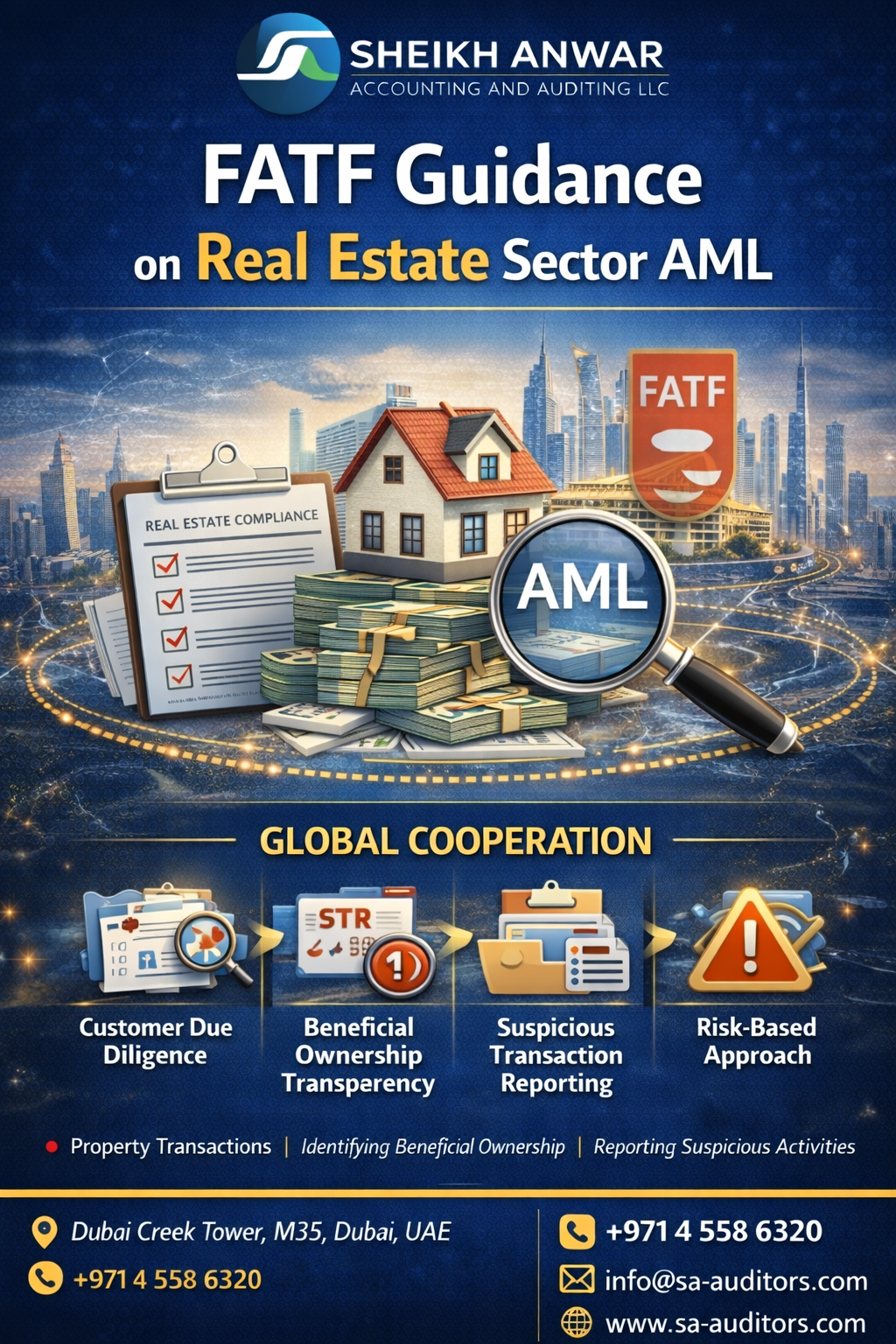
FATF Guidance on Real Estate Sector AML
Introduction
The real estate sector has long been identified as one of the industries vulnerable to money laundering and illicit financial activities. Due to the high value of transactions and the potential use of complex ownership structures, criminals often attempt to use property investments to disguise illegal funds. Recognizing these risks, the Financial Action Task Force (FATF) has issued guidance aimed at strengthening Anti-Money Laundering (AML) measures within the real estate sector.
For countries like the United Arab Emirates, which has a thriving real estate market and attracts international investors, implementing FATF guidance is essential to ensure transparency and maintain the integrity of the financial system.
________________________________________
Why the Real Estate Sector is Vulnerable to Money Laundering
Real estate transactions provide opportunities for criminals to convert illicit funds into seemingly legitimate assets. Some of the common methods used include:
• Purchasing property using illicit funds
• Using shell companies to hide ownership
• Conducting transactions through intermediaries
• Manipulating property values
• Using complex international ownership structures
Because of these risks, FATF recommends stronger oversight and compliance mechanisms within the property sector.
________________________________________
FATF Guidance for Real Estate AML Compliance
FATF provides specific recommendations to help governments and businesses mitigate risks associated with real estate transactions.
1. Customer Due Diligence (CDD)
Real estate professionals must verify the identity of buyers, sellers, and other parties involved in property transactions. This includes collecting identification documents and verifying the legitimacy of the transaction.
CDD helps ensure that real estate agents and professionals understand who they are dealing with and the purpose of the transaction.
________________________________________
2. Beneficial Ownership Transparency
One of the most significant AML risks in the real estate sector involves hidden ownership structures. FATF recommends identifying the Ultimate Beneficial Owner (UBO) behind companies purchasing property.
This helps prevent criminals from hiding their identity behind shell companies or nominee arrangements.
________________________________________
3. Suspicious Transaction Reporting
Real estate professionals should report suspicious activities to the relevant authorities through Suspicious Transaction Reports (STRs).
Examples of suspicious indicators include:
• Unusual payment methods or large cash payments
• Buyers unwilling to provide ownership details
• Complex corporate structures with unclear business purposes
• Rapid property resales without clear economic reasons
Reporting suspicious transactions allows authorities to investigate potential financial crimes.
________________________________________
4. Record Keeping Requirements
FATF recommends maintaining proper documentation related to property transactions, including:
• Customer identification records
• Transaction agreements
• Ownership documentation
• Payment records
These records help regulators track financial activities and investigate suspicious transactions when necessary.
________________________________________
5. Risk-Based Approach
FATF encourages real estate businesses to apply a risk-based approach when conducting transactions. This means businesses should assess the level of risk associated with clients, property types, and geographic locations.
High-risk transactions should be subject to enhanced due diligence and closer monitoring.
________________________________________
UAE Real Estate AML Regulations
The UAE has strengthened its AML framework in line with FATF recommendations. Real estate brokers and developers are classified as Designated Non-Financial Businesses and Professions (DNFBPs) and must comply with AML regulations.
Key requirements include:
• Conducting customer due diligence
• Verifying beneficial ownership
• Monitoring transactions
• Reporting suspicious activities to the Financial Intelligence Unit (FIU)
• Maintaining proper compliance documentation
Authorities such as the Ministry of Economy and other regulators actively supervise compliance within the real estate sector.
________________________________________
Red Flags in Real Estate Transactions
FATF guidance highlights several warning signs that real estate professionals should monitor:
• Property purchases significantly above or below market value
• Transactions involving high-risk jurisdictions
• Frequent property transfers within short periods
• Buyers using multiple intermediaries
• Lack of transparency regarding source of funds
Identifying these red flags can help prevent the misuse of the real estate sector for illegal activities.
________________________________________
Importance for Real Estate Professionals
Compliance with FATF guidance is essential for:
• Real estate brokers
• Property developers
• Legal advisors involved in property transactions
• Accountants and auditors supporting property deals
Strong compliance frameworks help businesses reduce regulatory risks and maintain trust with regulators and financial institutions.
________________________________________
Conclusion
The real estate sector plays a vital role in the global economy but also presents potential risks for money laundering. FATF guidance provides a comprehensive framework to help governments and real estate professionals strengthen AML controls and ensure transparency in property transactions.
For countries like the UAE, which continues to attract international property investments, implementing robust AML measures is essential to maintain market integrity and protect the financial system.
Real estate professionals who adopt strong compliance practices not only reduce regulatory risks but also contribute to building a secure and transparent property market.
________________________________________
About Our Company
Sheikh Anwar Accounting & Auditing LLC is a professional consulting and advisory firm based in Dubai, United Arab Emirates. The firm specializes in:
• AML/CFT Compliance Advisory
• FATF Compliance Implementation
• UAE Corporate Tax Consultancy
• VAT Advisory and Compliance
• External Audit and Risk Advisory
Our experts assist businesses in implementing effective compliance frameworks aligned with FATF standards and UAE regulatory requirements.
Company Details
Sheikh Anwar Accounting & Auditing LLC
📍 Dubai Creek Tower, M35, Dubai, UAE
📞 +971 4 558 6320
📧 info@sa-auditors.com
🌐 www.sa-auditors.com