FATF Evaluations – Lessons for UAE Businesses
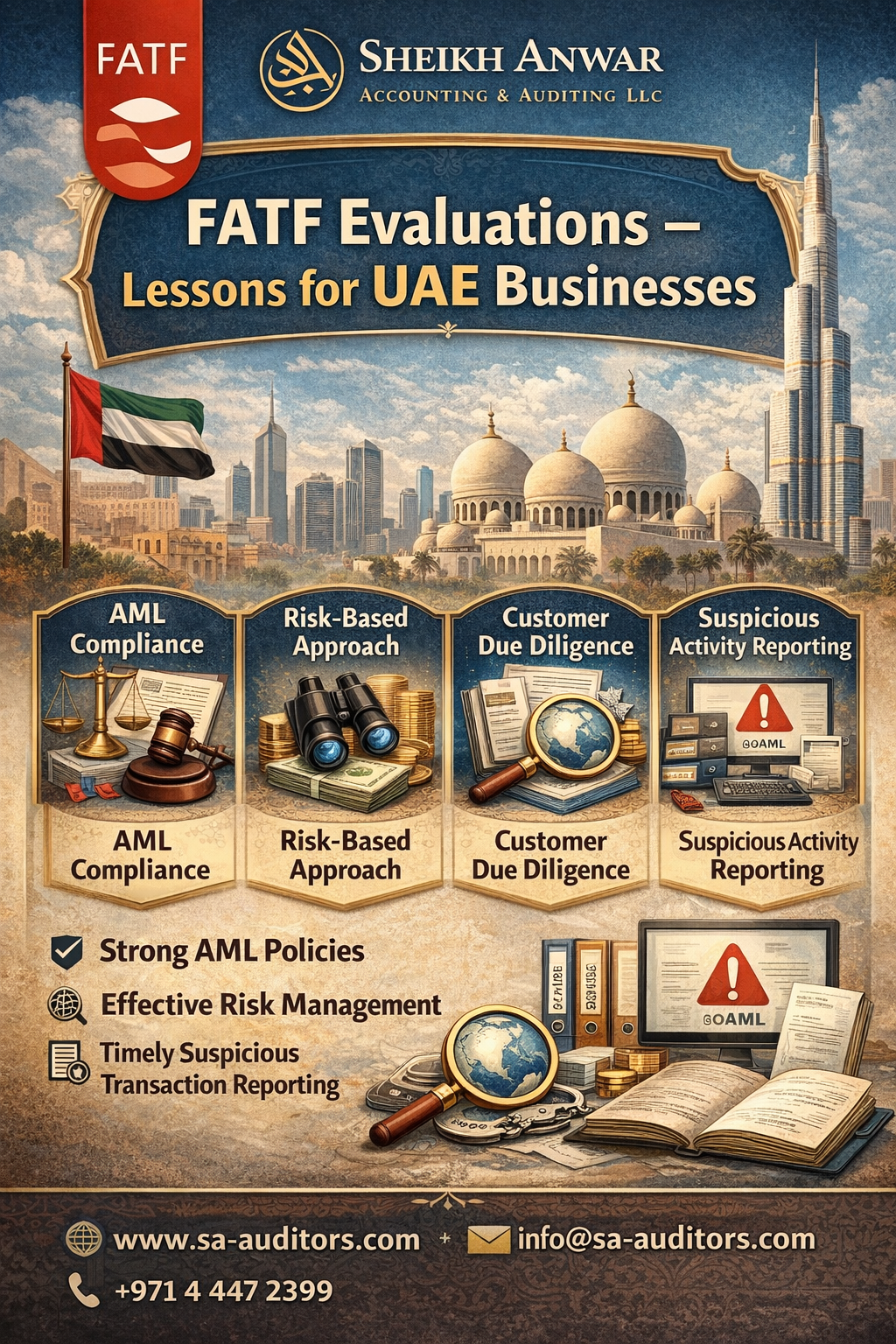
FATF Evaluations – Lessons for UAE Businesses
In today’s global financial landscape, combating money laundering and terrorist financing has become a top priority for governments and financial institutions worldwide. The Financial Action Task Force (FATF) plays a central role in setting international standards to ensure financial transparency and prevent illicit financial activities.
The United Arab Emirates, as a major global business and financial hub, has taken significant steps to strengthen its regulatory framework and align with FATF standards. FATF evaluations provide valuable insights and lessons for businesses operating in the UAE, especially those in regulated sectors such as financial institutions and Designated Non-Financial Businesses and Professions (DNFBPs).
________________________________________
Understanding FATF Evaluations
FATF evaluations, commonly known as Mutual Evaluations, assess how effectively a country implements international standards for Anti-Money Laundering (AML) and Counter-Terrorist Financing (CFT).
These evaluations review two key aspects:
1. Technical Compliance – Whether the country’s laws and regulations align with FATF recommendations.
2. Effectiveness – How effectively those laws are implemented in practice.
For the UAE, these evaluations have been instrumental in strengthening its compliance ecosystem, leading to reforms in AML regulations, enforcement mechanisms, and supervisory frameworks.
________________________________________
Key Lessons for UAE Businesses
1. Strong AML Compliance Is No Longer Optional
Businesses operating in the UAE must recognize that AML compliance is a regulatory requirement and a fundamental part of corporate governance. Companies are expected to implement comprehensive AML policies, maintain proper documentation, and conduct regular risk assessments.
Failure to comply with AML obligations may result in regulatory penalties, reputational damage, and operational restrictions.
________________________________________
2. Implement a Risk-Based Approach
FATF promotes a risk-based approach, which requires businesses to identify and assess risks related to money laundering and terrorist financing.
UAE companies should:
• Conduct Enterprise-Wide Risk Assessments (EWRA)
• Classify customers into low, medium, and high-risk categories
• Apply Enhanced Due Diligence (EDD) for high-risk clients
• Regularly review and update risk profiles
This approach ensures that resources are allocated efficiently to manage higher-risk activities.
________________________________________
3. Strengthen Customer Due Diligence (CDD)
Customer Due Diligence remains a critical component of FATF recommendations. Businesses must verify the identity of customers, understand the nature of their business activities, and determine the Ultimate Beneficial Owner (UBO).
In the UAE context, this includes verifying:
• Passport and identification details
• Source of funds and source of wealth
• Ownership structures of companies
• Politically Exposed Persons (PEP) status
Proper documentation and record-keeping are essential to demonstrate compliance during inspections.
________________________________________
4. Ongoing Monitoring Is Essential
Compliance does not end with onboarding a client. FATF evaluations emphasize continuous monitoring of business relationships and transactions.
Businesses must implement systems to:
• Detect unusual or suspicious transactions
• Monitor high-risk clients more closely
• Update client information periodically
• Maintain transaction records
This proactive approach helps prevent misuse of the financial system.
________________________________________
5. Timely Reporting of Suspicious Activities
Another major lesson from FATF evaluations is the importance of reporting suspicious activities. In the UAE, companies must report suspicious transactions through the **UAE Financial Intelligence Unit via the **goAML platform.
Reports may include:
• Suspicious Transaction Reports (STR)
• Suspicious Activity Reports (SAR)
• High-risk or unusual financial activities
Prompt reporting demonstrates a company’s commitment to transparency and regulatory compliance.
________________________________________
The Role of DNFBPs in Strengthening Compliance
FATF places particular emphasis on DNFBPs, which include:
• Lawyers and legal consultants
• Accountants and auditors
• Real estate agents
• Dealers in precious metals and stones
• Trust and company service providers
These sectors are considered vulnerable to money laundering risks. Therefore, businesses operating in these industries must adopt strict compliance measures, maintain proper AML policies, and ensure staff are adequately trained.
________________________________________
UAE’s Continuous Progress in AML Compliance
The UAE government has implemented several reforms to strengthen its AML framework, including enhanced regulatory supervision, stricter reporting obligations, and improved cooperation between authorities.
These efforts demonstrate the UAE’s commitment to maintaining a transparent and secure financial environment that aligns with international standards set by FATF.
________________________________________
Conclusion
FATF evaluations provide valuable guidance for businesses operating in the UAE. They highlight the importance of robust AML frameworks, effective risk management, and strong compliance cultures within organizations.
For UAE businesses, the key takeaway is clear: AML compliance is not merely a regulatory requirement but a strategic necessity for sustainable growth and global credibility.
Organizations that proactively adopt FATF standards will not only remain compliant but also build trust with regulators, financial institutions, and international partners.
________________________________________
Sheikh Anwar Accounting & Auditing LLC
Approved Auditor – MOE, DMCC, SAIF Zone, RAK ICC, Hamriyah Free Zone & DAFZA
🌐 Website: www.sa-auditors.com
📧 Email: info@sa-auditors.com
📞 Phone: +971 4 447 2399