DNFBPs: Common Pitfalls in AML Compliance
Introduction
In the fight against money laundering and terrorist financing, Designated Non-Financial Businesses and Professions (DNFBPs) play a crucial role. In the UAE, DNFBPs include dealers in precious metals and stones, real estate brokers, lawyers, accountants, auditors, corporate service providers, and other high-value traders. Despite clear regulatory frameworks, many DNFBPs still fall short of full compliance with Anti-Money Laundering (AML) requirements, exposing themselves to legal, financial, and reputational risks.
It highlights the most common pitfalls DNFBPs face in AML compliance and provides practical insights for businesses to strengthen their frameworks.
________________________________________
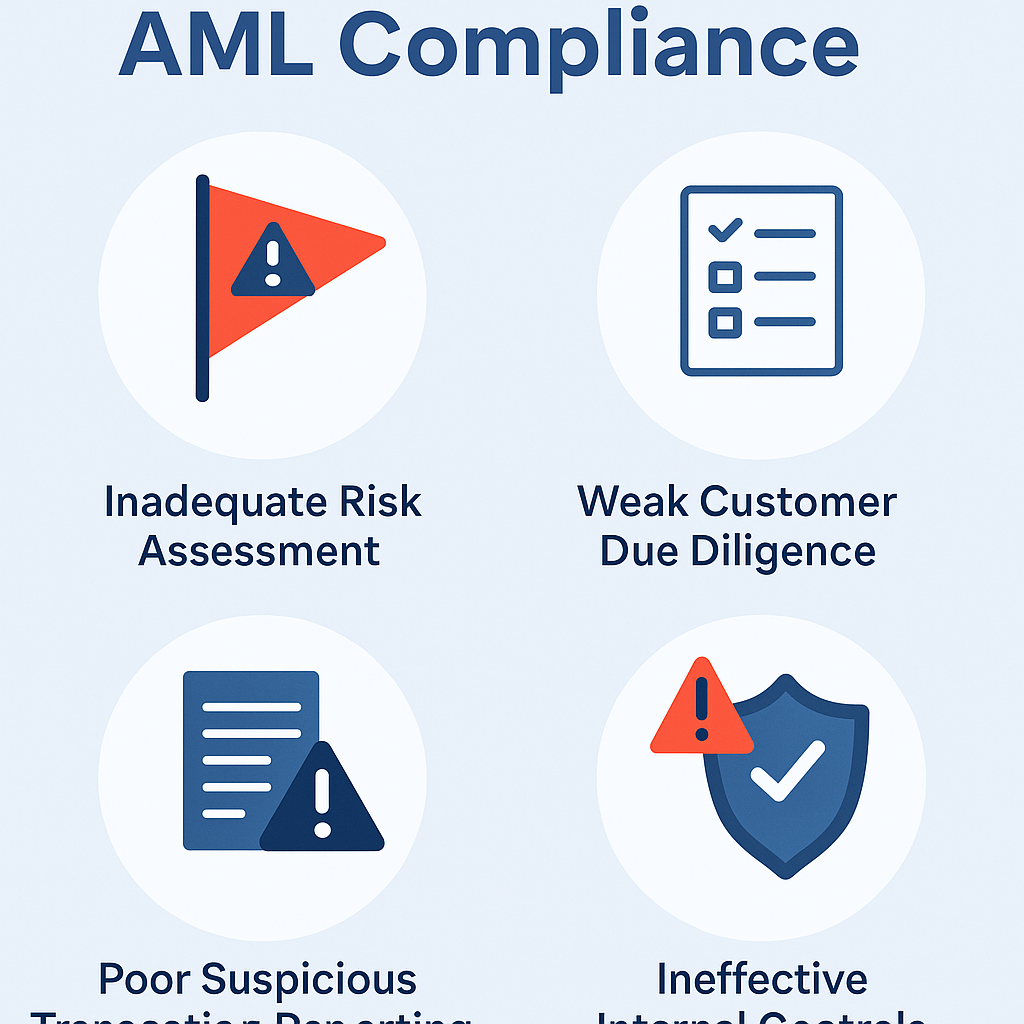
1. Inadequate Risk Assessment
Many DNFBPs fail to adopt a risk-based approach to AML compliance. Risk assessments are often generic, outdated, or not aligned with the business model. This results in ineffective controls.
Best Practice:
• Conduct entity-wide and customer-level risk assessments.
• Update them regularly to reflect new regulations, business changes, and emerging risks.
________________________________________
2. Weak Customer Due Diligence (CDD)
A frequent shortcoming is incomplete or inconsistent collection of customer information. DNFBPs may fail to:
• Verify the Ultimate Beneficial Owner (UBO).
• Identify Politically Exposed Persons (PEPs).
• Apply Enhanced Due Diligence (EDD) for high-risk clients.
Best Practice:
• Use robust onboarding checklists.
• Verify customer identity with reliable documentation.
• Conduct ongoing monitoring to ensure customer information remains up to date.
________________________________________
3. Poor Suspicious Transaction Reporting (STR)
DNFBPs often overlook or delay reporting suspicious activities. In some cases, staff may not even be aware of what constitutes suspicious behavior.
Best Practice:
• Train employees to identify red flags such as unusual cash transactions, complex ownership structures, or transactions inconsistent with customer profiles.
• File STRs promptly through the UAE’s goAML platform.
________________________________________
4. Insufficient Record-Keeping
Many businesses fail to maintain proper transaction and identification records for the required minimum five years. This becomes a major weakness during inspections.
Best Practice:
• Maintain well-organized records of CDD documents, invoices, contracts, and STR filings.
• Implement digital solutions for secure storage and easy retrieval.
________________________________________
5. Lack of Staff Training
Frontline employees often lack the necessary knowledge to detect suspicious activities or apply AML measures. Training is either irregular or generic.
Best Practice:
• Conduct regular, role-specific training for staff and management.
• Document all training sessions as part of compliance evidence.
________________________________________
6. Ineffective Internal Controls
Some DNFBPs appoint a Money Laundering Reporting Officer (MLRO) only on paper, without ensuring the role has the independence, authority, and resources to function effectively.
Best Practice:
• Appoint a qualified MLRO.
• Establish clear AML policies and procedures, reviewed at least annually.
• Perform internal audits to evaluate AML compliance.
________________________________________
7. Over-Reliance on Manual Processes
Relying solely on manual checks increases the risk of errors and oversight.
Best Practice:
• Integrate AML software solutions for CDD, risk assessment, and ongoing monitoring.
• Automate reporting and record-keeping where possible.
________________________________________
Conclusion
For DNFBPs in the UAE, compliance with AML obligations is not optional—it is a regulatory requirement enforced through inspections, fines, and potential license suspensions. The most common pitfalls arise from inadequate risk assessments, poor CDD, weak STR processes, lack of training, and ineffective internal controls. By addressing these gaps proactively, DNFBPs can protect their businesses, enhance credibility, and contribute to the UAE’s fight against financial crime.
________________________________________
📌 About Us
Sheikh Anwar Accounting and Auditing LLC specializes in AML compliance, auditing, and corporate tax advisory services in the UAE. We support DNFBPs—including jewelers, real estate firms, law practices, and accountants—by building strong AML frameworks, providing staff training, and ensuring regulatory compliance.
🌐 Website: www.sa-auditors.com
📧 Email: info@sa-auditors.com