Developing a Risk-Based AML Program
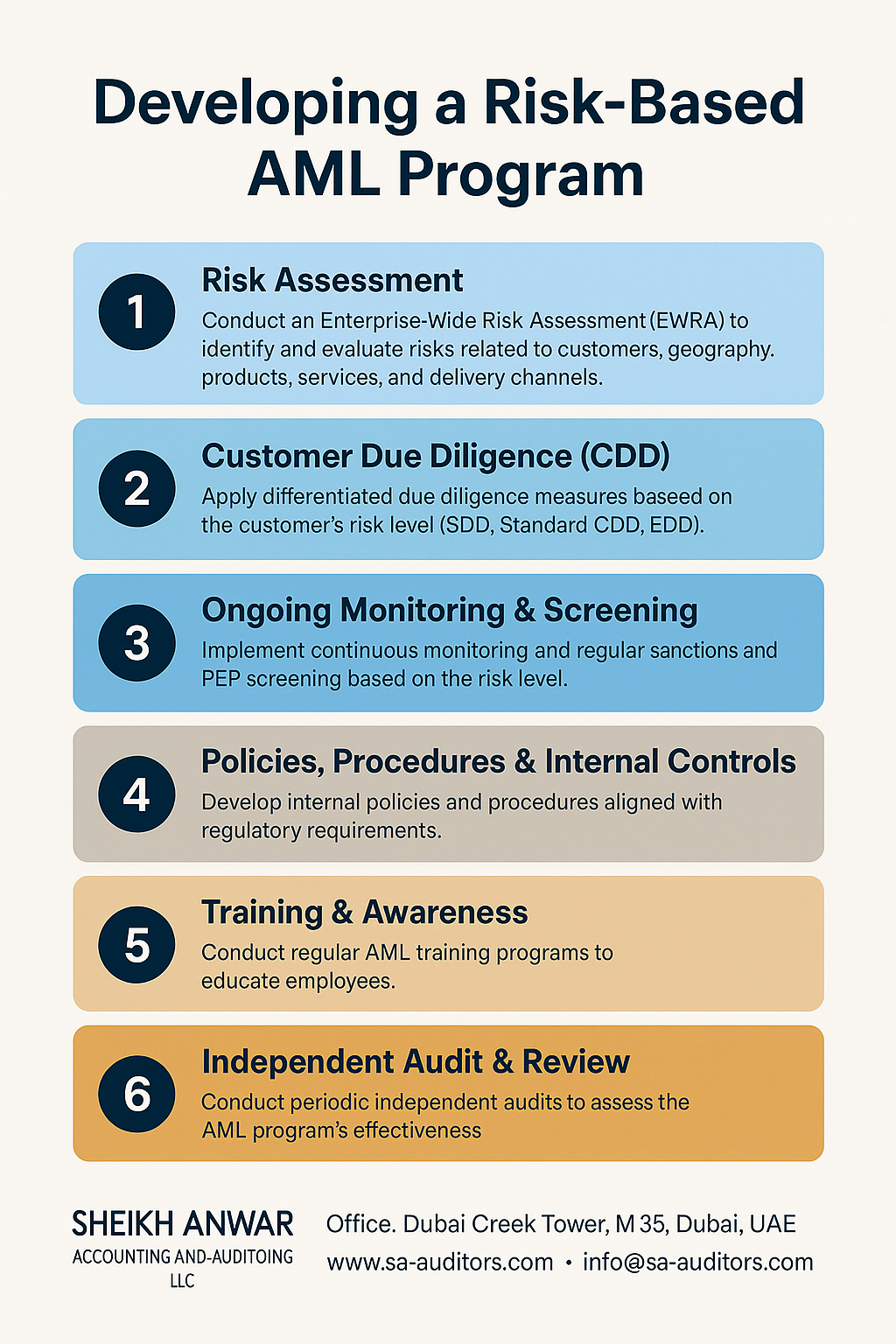
Introduction
In today’s global financial landscape, money laundering and terrorist financing remain critical threats to businesses, regulators, and economies at large. To effectively combat these risks, organizations must adopt a Risk-Based Approach (RBA) when designing and implementing their Anti-Money Laundering (AML) compliance programs. A well-structured risk-based AML program ensures that resources are allocated efficiently and that higher-risk areas receive greater scrutiny.
________________________________________
Understanding the Risk-Based Approach
The Risk-Based Approach is the cornerstone of modern AML compliance frameworks. Instead of applying the same level of monitoring and control across all clients and transactions, the RBA requires firms to assess, identify, and prioritize risks. This ensures that the most vulnerable areas to money laundering or terrorist financing are given heightened attention.
International standards, including those set by the Financial Action Task Force (FATF), emphasize the RBA as the most effective means to prevent financial crime. UAE regulations, such as Federal Decree-Law No. 20 of 2018 and Cabinet Decision No. 10 of 2019, also mandate entities—particularly DNFBPs (Designated Non-Financial Businesses and Professions)—to adopt a risk-based AML framework.
________________________________________
Key Steps in Developing a Risk-Based AML Program
1. Risk Assessment
Conducting an Enterprise-Wide Risk Assessment (EWRA) is the foundation. This identifies and evaluates risks linked to:
• Customers – e.g., high-net-worth individuals, PEPs, or non-resident clients
• Geography – countries with high corruption, weak AML laws, or on sanctions lists
• Products & Services – high-value goods such as gold, diamonds, or real estate
• Delivery Channels – intermediaries, online platforms, or face-to-face dealings
Each factor should be risk-rated (low, medium, high) with clear justifications.
________________________________________
2. Customer Due Diligence (CDD)
Different clients require different levels of due diligence:
• Simplified Due Diligence (SDD): For low-risk clients
• Standard Due Diligence: For normal-risk clients
• Enhanced Due Diligence (EDD): For high-risk clients such as PEPs or cross-border clients, requiring source of funds/wealth verification and closer monitoring
________________________________________
3. Ongoing Monitoring & Screening
Monitoring must be continuous and tailored to risk levels:
• Transaction monitoring systems to flag unusual patterns
• Regular sanctions and PEP screening
• Periodic reviews of client risk profiles
________________________________________
4. Policies, Procedures & Internal Controls
Documented internal policies should:
• Define responsibilities (MLRO, compliance officers, staff)
• Outline suspicious activity reporting and escalation procedures
• Align with UAE Central Bank, Ministry of Economy, FSRA, and DFSA regulations
________________________________________
5. Training & Awareness
Employees are the frontline of AML defense. Regular AML training programs should ensure staff can:
• Recognize red flags
• Understand reporting obligations under UAE law
• Stay informed of FATF updates and emerging risks
________________________________________
6. Independent Audit & Review
Periodic AML audits help:
• Test the effectiveness of controls
• Identify compliance gaps
• Provide assurance to regulators and stakeholders
________________________________________
Benefits of a Risk-Based AML Program
✔️ Efficient allocation of compliance resources
✔️ Stronger alignment with UAE AML/CFT regulations
✔️ Enhanced trust and reputation with regulators and stakeholders
✔️ Reduced exposure to fines, penalties, and reputational damage
________________________________________
Conclusion
A Risk-Based AML Program is essential for businesses operating in high-risk industries such as gold, diamond, real estate, and legal/accounting services. By applying a structured approach—starting from risk assessments to continuous monitoring—companies can safeguard their operations while demonstrating strong compliance with UAE’s regulatory requirements.
________________________________________
About Us
Sheikh Anwar Accounting and Auditing LLC is a UAE Ministry of Economy–approved audit and compliance firm based in Dubai. We specialize in:
• AML compliance advisory and policies
• AML risk assessments and independent audits
• Outsourced MLRO and Deputy MLRO services
• Corporate Tax and VAT advisory
• Transfer Pricing compliance and reporting
📍 Office: Dubai Creek Tower, M 35, Dubai, UAE
🌐 Website: www.sa-auditors.com
📧 Email: info@sa-auditors.com
Popular Blogs