Common Red Flags That Lead to VAT Inspections
Introduction
The Federal Tax Authority (FTA) conducts VAT inspections and audits to ensure businesses are complying with UAE VAT laws. But what exactly triggers these inspections? While some audits are routine, others are prompted by specific red flags in VAT filings or business behaviour.
Here, we outline the most common red flags that can trigger VAT audits or field inspections — and how to avoid them.
________________________________________
🔍 What is a VAT Inspection?
A VAT inspection is an official review by the FTA of a business’s tax records, transactions, systems, and physical premises to verify the accuracy of:
• VAT filings
• Tax payments
• Compliance with invoicing and documentation standards
FTA may notify businesses in advance or conduct surprise visits, especially if red flags are identified.
________________________________________
🚨 Top Red Flags That Attract VAT Inspections
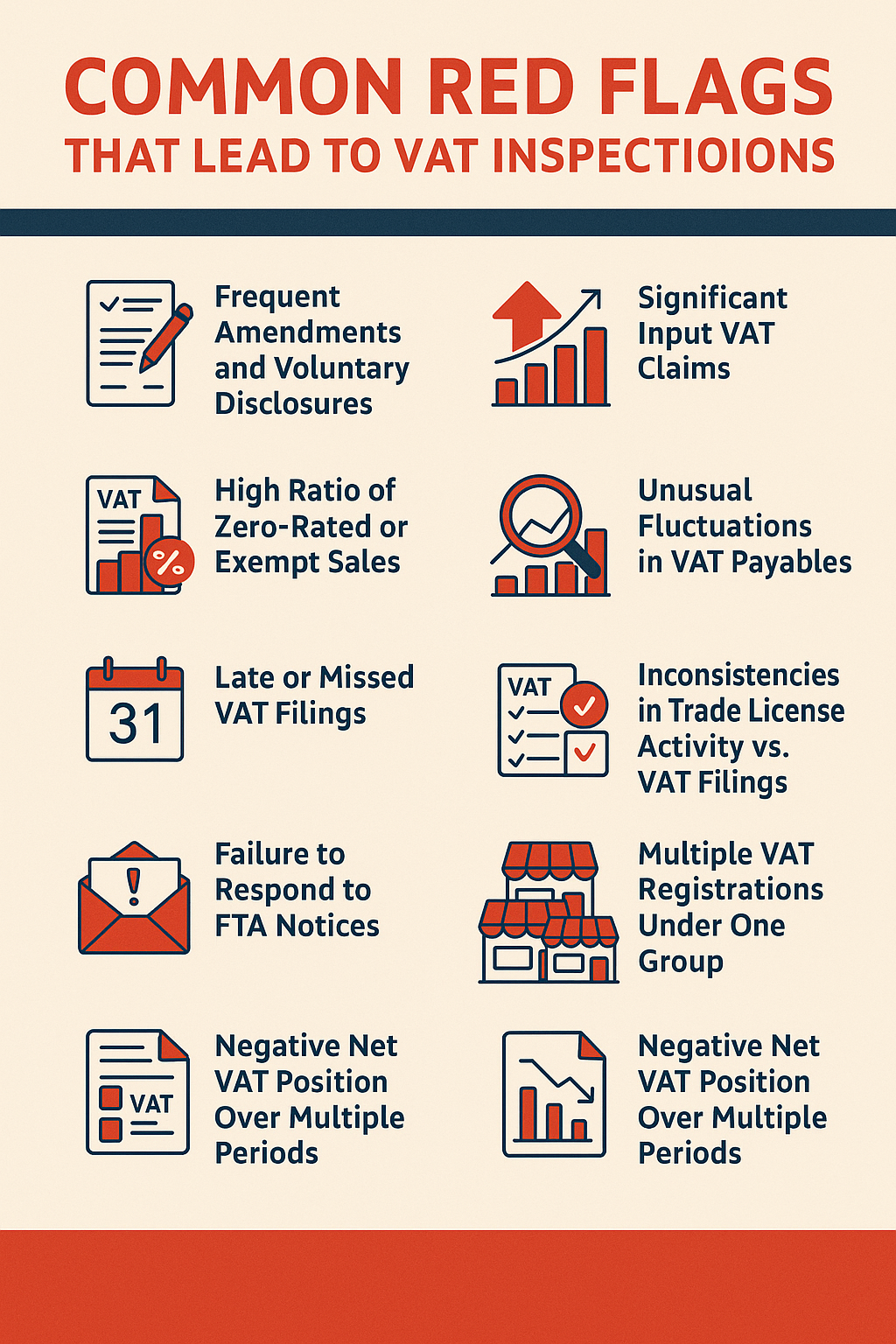
1. Frequent Amendments and Voluntary Disclosures
• Constant corrections to VAT returns or excessive use of Form 211 (Voluntary Disclosure) may signal poor internal controls or tax evasion attempts.
• ✅ Tip: Ensure VAT returns are carefully reviewed before filing and limit errors that require frequent correction.
________________________________________
2. Mismatch Between VAT Returns and Financial Statements
• If your VAT returns don’t match your accounting records, bank statements, or audited financials, FTA may flag inconsistencies.
• ✅ Tip: Reconcile VAT returns with books of accounts and trial balances regularly.
________________________________________
3. Significant Input VAT Claims
• Claiming large amounts of Input VAT, especially refunds, without strong documentation can draw attention.
• ✅ Tip: Maintain proper VAT-compliant tax invoices and avoid overclaiming on non-recoverable expenses.
________________________________________
4. High Ratio of Zero-Rated or Exempt Sales
• Reporting a large proportion of zero-rated (e.g., exports) or exempt sales reduces output VAT and may trigger scrutiny.
• ✅ Tip: Ensure proper export documentation and VAT treatment, especially for free zone and international transactions.
________________________________________
5. Unusual Fluctuations in VAT Payables
• Sudden increases or drops in VAT payable amounts may raise questions about revenue recognition or expense treatments.
• ✅ Tip: Ensure seasonal sales trends or accounting adjustments are well-supported with notes and records.
________________________________________
6. Late or Missed VAT Filings
• Late VAT return submissions or non-payment of VAT liabilities are common triggers for audits and penalties.
• ✅ Tip: Automate reminders and file VAT returns well before the deadline.
________________________________________
7. Inconsistencies in Trade License Activity vs. VAT Filings
• FTA may inspect businesses that are reporting low or no taxable activity, despite being licensed in high-revenue sectors (e.g., gold, electronics, consultancy).
• ✅ Tip: Ensure VAT filings reflect actual business activity and update trade license descriptions if needed.
________________________________________
8. Failure to Respond to FTA Notices
• Ignoring FTA notifications, emails, or clarification requests may lead to forced inspections or penalties.
• ✅ Tip: Always monitor your EmaraTax portal and respond to FTA communication promptly.
________________________________________
9. Multiple VAT Registrations Under One Group
• Having separate VAT TRNs for different branches or entities under the same group may raise concerns about artificial tax planning.
• ✅ Tip: Consider applying for Tax Group Registration if eligible and beneficial.
________________________________________
10. Negative Net VAT Position Over Multiple Periods
• If you’re consistently reporting more input VAT than output VAT, the FTA may question the legitimacy of your business model.
• ✅ Tip: Document reasons (e.g., capital investment phase) clearly and ensure supporting evidence is ready.
________________________________________
📂 Documentation That May Be Reviewed During Inspection
• VAT returns and payment receipts
• Sales and purchase invoices
• Bank statements
• Contracts and delivery notes
• POS system reports
• Customs documents (imports/exports)
• Financial statements and general ledger
________________________________________
🧠 How to Avoid VAT Inspection Triggers
• Conduct internal VAT health checks
• Appoint a registered Tax Agent for expert review
• Use FTA-compliant software to manage VAT data
• Ensure training for staff involved in VAT handling
• Stay updated with FTA clarifications and tax alerts
________________________________________
🤝 Need Help With VAT Audit Preparation?
Sheikh Anwar Accounting and Auditing LLC provides:
• VAT audit defense and inspection preparation
• Compliance reviews and red flag analysis
• Documentation support and reconciliation
• Filing of reconsideration requests and appeals
📧 Email: info@sa-auditors.com
🌐 Website: www.sa-auditors.com