Common Mistakes in AML Training Programs
Introduction
Anti-Money Laundering (AML) training is a cornerstone of compliance for financial institutions and Designated Non-Financial Businesses and Professions (DNFBPs) in the UAE. Regulators such as the Ministry of Economy, FIU, and free zone authorities (DMCC, DIFC, ADGM, RAKEZ, etc.) expect businesses to have well-structured training programs for employees at all levels.
However, many organizations treat AML training as a box-ticking exercise, which leads to serious gaps in awareness, monitoring, and compliance. Below are the most common mistakes in AML training programs and how to avoid them.
________________________________________
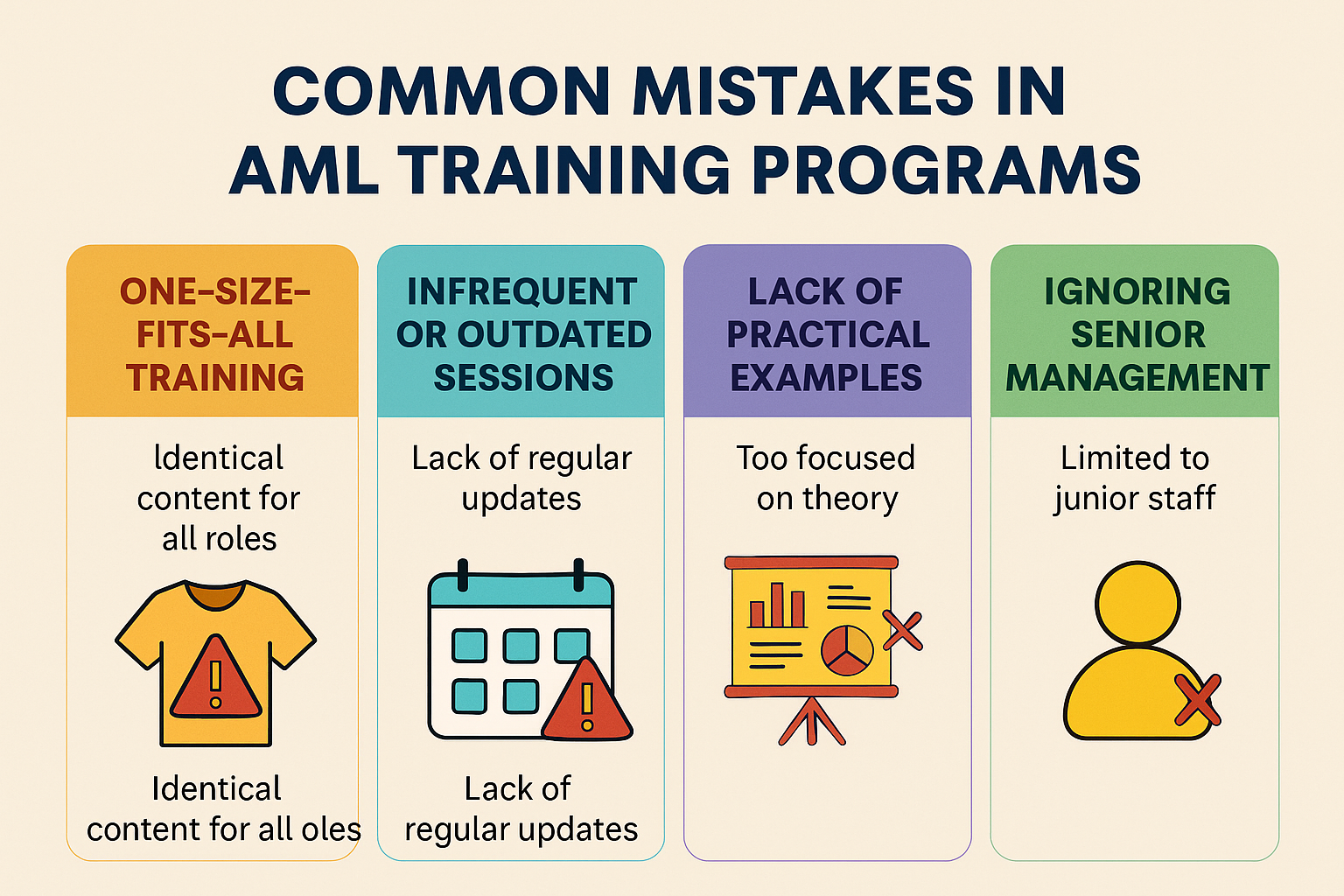
1. One-Size-Fits-All Training
• Mistake: Providing the same generic training to all employees.
• Why It’s a Problem: Different roles face different AML risks. For example, frontline staff need to recognize suspicious behavior, while compliance officers must understand STR filing and regulatory reporting.
• Solution: Use role-specific training modules tailored to the responsibilities of each department.
________________________________________
2. Infrequent or Outdated Sessions
• Mistake: Conducting training only once a year with no updates.
• Why It’s a Problem: AML risks and UAE regulations evolve rapidly, especially with FATF reviews and FIU circulars.
• Solution: Provide annual mandatory training, plus ad-hoc updates whenever new laws, risks, or regulatory expectations emerge.
________________________________________
3. Lack of Practical Examples
• Mistake: Training focuses only on laws and regulations without real-world cases.
• Why It’s a Problem: Employees may not connect legal concepts with day-to-day work.
• Solution: Use case studies, role-play scenarios, and UAE-specific red flag examples to make training engaging and practical.
________________________________________
4. Ignoring Senior Management
• Mistake: Training limited to compliance staff and junior employees.
• Why It’s a Problem: Regulators hold senior management accountable for AML failures. If leaders are not trained, oversight weakens.
• Solution: Include board members and executives in AML training, emphasizing governance and accountability.
________________________________________
5. No Measurement of Effectiveness
• Mistake: Assuming training works without testing knowledge.
• Why It’s a Problem: Employees may forget or fail to apply what they learned.
• Solution: Use quizzes, certifications, and feedback surveys to measure effectiveness and improve future sessions.
________________________________________
6. Overloading with Theory
• Mistake: Delivering long, technical sessions with excessive legal jargon.
• Why It’s a Problem: Employees lose focus and fail to retain key points.
• Solution: Keep content clear, concise, and interactive, focusing on practical application over theory.
________________________________________
7. Neglecting Record-Keeping
• Mistake: Failing to document who attended training, when, and on what topics.
• Why It’s a Problem: Regulators require proof of training during inspections.
• Solution: Maintain detailed training records including attendance logs, materials used, and assessment results.
________________________________________
8. No Continuous Reinforcement
• Mistake: Treating AML training as a one-time event.
• Why It’s a Problem: Knowledge fades if not refreshed regularly.
• Solution: Implement 6-month refreshers, e-learning modules, and periodic reminders to reinforce awareness.
________________________________________
Conclusion
An AML training program is only effective if it is role-specific, updated, practical, and measurable. By avoiding these common mistakes, companies in the UAE can build stronger compliance frameworks, reduce regulatory risk, and foster a genuine culture of AML awareness.
________________________________________
📩 For customized AML training solutions that meet UAE DNFBP and regulatory requirements, contact us:
Sheikh Anwar Accounting & Auditing LLC
🌐 www.sa-auditors.com
📧 info@sa-auditors.com