Challenges in Implementing AML Technology
Introductions
The global financial system is under increasing pressure to combat money laundering, terrorist financing, and other illicit activities. Regulators expect financial institutions and Designated Non-Financial Businesses and Professions (DNFBPs) to adopt advanced Anti-Money Laundering (AML) technology solutions for transaction monitoring, sanctions screening, and case management. While technology enhances compliance capabilities, its implementation is not without challenges. Organizations must overcome technical, operational, and regulatory barriers to ensure effectiveness.
________________________________________
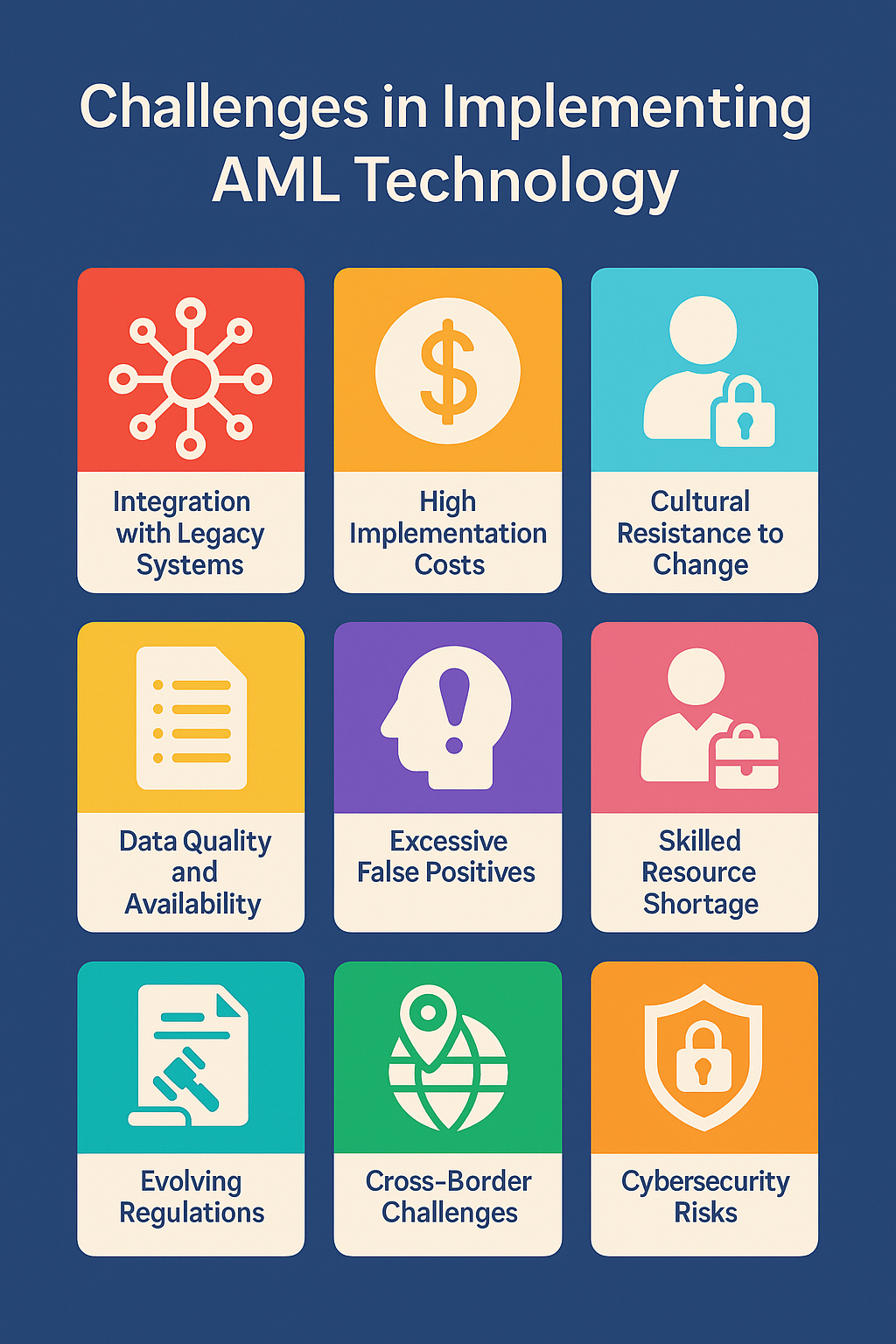
1. Integration with Legacy Systems
One of the biggest hurdles is connecting new AML solutions with existing core banking, ERP, or accounting systems. Many institutions rely on outdated infrastructure, making seamless integration complex, time-consuming, and costly. Poor integration can result in fragmented data, inconsistent alerts, and inefficiencies in compliance workflows.
________________________________________
2. High Implementation Costs
AML technology requires significant investment in:
• Licensing fees for advanced solutions.
• Customization and integration.
• Skilled compliance staff training.
• Ongoing maintenance and updates.
For SMEs and DNFBPs, the costs can feel overwhelming, especially when regulators require compliance at the same standard as larger institutions.
________________________________________
3. Data Quality and Availability
AML solutions depend on accurate and complete data. Common issues include:
• Inconsistent customer records across systems.
• Missing KYC documentation.
• Errors in transaction data feeds.
Without quality data, even the most advanced technology may produce false positives or miss suspicious activity altogether.
________________________________________
4. Excessive False Positives
Poorly calibrated rules and monitoring systems often generate large volumes of false alerts, overwhelming compliance teams. Investigators spend valuable time clearing low-risk cases instead of focusing on genuine threats. This reduces efficiency and increases operational costs.
________________________________________
5. Skilled Resource Shortage
Implementing AML technology is not just about installing software—it requires skilled compliance officers, data analysts, and IT specialists. Many organizations struggle to find professionals who understand both regulatory frameworks and advanced technologies such as AI, machine learning, and big data.
________________________________________
6. Keeping Up with Evolving Regulations
AML regulations are constantly changing in response to new risks, FATF recommendations, and national requirements. Systems must be continuously updated to reflect:
• Changes in sanction lists.
• New transaction monitoring scenarios.
• Enhanced reporting obligations.
Failure to adapt quickly exposes institutions to compliance gaps and regulatory penalties.
________________________________________
7. Cross-Border Challenges
For institutions operating internationally, AML technology must handle multiple regulatory regimes simultaneously. Differences in thresholds, reporting obligations, and data privacy laws create complexities in system design and configuration.
________________________________________
8. Cybersecurity Risks
AML technology requires access to sensitive customer and transaction data. Poorly protected systems may become targets for cyberattacks, resulting in data breaches and reputational damage. Balancing accessibility with security is a constant challenge.
________________________________________
9. Cultural Resistance to Change
Employees accustomed to manual processes may resist adopting automated AML solutions. Successful implementation requires change management, training, and a compliance-focused culture that embraces technology as a partner, not a burden.
________________________________________
Conclusion
Implementing AML technology is essential, but it comes with real challenges. Institutions must plan carefully, allocate sufficient resources, and invest in both technology and people to achieve compliance effectiveness. By addressing integration issues, improving data quality, reducing false positives, and fostering a culture of compliance, organizations can transform these challenges into opportunities for stronger AML frameworks.
________________________________________
About Us
At Sheikh Anwar Accounting and Auditing LLC, we specialize in AML compliance advisory, technology integration, and regulatory reporting support. Our expertise helps DNFBPs and financial institutions in the UAE adopt AML solutions effectively while meeting both local and international regulatory standards.
📩 Email: info@sa-auditors.com
🌐 Website: www.sa-auditors.com