Case Study: Impact of AML Training on Compliance Effectiveness
Introduction
Anti-Money Laundering (AML) training is more than a regulatory requirement in the UAE—it is a vital tool to protect businesses against financial crime. Many organizations implement AML training, but its true value lies in how it improves compliance effectiveness. This case study explores the impact of structured AML training on employees, processes, and regulatory outcomes.
________________________________________
Background
A medium-sized jewellery retailer in Dubai, classified as a DNFBP (Designated Non-Financial Business or Profession), was subject to increasing compliance obligations under Federal Decree-Law No. 20 of 2018 and Cabinet Decision No. 10 of 2019. Despite having internal AML policies, the company faced challenges:
• Employees lacked awareness of suspicious activity indicators.
• Customer Due Diligence (CDD) checks were inconsistent.
• STR (Suspicious Transaction Report) filings were either delayed or incomplete.
Recognizing these gaps, the company invested in a structured AML training program for all staff.
________________________________________
Implementation of AML Training
The AML training program was divided into three stages:
1. Foundational Induction Sessions
New joiners received mandatory training on AML laws, KYC procedures, and risk-based approaches.
2. Refresher Courses for Existing Staff
Annual refresher sessions reinforced red flags in jewellery transactions, record-keeping, and goAML reporting obligations.
3. Role-Specific Workshops
o Frontline staff learned how to handle high-risk customers.
o Compliance officers received training on monitoring tools and escalation procedures.
o Management was trained on accountability and regulatory expectations.
________________________________________
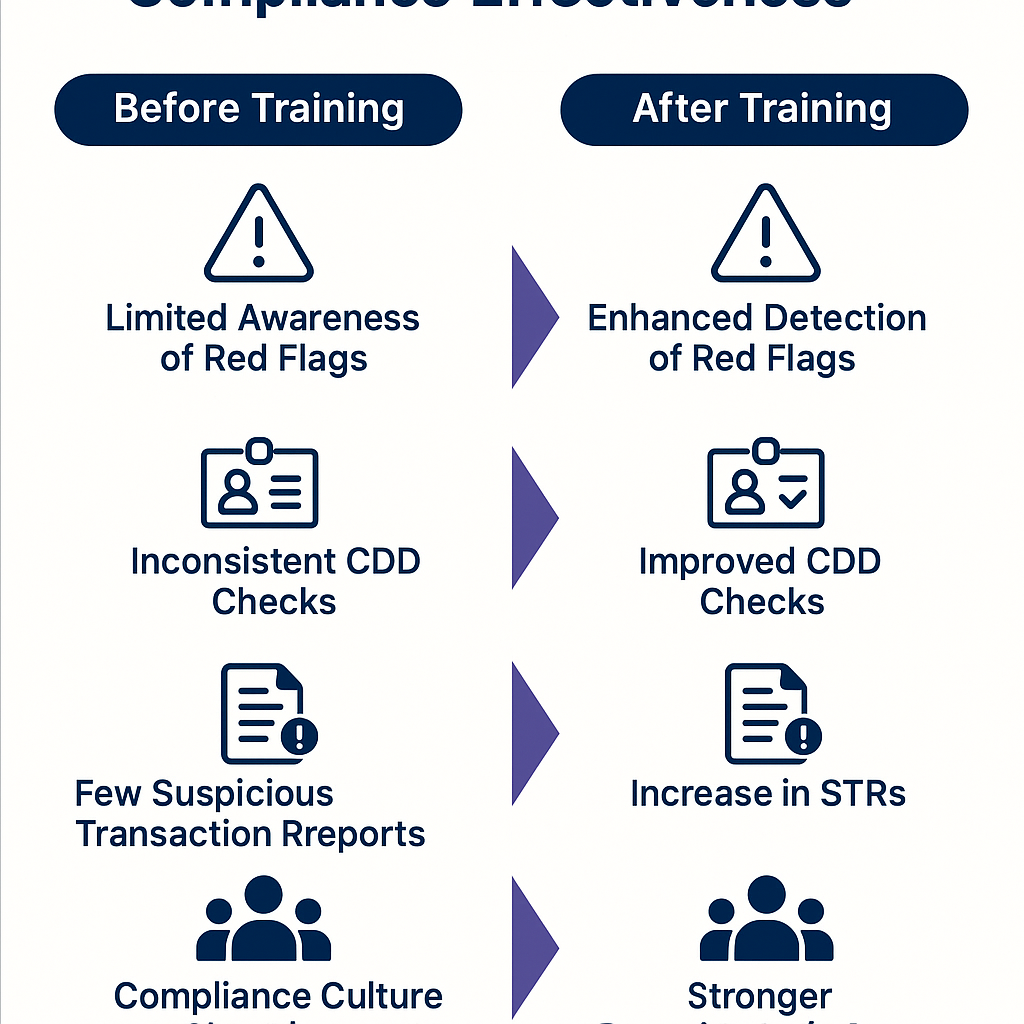
Outcomes After Training
Within one year of implementing the AML training program, the company recorded measurable improvements:
1. Enhanced Detection of Red Flags
Employees began identifying suspicious patterns such as structured cash purchases and reluctance to provide ID.
2. Improved STR Reporting
The number of accurate STRs submitted through the goAML system increased by 45%, with fewer errors flagged by regulators.
3. Audit Readiness
During a Ministry of Economy inspection, the company demonstrated strong record-keeping practices and passed with no penalties.
4. Cultural Shift
Staff reported greater confidence in handling AML compliance, creating a company-wide culture of vigilance.
________________________________________
Key Lessons from the Case Study
• Training Improves Compliance Efficiency: Employees who understand AML obligations reduce delays in reporting and improve regulatory confidence.
• Regular Refreshers Are Crucial: Knowledge retention fades; refresher courses maintain awareness of evolving risks.
• Role-Based Training is Effective: Tailoring content to responsibilities ensures staff apply AML principles effectively.
• Compliance Culture Strengthens Reputation: Demonstrated compliance boosted customer trust and regulatory credibility.
________________________________________
Conclusion
This case study highlights that AML training is not merely a checkbox exercise—it directly impacts compliance effectiveness, risk mitigation, and regulatory relationships. By investing in structured training, businesses in high-risk sectors like jewellery, real estate, and auditing can protect themselves from financial crime and regulatory penalties.
________________________________________
📌 For customized AML training and compliance advisory in the UAE, contact:
• Email: info@sa-auditors.com
• Website: www.sa-auditors.com