Building AML-Resilient Business Models
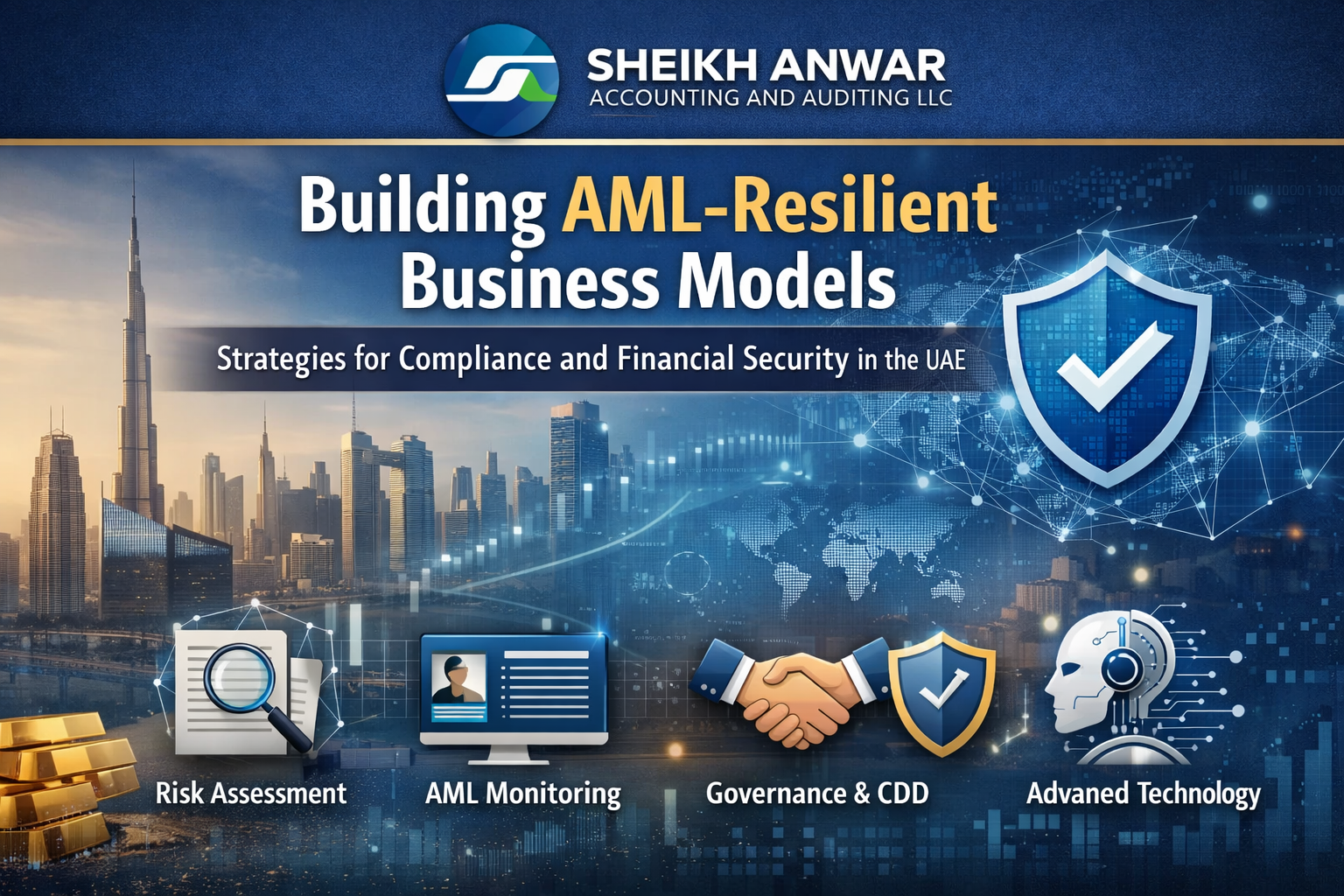
Introduction
In today’s global financial environment, Anti-Money Laundering (AML) compliance is no longer just a regulatory requirement—it has become a core pillar of sustainable business operations. With increasing scrutiny from international organizations such as FATF and strict enforcement by UAE regulators, businesses must build AML-resilient business models that integrate compliance into their operational DNA. Organizations that proactively strengthen AML frameworks not only avoid regulatory penalties but also build trust, transparency, and long-term credibility in the marketplace.
1. Understanding the Need for AML-Resilient Models
The UAE has significantly strengthened its AML/CFT framework in recent years. Businesses operating in sectors such as gold and jewellery trading, real estate, financial services, fintech, and corporate services face increased regulatory monitoring. Companies must therefore shift from a reactive compliance approach to a proactive risk-based model that anticipates potential financial crime risks.
An AML-resilient business model ensures that AML compliance is embedded in business strategy, governance, and operational processes, rather than treated as a separate compliance function.
2. Integrating Risk-Based Compliance into Business Strategy
A resilient AML model begins with the Risk-Based Approach (RBA) recommended by FATF and adopted by UAE regulators. Companies must identify, assess, and mitigate risks associated with customers, products, delivery channels, and geographic exposure.
Key steps include:
• Conducting Enterprise-Wide Risk Assessments (EWRA)
• Implementing customer risk profiling and segmentation
• Identifying high-risk jurisdictions and transaction patterns
• Regularly updating risk assessment frameworks based on emerging threats
This approach allows organizations to allocate resources efficiently and focus on higher-risk areas requiring enhanced monitoring.
3. Strengthening Governance and Leadership Oversight
Effective AML resilience requires strong governance structures. Senior management and boards of directors must play an active role in overseeing AML programs.
Best practices include:
• Appointing a qualified Money Laundering Reporting Officer (MLRO)
• Establishing clear AML policies and internal control frameworks
• Conducting regular AML training for employees
• Reviewing compliance reports and internal audit findings
Leadership involvement ensures AML compliance becomes a strategic priority rather than a regulatory burden.
4. Leveraging Technology for AML Resilience
Technology plays a critical role in strengthening AML frameworks. Modern businesses are increasingly adopting AI-driven compliance solutions to monitor transactions, detect suspicious activities, and automate reporting.
Technological tools include:
• Automated transaction monitoring systems
• Sanctions and PEP screening platforms
• AI-based risk scoring models
• Integrated compliance dashboards
• Digital identity verification systems
For industries such as gold and precious metals trading, technology helps track large transactions, identify unusual trading patterns, and maintain transparent audit trails.
5. Building a Culture of Compliance
An AML-resilient organization is built on a strong culture of integrity and compliance. Employees must understand their role in preventing financial crimes and reporting suspicious activities.
Organizations should implement:
• Regular AML awareness training
• Whistleblowing channels
• Clear internal reporting procedures
• Periodic compliance assessments
When employees actively participate in AML efforts, companies become significantly more resistant to financial crime risks.
6. Enhancing Customer Due Diligence (CDD)
Robust Customer Due Diligence (CDD) and Enhanced Due Diligence (EDD) processes are fundamental to AML resilience. Businesses must verify customer identities, understand beneficial ownership structures, and assess transaction patterns.
In sectors such as gold and diamond trading, verifying the legitimacy of suppliers, buyers, and intermediaries is essential to prevent trade-based money laundering.
7. Continuous Monitoring and Improvement
AML threats evolve rapidly, and compliance frameworks must continuously adapt. Businesses should conduct:
• Periodic AML audits
• Independent compliance reviews
• Continuous monitoring of transactions
• Regular updates to policies and procedures
This ensures the organization remains aligned with UAE regulatory requirements and international AML standards.
Conclusion
Building AML-resilient business models is essential for organizations operating in the UAE’s highly regulated financial environment. Companies that embed AML compliance into their governance, operations, and technology infrastructure can protect themselves from financial crime risks while strengthening their reputation and regulatory standing.
By adopting proactive compliance strategies, leveraging advanced technology, and fostering a strong compliance culture, businesses can transform AML from a regulatory obligation into a strategic advantage for long-term growth and sustainability.
________________________________________
About Sheikh Anwar Accounting & Auditing LLC
Sheikh Anwar Accounting & Auditing LLC is a professional advisory firm in Dubai providing specialized services in AML compliance, corporate tax advisory, VAT consultancy, audit services, and regulatory compliance solutions for businesses across the UAE.
Our team assists organizations in building robust AML frameworks, risk assessments, AML policies, and regulatory reporting systems to ensure full compliance with UAE laws and FATF standards.
Company Details
📍 Address: Dubai Creek Tower, M35, Dubai, UAE
🌐 Website: www.sa-auditors.com
📧 Email: info@sa-auditors.com
📞 Phone: +971 50 986 8462