Building a Culture of Compliance Through Training
Introduction
In the UAE, regulators expect businesses — especially financial institutions and DNFBPs (Designated Non-Financial Businesses and Professions) — to move beyond simple box-ticking exercises in AML/CFT compliance. A strong culture of compliance is essential to protect organizations from money laundering (ML) and terrorist financing (TF) risks, while also safeguarding the country’s reputation as a global financial hub.
Training is one of the most powerful tools for embedding this culture across all levels of the organization.
________________________________________
1. What is a Culture of Compliance?
A culture of compliance means that employees at every level — from frontline staff to senior executives — understand their role in preventing financial crime. It is about integrating compliance into daily business operations rather than treating it as a regulatory burden.
________________________________________
2. Role of Training in Building Compliance Culture
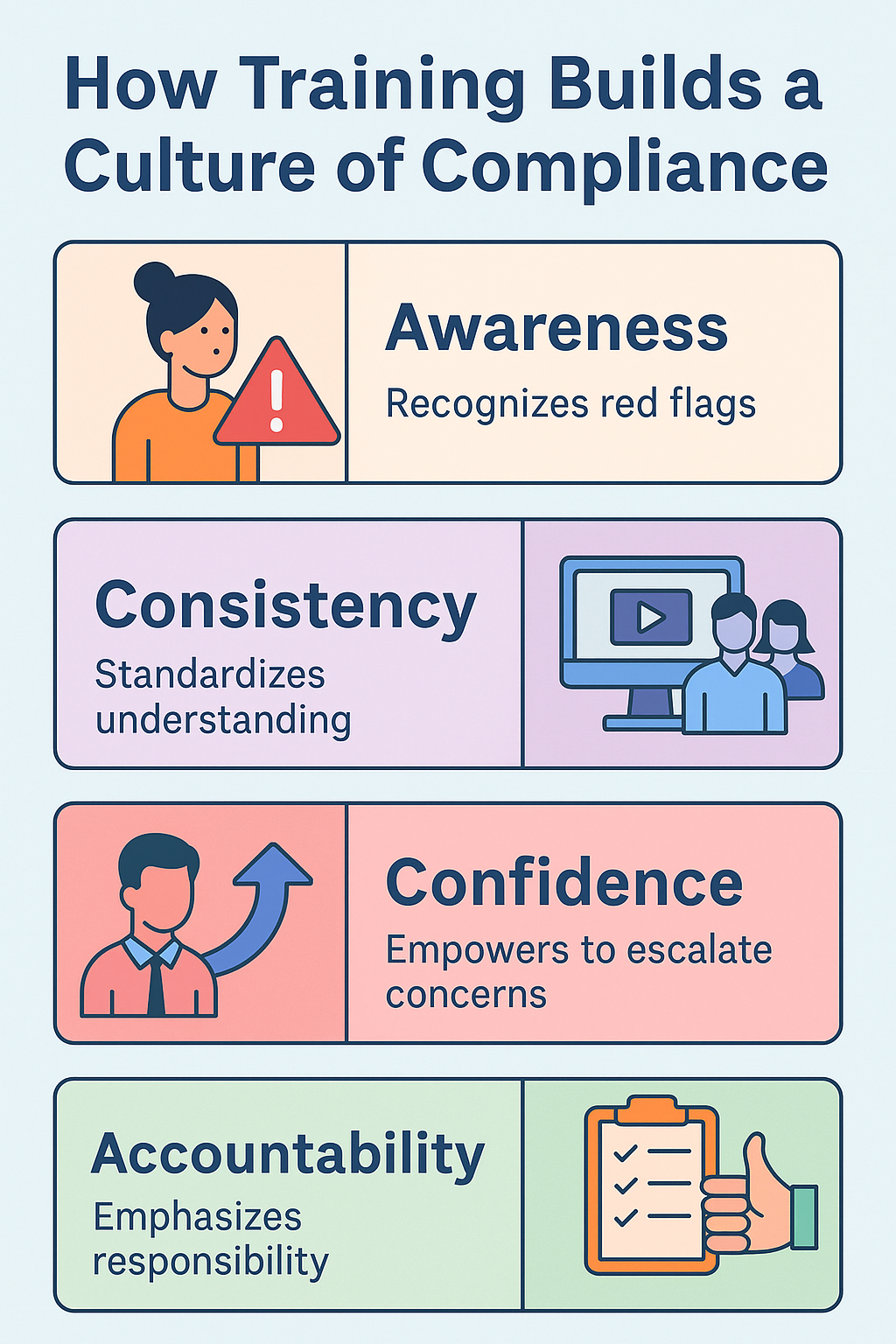
• Awareness: Training helps employees recognize red flags and suspicious patterns.
• Consistency: Standardized training ensures every staff member has the same understanding of AML obligations.
• Confidence: Employees feel empowered to escalate concerns without fear of retaliation.
• Accountability: Training emphasizes that compliance is everyone’s responsibility, not just the MLRO’s.
________________________________________
3. Elements of Effective Compliance Training
1. Role-Specific Modules
o Frontline staff: Customer interaction and onboarding risks.
o Operations staff: Monitoring transactions.
o Compliance officers: STR filing and regulatory reporting.
o Senior management: Oversight and governance.
2. Case Studies & Real-Life Scenarios
o Use UAE-specific examples in real estate, gold trading, and company formation services.
3. Regular Refreshers
o Annual mandatory training plus 6-month refreshers.
o Ad-hoc sessions when new AML laws or FATF findings are issued.
4. Interactive Learning
o Quizzes, workshops, and role-plays improve retention.
5. Clear Reporting Procedures
o Ensure staff know how to escalate suspicions and file STRs via goAML.
________________________________________
4. Benefits of Embedding Training in Compliance Culture
• Regulatory Confidence: Demonstrates to regulators that the business is proactive.
• Reduced Risk: Staff are more likely to detect unusual activity early.
• Reputation Protection: Avoids fines, penalties, and reputational harm.
• Employee Engagement: Staff feel responsible and valued as part of the compliance framework.
________________________________________
5. Leadership’s Role
Senior management must set the tone from the top by:
• Actively participating in training.
• Allocating resources to compliance programs.
• Reinforcing AML awareness in company communications.
• Holding all employees accountable for compliance lapses.
________________________________________
Conclusion
A culture of compliance is built gradually, through continuous training, reinforcement, and leadership commitment. For UAE businesses, this is not just a regulatory expectation but a strategic necessity to ensure sustainable growth and global trust.
________________________________________
📩 For AML training and compliance culture development programs in the UAE, contact us:
Sheikh Anwar Accounting & Auditing LLC
🌐 www.sa-auditors.com
📧 info@sa-auditors.com