Blockchain’s Role in AML Enforcement
Introduction
The rise of blockchain technology has transformed the financial landscape. While it powers innovative solutions such as cryptocurrencies, NFTs, and decentralized finance (DeFi), it has also introduced unique risks for Anti-Money Laundering (AML) enforcement. Regulators, financial institutions, and compliance officers are turning to blockchain not only as a source of challenges but also as a powerful tool to strengthen AML frameworks.
________________________________________
Why Blockchain Matters for AML
1. Transparency of Transactions
Every transaction recorded on a public blockchain is immutable and auditable. This transparency creates opportunities for regulators and investigators to trace illicit funds more effectively than in traditional opaque banking systems.
2. Global Accessibility
Blockchain transactions can cross borders in seconds, making it critical for AML frameworks to adapt and respond in real time.
3. Dual Role: Risk & Solution
o Risk: Anonymity in wallets and mixers allows criminals to obscure sources of funds.
o Solution: Blockchain analytics tools can trace suspicious patterns and identify red flags.
________________________________________
Key Applications of Blockchain in AML Enforcement
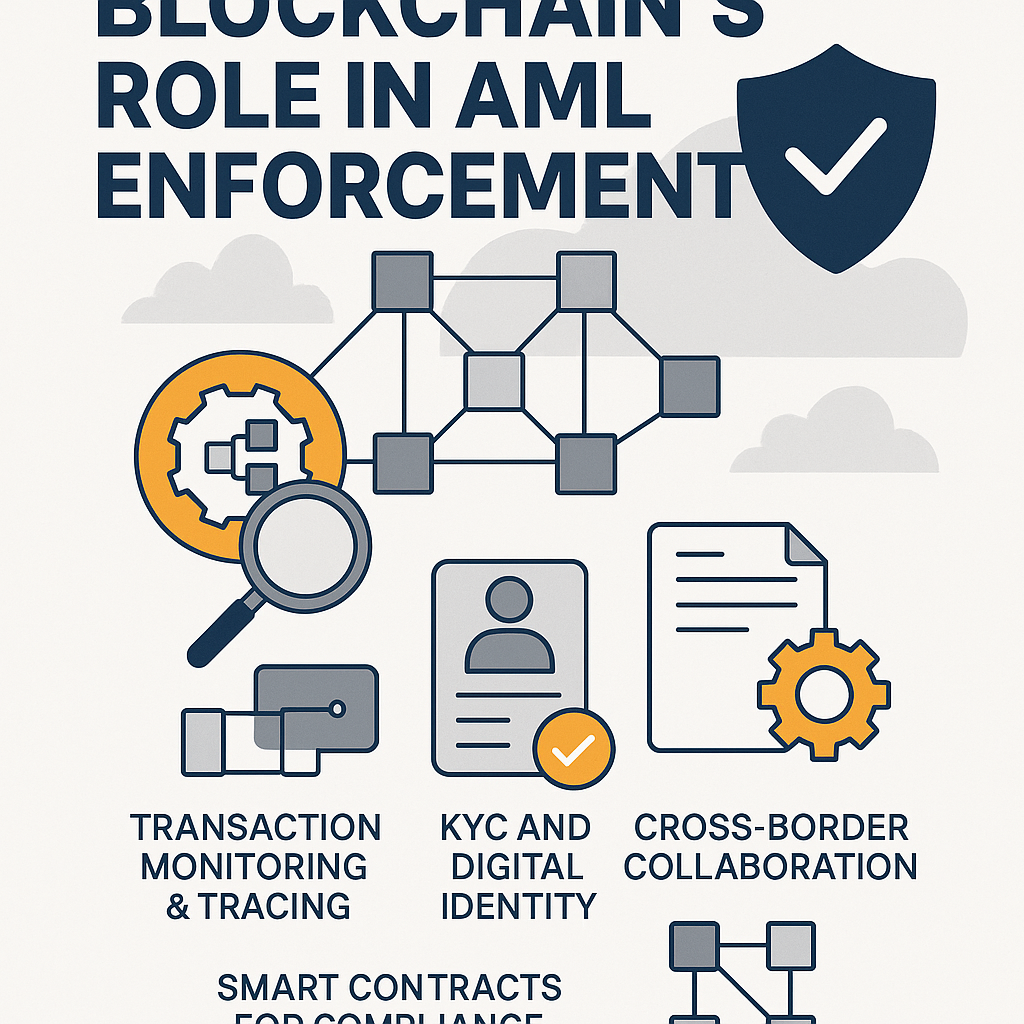
1. Transaction Monitoring & Tracing
• Regulators and financial institutions use blockchain analytics to track wallets linked to high-risk activities (terrorism financing, ransomware, darknet markets).
• Blockchain’s immutable ledger ensures that once suspicious activity is detected, it cannot be erased or manipulated.
2. KYC and Digital Identity
• Blockchain-based digital ID solutions allow secure storage of verified customer information.
• Reduces duplication in KYC processes and strengthens Customer Due Diligence (CDD).
• Enables shared KYC utilities across banks, regulators, and DNFBPs.
3. Smart Contracts for Compliance Automation
• AML rules (like transaction limits or red-flag alerts) can be encoded into smart contracts.
• Transactions that breach compliance thresholds can be automatically flagged or halted.
4. Cross-Border Collaboration
• Blockchain allows regulators across different jurisdictions to share AML intelligence in near real time.
• Enhances the ability to trace illicit funds moving between multiple countries.
5. Cryptocurrency Exchange Supervision
• VASPs (Virtual Asset Service Providers) in the UAE must comply with AML/CFT laws.
• Blockchain monitoring ensures exchanges can identify suspicious transactions, freeze wallets, and report via goAML.
________________________________________
Benefits of Blockchain for AML Enforcement
• Immutable Records – Ensures evidence cannot be tampered with.
• Auditability – Provides regulators with clear, time-stamped transaction trails.
• Efficiency – Reduces the manual workload in transaction verification.
• Transparency & Trust – Builds credibility with regulators and clients.
• Early Detection – Advanced blockchain analytics can identify high-risk wallets before major laundering occurs.
________________________________________
Challenges in Blockchain-Based AML
1. Privacy & Anonymity Tools – Mixers, privacy coins, and DeFi platforms complicate enforcement.
2. Data Overload – High transaction volumes require advanced AI to detect meaningful red flags.
3. Regulatory Gaps – Inconsistent laws across jurisdictions hinder effective monitoring.
4. Technology Costs – Setting up blockchain analytics tools can be resource-intensive.
5. False Sense of Security – Transparency does not eliminate the need for human expertise in investigations.
________________________________________
Blockchain & AML in the UAE
The UAE has taken strong steps to regulate the virtual asset ecosystem:
• Cabinet Decision No. 111 of 2022 on regulating Virtual Asset Service Providers (VASPs).
• Dubai Virtual Assets Regulatory Authority (VARA) oversees crypto service providers.
• Integration with goAML ensures suspicious blockchain transactions are reported to the UAE FIU.
• Increasing adoption of blockchain-powered eKYC utilities across banks and DNFBPs.
________________________________________
Future Outlook
• AI + Blockchain Integration: Combining blockchain analytics with AI for real-time suspicious transaction detection.
• Decentralized KYC Systems: Shared blockchain identity registries across UAE financial institutions.
• Global Regulatory Cooperation: Use of blockchain for cross-border AML intelligence networks.
• Crypto-Specific RegTech Solutions: Tailored AML monitoring for DeFi and NFTs.
________________________________________
Conclusion
Blockchain is no longer just a financial innovation—it is becoming an essential component of AML enforcement. While it presents challenges in terms of anonymity and regulatory gaps, blockchain also offers unprecedented transparency, auditability, and traceability. By leveraging blockchain analytics, digital identity solutions, and smart contracts, regulators and businesses can strengthen their fight against financial crime.
In the UAE, with its proactive stance on AML and virtual assets, blockchain is set to play a central role in shaping the future of compliance.
________________________________________
About Us
Sheikh Anwar Accounting and Auditing LLC specializes in AML compliance, blockchain advisory, and outsourced MLRO services for businesses and DNFBPs in the UAE. We support clients in integrating blockchain analytics into AML frameworks and ensuring compliance with UAE regulations.
📧 Email: info@sa-auditors.com
🌐 Website: www.sa-auditors.com
☎️ Contact: +971 4 123 4567