Biometric KYC Solutions in UAE AML Compliance
Introduction
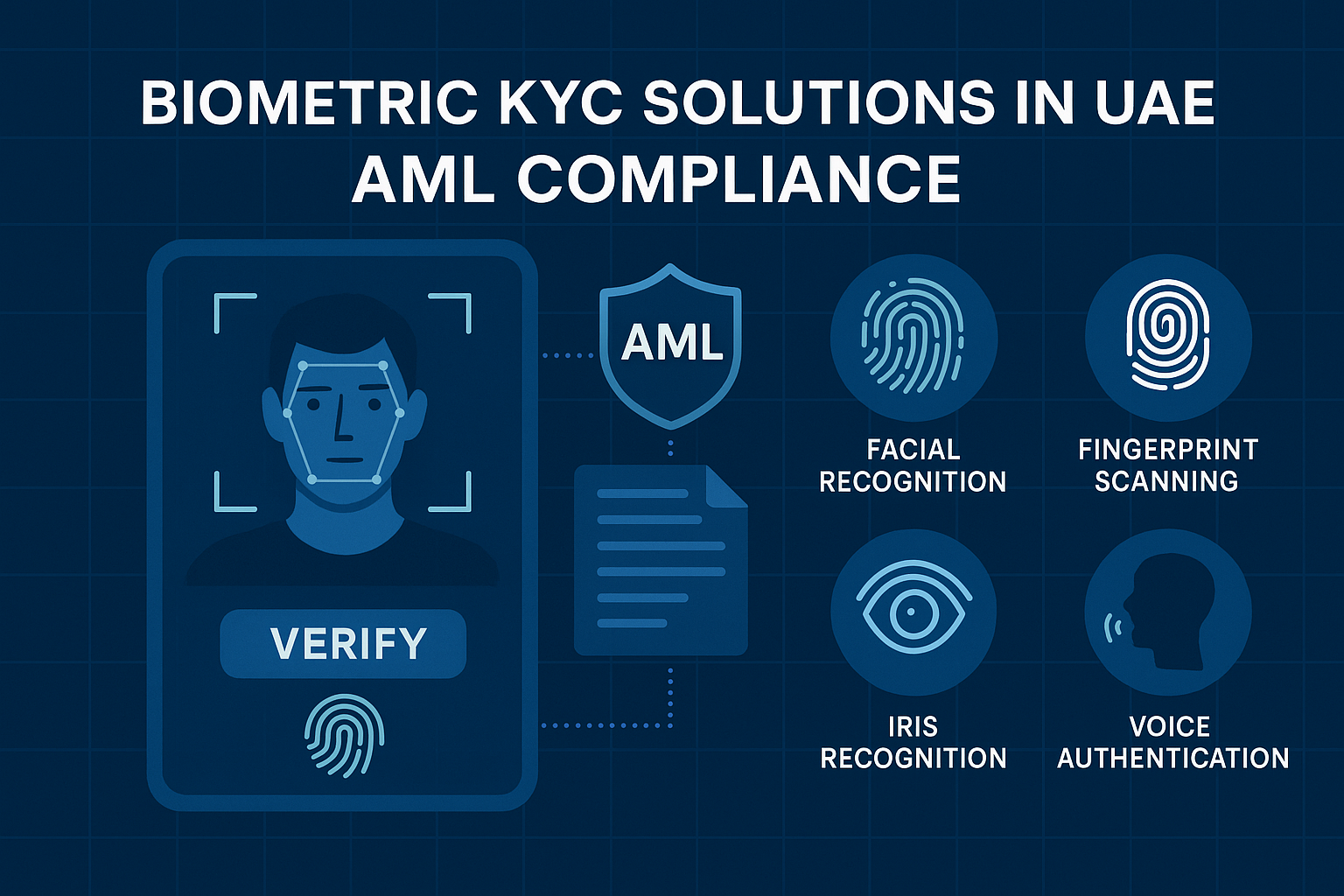
As financial crimes evolve in complexity, regulators in the UAE are placing increasing emphasis on robust Know Your Customer (KYC) frameworks. One of the most transformative technologies reshaping customer due diligence is biometric KYC. By leveraging facial recognition, fingerprint scanning, iris recognition, and voice authentication, businesses can ensure faster onboarding, reduce identity fraud, and meet stringent AML requirements under Federal Decree-Law No. 20 of 2018 and Cabinet Decision No. 10 of 2019.
________________________________________
Why Biometric KYC is Crucial for AML in the UAE
1. Strengthening Identity Verification
Traditional KYC relies on documents like passports, Emirates IDs, or utility bills. These can be forged or manipulated. Biometric KYC ties identity verification to unique biological traits, making impersonation or fraud significantly harder.
2. Regulatory Compliance
UAE regulators such as the Central Bank of the UAE (CBUAE), Dubai Financial Services Authority (DFSA), and Abu Dhabi Global Market (ADGM) require DNFBPs (Designated Non-Financial Businesses and Professions) and financial institutions to implement enhanced due diligence (EDD) for high-risk customers. Biometric verification adds a powerful layer of assurance.
3. Seamless Digital Onboarding
With the UAE moving towards a digital economy and initiatives like UAE Pass and paperless government, biometric KYC ensures customers can be onboarded remotely while meeting AML and goAML reporting standards.
________________________________________
Key Biometric KYC Technologies Used in UAE
1. Facial Recognition – Widely used by banks and fintechs, facial recognition cross-verifies live selfies with official IDs.
2. Fingerprint Scanning – Integrated in mobile banking apps and identity verification systems for recurring logins.
3. Iris Recognition – Extremely secure and popular in government identity programs.
4. Voice Authentication – Growing in call-center based financial services for real-time verification.
________________________________________
Benefits for AML Compliance
• Reduced Identity Fraud: Harder for criminals to create synthetic identities.
• Real-Time Risk Mitigation: Continuous biometric monitoring ensures suspicious activity is flagged early.
• RegTech Integration: Biometrics combined with AI/ML enables automated screening against sanctions lists, PEP databases, and adverse media.
• Audit Trail for Regulators: Biometric verification leaves a digital footprint, ensuring transparency during inspections.
________________________________________
Challenges in Implementing Biometric KYC
While promising, biometric adoption faces some hurdles:
• Data Privacy Concerns: Regulated under Federal Decree-Law No. 45 of 2021 on Personal Data Protection (PDPL), requiring strict consent and secure storage.
• High Implementation Costs: Advanced biometric solutions require investment in infrastructure and cybersecurity.
• False Positives/Negatives: Biometric mismatches can lead to compliance challenges if not backed by robust secondary checks.
________________________________________
Regulatory Outlook in UAE
• CBUAE Guidance: Strongly encourages digital KYC solutions for customer onboarding in banks and exchange houses.
• DFSA & ADGM: Recognize biometrics as part of technology-enabled due diligence, provided businesses meet AML/CFT Rulebook requirements.
• Ministry of Economy (MOE): DNFBPs such as real estate brokers, precious metals traders, and lawyers are expected to adopt enhanced CDD—biometrics can help them stay compliant.
________________________________________
Best Practices for Businesses
1. Integrate Biometric KYC with AML Screening Tools – Ensure systems sync with goAML portal for suspicious transaction reporting.
2. Adopt Multi-Factor Verification – Combine biometrics with OTPs, geolocation, and device fingerprinting for layered security.
3. Ensure Data Protection Compliance – Encrypt biometric data, limit access, and follow PDPL guidelines.
4. Regular System Audits – Conduct periodic AML system audits to ensure biometric KYC tools are accurate and regulator-ready.
________________________________________
Conclusion
Biometric KYC is not just a technological upgrade—it is becoming a compliance necessity in the UAE’s fight against money laundering and terrorist financing. Businesses that adopt biometric verification will not only satisfy regulatory obligations but also build customer trust through enhanced security and seamless onboarding.
As the UAE continues to evolve into a global hub for finance, gold trading, real estate, and fintech, biometric KYC will play a central role in shaping the future of AML compliance.
________________________________________
💡 Sheikh Anwar Accounting & Auditing LLC provides specialized AML compliance services, including KYC framework design, AML audits, training, and goAML reporting support.
📧 Email: info@sa-auditors.com
🌐 Website: www.sa-auditors.com