Best Practices in Board-Level AML Training
Introduction
In the UAE, regulators emphasize that boards of directors and senior management are ultimately responsible for ensuring Anti-Money Laundering (AML) compliance within their organizations. While compliance teams and Money Laundering Reporting Officers (MLROs) manage day-to-day tasks, boards must demonstrate a deep understanding of AML obligations to provide effective oversight. To achieve this, board-level AML training is essential.
________________________________________
Why Boards Need AML Training
1. Regulatory Accountability
o Federal Decree-Law No. 20 of 2018 and Cabinet Decision No. 10 of 2019 make boards and senior management accountable for AML breaches.
o Regulators may hold directors personally responsible if failures occur under their governance.
2. Strategic Oversight
o Boards must ensure AML risks are identified, assessed, and managed across the organization.
o AML training equips them to challenge management and ask the right questions.
3. Reputation & Risk Protection
o A compliance failure can severely damage corporate reputation.
o Board-level awareness ensures AML is treated as a strategic priority, not just an operational task.
________________________________________
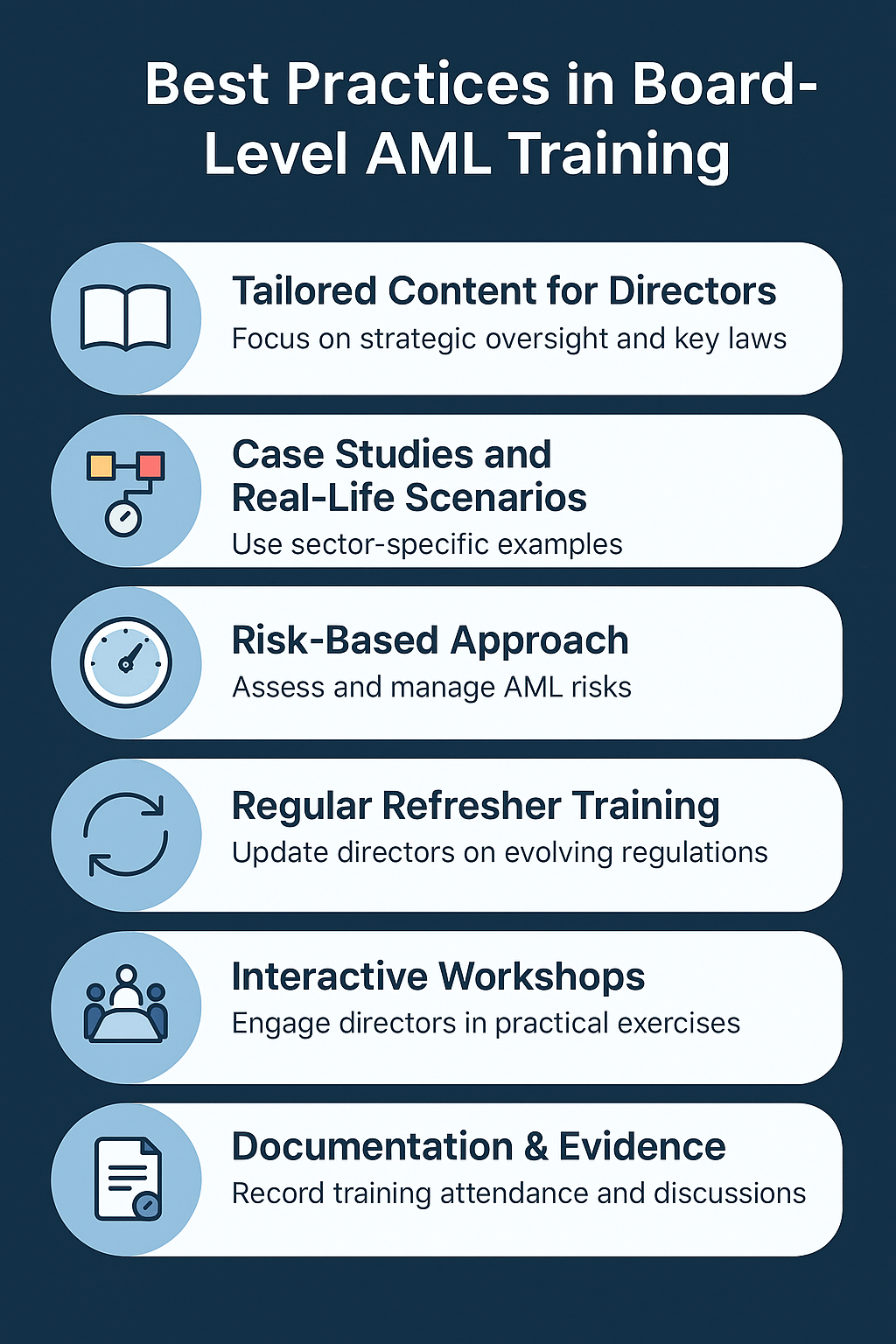
Best Practices for Board-Level AML Training
1. Tailored Content for Directors
Training for board members should focus on strategic oversight, not operational detail. Topics should include:
• Key UAE AML laws and their implications.
• FATF recommendations and how they affect the UAE market.
• The board’s accountability in inspections and enforcement actions.
2. Case Studies and Real-Life Scenarios
Boards learn best when training uses sector-specific case studies. Examples:
• Jewellery retailers failing to report suspicious cash transactions.
• Real estate firms accepting complex offshore structures without verification.
• Audit firms overlooking beneficial ownership concerns.
3. Risk-Based Approach
Training should emphasize that the board must approve and oversee:
• Enterprise-wide risk assessments.
• AML frameworks tailored to the organization’s risk profile.
• Enhanced due diligence for high-risk clients and jurisdictions.
4. Regular Refresher Training
AML regulations evolve. Boards should undergo refresher sessions at least annually, focusing on:
• New Ministry of Economy circulars.
• Recent enforcement cases.
• Updates from FATF or Central Bank of the UAE.
5. Interactive Workshops
Encourage directors to engage in workshops where they:
• Review mock STRs (Suspicious Transaction Reports).
• Evaluate risk assessment frameworks.
• Discuss governance failures in high-profile AML cases.
6. Documentation & Evidence
Boards should ensure:
• Training attendance is documented.
• Minutes of board meetings reflect AML discussions.
• Training certificates are available for regulator review.
________________________________________
Benefits of Effective Board-Level AML Training
• Regulatory Confidence – Demonstrates proactive governance to inspectors.
• Improved Oversight – Directors can challenge and guide management effectively.
• Reduced Risk Exposure – Early identification of compliance gaps prevents fines and sanctions.
• Enhanced Culture of Compliance – Leadership sets the tone for the entire organization.
________________________________________
Conclusion
Board-level AML training is not optional—it is a regulatory necessity and a governance best practice. By ensuring directors understand their roles and responsibilities in AML compliance, businesses in the UAE can strengthen their defenses against money laundering risks while building trust with regulators, clients, and stakeholders.
________________________________________
📌 For customized board-level AML awareness programs and governance training in the UAE, contact:
• Email: info@sa-auditors.com
• Website: www.sa-auditors.com