Benefits of API Integration in AML Screening Tools
Introduction
In today’s digital financial ecosystem, speed and accuracy in compliance processes are more important than ever. As regulators tighten Anti-Money Laundering (AML) requirements, businesses need seamless, real-time solutions to manage KYC, sanctions screening, and transaction monitoring. This is where API integration in AML screening tools comes into play.
An Application Programming Interface (API) acts as a bridge, enabling AML software to integrate with existing business systems such as CRMs, ERPs, accounting tools, and payment platforms. For organizations in the UAE—ranging from banks to DNFBPs—API-enabled AML solutions streamline compliance while ensuring regulatory alignment with Federal Decree-Law No. 20 of 2018, Cabinet Decision No. 10 of 2019, and goAML reporting requirements.
________________________________________
What is API Integration in AML Screening?
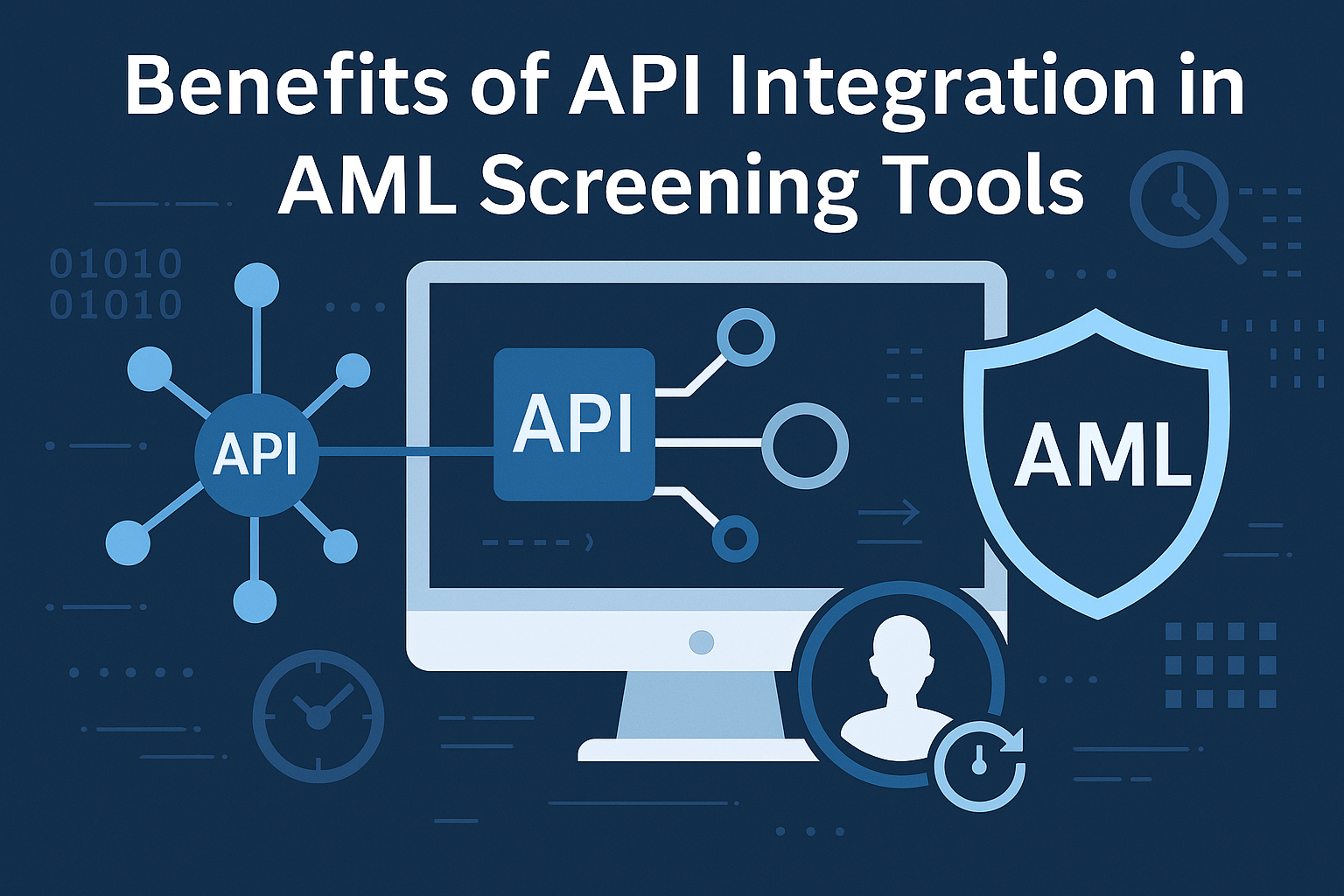
API integration allows AML screening tools to connect directly with a company’s internal systems. Instead of manually uploading customer or transaction data into separate compliance platforms, APIs enable automatic data exchange. This means every new customer record, payment transaction, or updated client profile can be screened instantly against sanctions, PEP, and adverse media lists.
________________________________________
Benefits of API Integration in AML Screening Tools
1. Real-Time Compliance
• APIs ensure instant screening during customer onboarding or when processing a transaction.
• Suspicious matches are flagged in real time, reducing the risk of delayed compliance actions.
2. Seamless Customer Experience
• Customers no longer face long onboarding delays caused by manual KYC checks.
• Instant verification improves trust and enhances the digital experience, especially important for fintechs and SMEs.
3. Operational Efficiency
• Reduces manual data entry and duplicate compliance checks.
• Compliance teams can focus on investigating genuine alerts instead of administrative tasks.
4. Improved Accuracy & Risk Detection
• APIs continuously sync data with updated global sanctions lists (UN, OFAC, EU, UK) and UAE local lists.
• Enhanced fuzzy matching algorithms minimize false positives, critical in a diverse customer base environment like the UAE.
5. Cost Savings
• Automating screening through APIs reduces the need for large compliance teams.
• Prevents financial penalties from regulatory non-compliance, which can be significant in the UAE.
6. Scalability for Growth
• As businesses grow, APIs allow AML tools to scale effortlessly.
• Supports SMEs, fintechs, and large institutions without needing full system overhauls.
7. Integration with RegTech & goAML
• APIs make it easy to connect AML screening with goAML portal reporting, ensuring timely submission of Suspicious Activity Reports (SARs).
• Works well with RegTech dashboards for automated audit trails and compliance analytics.
________________________________________
Use Cases in the UAE
1. Banks & Financial Institutions
o API screening integrated with mobile banking apps ensures every digital payment is screened instantly.
2. Fintech Companies
o E-wallets, digital lenders, and crypto platforms can perform automated KYC checks during onboarding.
3. Gold & Jewellery Traders
o APIs connect point-of-sale (POS) systems with AML tools, ensuring high-value transactions are screened in real time.
4. Real Estate Brokers
o Automated customer checks during property sales prevent engagement with sanctioned buyers or sellers.
________________________________________
Regulatory Perspective in UAE
• CBUAE: Requires real-time transaction monitoring for banks and exchange houses.
• DFSA & ADGM: Encourage fintechs and regulated entities to adopt technology-driven compliance tools.
• Ministry of Economy (MOE): Mandates DNFBPs to conduct regular sanctions screening and report suspicious transactions via goAML—APIs help automate this process.
________________________________________
Challenges of API Integration
• Data Security: Businesses must ensure compliance with UAE’s PDPL (Federal Decree-Law No. 45 of 2021) for data privacy.
• Technical Setup: Requires IT expertise to integrate AML APIs with legacy systems.
• Cost for SMEs: While cost-effective in the long run, initial setup may be expensive for smaller firms.
________________________________________
Best Practices for Businesses
1. Select Reliable Vendors – Choose API providers with proven experience in AML compliance.
2. Ensure Regulatory Compliance – APIs must support goAML reporting formats.
3. Test for Accuracy – Validate name-matching logic to reduce false positives.
4. Encrypt Data Transfers – Use end-to-end encryption to protect customer information.
5. Regular System Updates – Ensure APIs are synced with updated sanctions and PEP lists.
________________________________________
Conclusion
API integration is no longer a luxury—it is a compliance necessity for businesses in the UAE. By embedding AML screening into everyday workflows, companies can achieve real-time compliance, reduce risks, and enhance efficiency.
In a regulatory environment as dynamic as the UAE’s, businesses that leverage API-driven AML tools will not only stay compliant but also gain a competitive advantage through faster onboarding, safer transactions, and improved customer trust.
________________________________________
💡 Sheikh Anwar Accounting & Auditing LLC assists businesses in selecting and implementing API-enabled AML tools, conducting compliance audits, and ensuring full integration with UAE’s goAML reporting requirements.
📧 Email: info@sa-auditors.com
🌐 Website: www.sa-auditors.com