AML Training Requirements for DNFBPs in UAE
Introduction
The UAE has placed Designated Non-Financial Businesses and Professions (DNFBPs) under strict AML/CFT obligations in line with Federal Decree-Law No. 20 of 2018 and Cabinet Decision No. 10 of 2019. DNFBPs include:
• Real estate brokers and agents
• Dealers in precious metals and stones (DPMS)
• Lawyers, notaries, and other legal professionals
• Company service providers
• Auditors and accountants
One of the most critical obligations for DNFBPs is ongoing AML training for staff. Effective training ensures employees can detect red flags, file Suspicious Transaction Reports (STRs), and comply with goAML requirements.
________________________________________
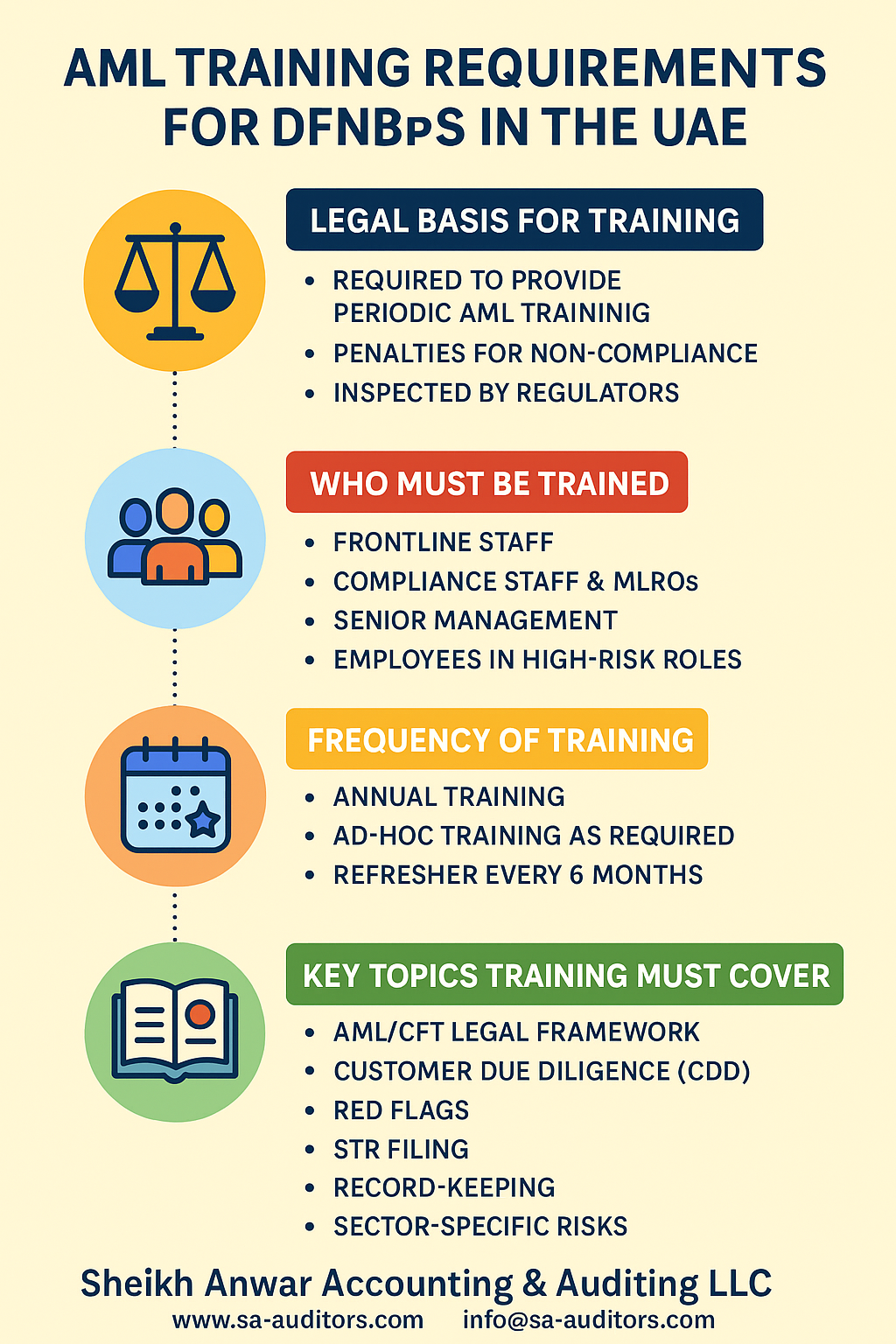
1. Legal Basis for Training
• UAE law requires DNFBPs to maintain a risk-based AML program that includes periodic training.
• Training is not optional—failure to comply may lead to penalties, including fines up to AED 1 million or suspension of business licenses.
• Regulators (Ministry of Economy, FIU, free zone authorities like DMCC, ADGM, DIFC, RAKEZ) frequently check training records during inspections.
________________________________________
2. Who Must Be Trained?
• Frontline staff: Employees dealing directly with customers and transactions.
• Compliance staff & MLROs: Must receive in-depth training on STR filing and regulatory reporting.
• Senior management: Responsible for governance and setting the tone for compliance.
• All employees in high-risk functions: Even non-compliance staff who might detect suspicious activity.
________________________________________
3. Frequency of Training
• Annual training: Minimum requirement for all DNFBPs.
• Ad-hoc training: Required when there are changes in UAE AML laws, FATF recommendations, or new sector-specific risks.
• Refresher sessions every 6 months: Especially recommended for high-risk sectors like gold and diamond trading.
________________________________________
4. Key Topics DNFBP Training Must Cover
1. AML/CFT legal framework in the UAE – Federal Decree-Law No. 20/2018, Cabinet Decision No. 10/2019, FIU requirements.
2. Customer Due Diligence (CDD) & Enhanced Due Diligence (EDD) – Identifying and verifying clients, beneficial ownership, and PEPs.
3. Red Flags – Suspicious behavior, transaction anomalies, sector-specific indicators.
4. STR Filing – When and how to file suspicious transaction reports in the goAML portal.
5. Record-Keeping – Maintaining documents for at least 5 years as per UAE law.
6. Sector-Specific Risks –
o Real estate: Offshore ownership, high-cash purchases.
o Jewellery/DPMS: Structuring to avoid reporting thresholds.
o Lawyers/Company service providers: Use of nominee shareholders, shell companies.
o Auditors/Accountants: Misuse of consultancy fees, related-party over-invoicing.
________________________________________
5. Best Practices for DNFBPs
• Maintain training records (attendance logs, certificates, and training materials).
• Use a risk-based approach to customize training for each employee role.
• Conduct interactive sessions with case studies relevant to the UAE market.
• Include quizzes and assessments to measure effectiveness.
• Update programs continuously to reflect new typologies, FATF findings, and UAE FIU circulars.
________________________________________
Conclusion
AML training for DNFBPs in the UAE is mandatory, ongoing, and role-specific. It is not just about compliance but about building a culture where staff can confidently identify suspicious activity and act accordingly. With regulators increasing inspections and enforcement, DNFBPs must treat training as a strategic compliance priority rather than a box-ticking exercise.
________________________________________
📩 For customized AML training programs designed for DNFBPs in the UAE, contact us:
Sheikh Anwar Accounting & Auditing LLC
🌐 www.sa-auditors.com
📧 info@sa-auditors.com