AML Training for High-Risk Business Lines
Introduction
Certain business lines carry higher exposure to money laundering and terrorist financing risks. In the UAE, regulators classify sectors such as jewellery trading, real estate, legal services, accounting, and money exchange as Designated Non-Financial Businesses and Professions (DNFBPs)—all of which require stronger AML (Anti-Money Laundering) training frameworks.
________________________________________
Why High-Risk Business Lines Need Specialized AML Training
1. Regulatory Expectation
Federal Decree-Law No. 20 of 2018 and Cabinet Decision No. 10 of 2019 emphasize risk-based compliance. Regulators expect staff in high-risk businesses to have advanced knowledge of AML controls.
2. Greater Exposure to Illicit Activity
o Jewellery: Easy portability of gold and diamonds makes them attractive for illicit transactions.
o Real Estate: High-value assets can be misused to launder large sums.
o Legal & Audit Firms: May be used to conceal beneficial ownership or set up complex offshore structures.
3. Penalties for Non-Compliance
The Ministry of Economy has imposed fines ranging from AED 50,000 to AED 5 million for AML breaches, with high-risk DNFBPs being a priority for inspections.
________________________________________
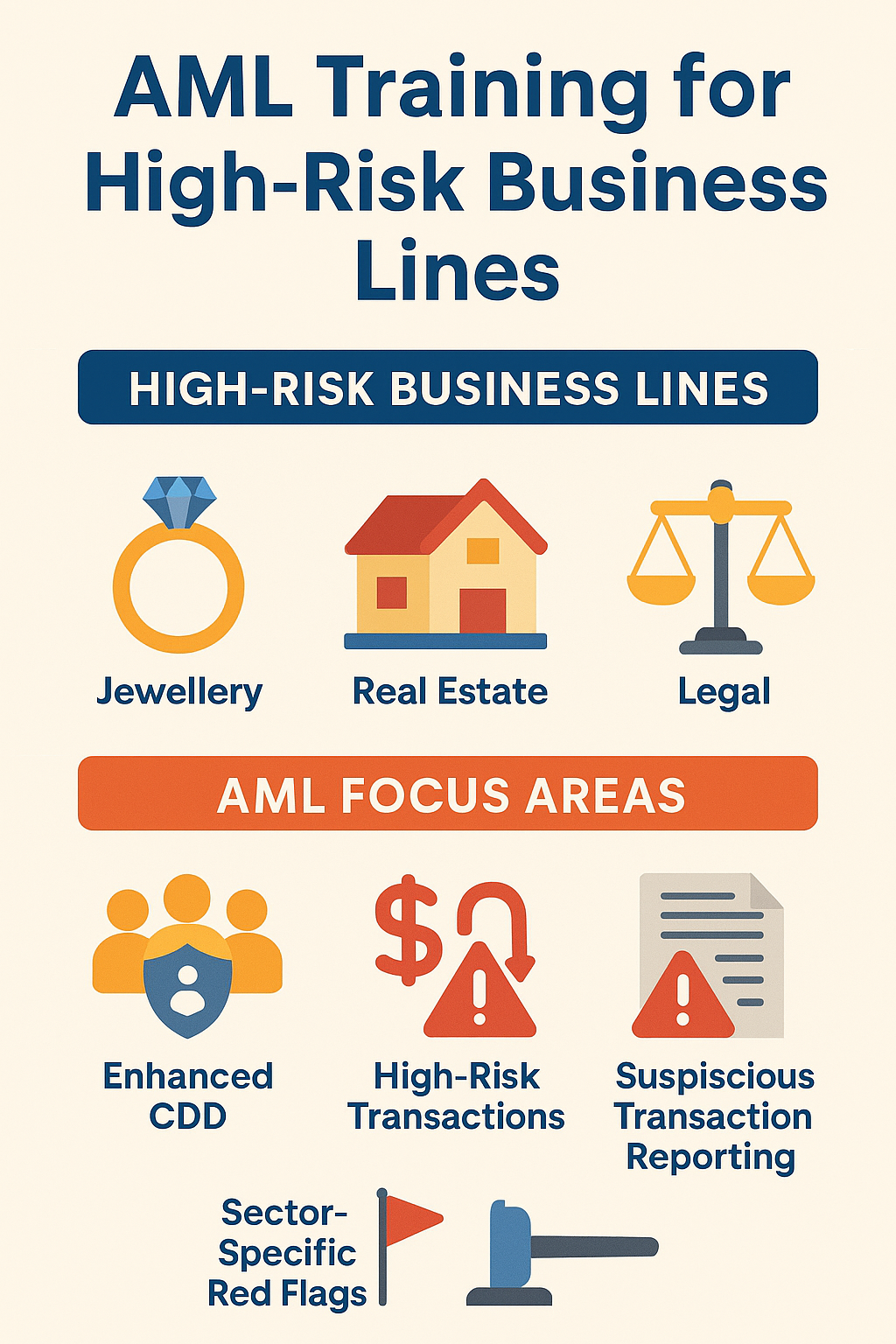
Key Focus Areas in AML Training for High-Risk Business Lines
1. Enhanced Customer Due Diligence (CDD)
• Identifying ultimate beneficial owners (UBOs).
• Applying stricter checks for Politically Exposed Persons (PEPs).
• Verifying the source of wealth and source of funds.
2. Recognizing High-Risk Transactions
• Jewellery: Large cash purchases, third-party payments, and structured transactions.
• Real Estate: Purchases through complex corporate structures or offshore companies.
• Law & Audit Firms: Requests to form shell companies or unusual legal arrangements.
3. Suspicious Transaction Reporting (STRs)
• Training employees on when to escalate cases.
• Filing accurate reports through the goAML portal.
• Understanding confidentiality requirements in STR handling.
4. Sector-Specific Red Flags
• Jewellery: Customers refusing to provide ID or insisting on anonymity.
• Real Estate: Buyers from high-risk jurisdictions purchasing in cash.
• Legal & Audit: Complex trust arrangements without clear economic rationale.
5. Record-Keeping and Audit Readiness
• Maintaining CDD records for at least five years.
• Preparing for regulatory audits and inspections with complete documentation.
________________________________________
Benefits of Specialized AML Training
• Improved Compliance Readiness – Staff can handle regulator inspections confidently.
• Reduced Risk Exposure – Early detection of suspicious activity limits business liability.
• Stronger Reputation – Compliance-focused businesses gain customer trust.
• Operational Efficiency – Staff trained in risk-based processes work more effectively.
________________________________________
Best Practices for Delivering AML Training in High-Risk Sectors
• Customized Training Modules – Tailored content for specific industries (jewellery vs real estate vs legal).
• Interactive Case Studies – Real-world examples from the UAE market.
• Gamification Techniques – Use quizzes, role-play, and simulations for better engagement.
• Regular Refresher Courses – Ensure staff remain updated on new FATF typologies and UAE guidelines.
________________________________________
Conclusion
For high-risk business lines in the UAE, AML training is not a tick-box exercise—it is a regulatory necessity and a reputational safeguard. By investing in specialized training programs, businesses can protect themselves from fines, build trust with regulators, and foster a culture of compliance.
________________________________________
📌 For tailored AML training programs for jewellery retailers, real estate brokers, legal firms, and auditors in the UAE, contact:
• Email: info@sa-auditors.com
•