AML Indicators in Cryptocurrency Transactions
Introduction
The rise of cryptocurrencies and virtual assets (VAs) has transformed global finance, offering speed, accessibility, and innovation. However, the same features that make cryptocurrencies attractive also make them vulnerable to money laundering (ML) and terrorist financing (TF). Criminals exploit the anonymity, cross-border reach, and decentralized nature of virtual assets to move illicit funds undetected.
For UAE regulators, DNFBPs, and financial institutions, recognizing AML red flags in cryptocurrency transactions is essential to comply with Federal Decree-Law No. 20 of 2018, Cabinet Decision No. 10 of 2019, and the FATF guidance on Virtual Asset Service Providers (VASPs).
________________________________________
1. Transaction Pattern Red Flags
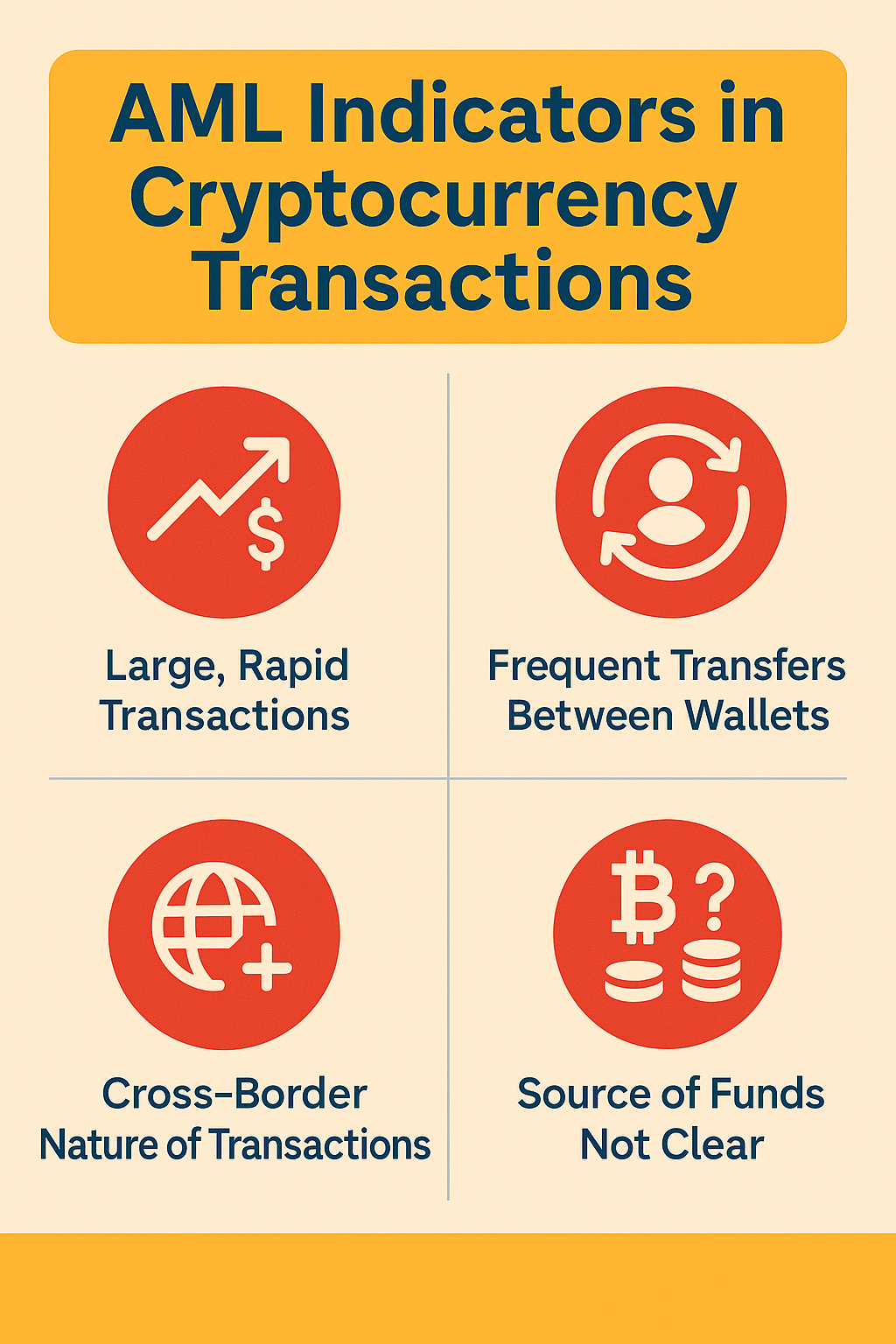
• Large, rapid transactions inconsistent with customer profile.
• High frequency of transfers between multiple wallets.
• Sudden conversion of large amounts of cryptocurrency into fiat without commercial rationale.
• Structuring transactions below reporting thresholds.
________________________________________
2. Customer Red Flags
• Reluctance to provide KYC or source of funds/wealth information.
• Use of false or unverifiable identities when opening accounts on exchanges.
• Customers linked to high-risk jurisdictions or sanctioned countries.
• Multiple accounts controlled by the same individual.
________________________________________
3. Virtual Asset-Specific Red Flags
• Use of privacy coins (e.g., Monero, Zcash) to obscure traceability.
• Engagement with mixing or tumbling services designed to hide transaction origins.
• Frequent transfers between hosted and unhosted wallets.
• Use of decentralized exchanges (DEXs) with no AML controls.
________________________________________
4. Cross-Border Red Flags
• Transfers to or from countries with weak AML/CFT frameworks.
• Large, repeated transactions routed through multiple exchanges in different jurisdictions.
• Use of cross-border peer-to-peer (P2P) transfers for no clear business reason.
________________________________________
5. Behavioural Red Flags
• Clients displaying secrecy or urgency in completing crypto transactions.
• Refusal to meet in person, relying only on intermediaries.
• Aggressive behaviour when asked about compliance checks.
• Sudden switching of exchanges or wallets without justification.
________________________________________
6. UAE-Specific Risks in Cryptocurrency
• Real estate purchases settled using crypto assets without proper verification.
• Gold and jewellery traders accepting crypto payments with no KYC checks.
• Free zone companies declaring “crypto-related business” but showing no real economic substance.
• Informal peer-to-peer trading outside licensed exchanges regulated by VARA or ADGM.
________________________________________
7. Mitigation Measures
• Conduct Enhanced Due Diligence (EDD) for crypto-linked clients.
• Deploy blockchain analytics tools to trace and monitor transactions.
• Ensure onboarding with robust KYC/UBO verification.
• Screen counterparties against sanctions, PEP, and watch lists.
• File Suspicious Activity Reports (SARs) promptly via goAML when red flags are detected.
• Stay aligned with the UAE Virtual Assets Regulatory Authority (VARA) guidelines and FATF recommendations.
________________________________________
✅ Conclusion
Cryptocurrencies bring new opportunities but also serious AML/CFT risks. By monitoring suspicious patterns and strengthening compliance, UAE businesses, DNFBPs, and financial institutions can protect themselves against misuse, reputational harm, and regulatory penalties.
________________________________________
📌 About Us
At Sheikh Anwar Accounting & Auditing LLC, we provide expert support in AML compliance, cryptocurrency risk assessments, outsourced MLRO services, and transaction monitoring. Our solutions help businesses in the UAE detect crypto-related risks and remain fully compliant with local and international AML standards.
📧 Email: info@sa-auditors.com
🌐 Website: www.sa-auditors.com