AML in Cross-Border Digital Trade – Future Challenges
Introduction
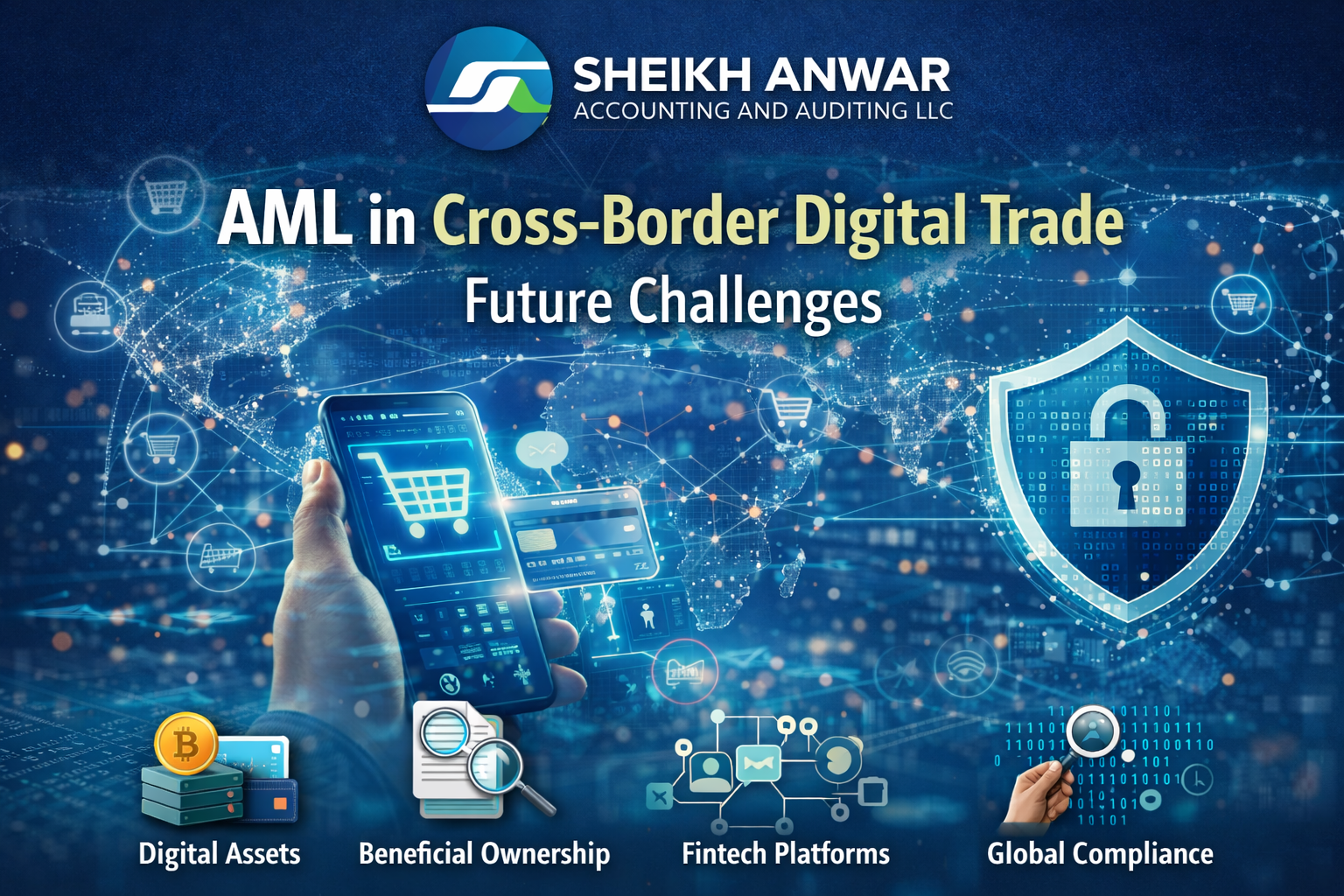
The rapid growth of cross-border digital trade has transformed global commerce. Businesses can now conduct transactions instantly across multiple jurisdictions using digital platforms, online marketplaces, fintech applications, and blockchain-based payment systems. While this digital transformation creates tremendous economic opportunities, it also introduces new challenges for Anti-Money Laundering (AML) compliance.
For regulators and businesses operating in the UAE and global markets, the expansion of digital trade increases the complexity of monitoring financial transactions, identifying beneficial ownership, and preventing illicit financial flows. Companies must therefore prepare for future AML challenges in cross-border digital trade by strengthening compliance frameworks and adopting advanced technologies.
________________________________________
1. Increasing Complexity of Cross-Border Transactions
Digital trade allows businesses to transact across multiple jurisdictions simultaneously. A single online transaction may involve:
• A buyer in one country
• A seller in another country
• A payment processor in a third country
• A logistics provider in a fourth country
This multi-layered transaction structure makes tracking the flow of funds and verifying the legitimacy of transactions more difficult. AML regulators increasingly require companies to perform enhanced monitoring of international digital transactions.
________________________________________
2. Rise of Fintech and Digital Payment Platforms
Fintech innovations such as digital wallets, payment gateways, and instant international transfers have significantly improved global commerce efficiency. However, these technologies also create opportunities for money laundering if adequate AML controls are not implemented.
Challenges include:
• Anonymous digital transactions
• Limited transparency in payment intermediaries
• Rapid cross-border fund transfers
• Use of multiple digital accounts across jurisdictions
Financial institutions and digital platforms must therefore implement strong transaction monitoring systems and real-time AML screening mechanisms.
________________________________________
3. Trade-Based Money Laundering in Digital Commerce
Trade-Based Money Laundering (TBML) is one of the fastest-growing financial crime risks in global trade. In digital trade environments, criminals may manipulate invoices, shipping documentation, or product valuations to move illicit funds across borders.
Common TBML risks in digital trade include:
• Over- or under-invoicing of goods
• Fake online trading platforms
• Misrepresentation of product values
• Multiple shell companies involved in transactions
For sectors such as gold, jewellery, and precious metals trading, which are highly active in cross-border commerce, robust AML monitoring becomes particularly important.
________________________________________
4. Challenges in Beneficial Ownership Identification
Cross-border digital businesses often operate through complex corporate structures, offshore entities, and nominee shareholders. Identifying the ultimate beneficial owner (UBO) of entities involved in digital trade transactions is becoming increasingly difficult.
Regulators worldwide are strengthening beneficial ownership transparency requirements, and businesses must ensure proper Customer Due Diligence (CDD) and Enhanced Due Diligence (EDD) procedures are implemented.
________________________________________
5. Cryptocurrency and Digital Asset Risks
The increasing use of cryptocurrencies and virtual assets in international transactions introduces new AML risks. Digital assets allow rapid cross-border transfers without traditional banking intermediaries, which can make transaction monitoring more challenging.
Key AML risks related to digital assets include:
• Pseudonymous wallet addresses
• Decentralized exchanges
• Cross-chain transactions
• Difficulty tracing the source of funds
Regulators in the UAE and globally are introducing stricter Virtual Asset Service Provider (VASP) regulations to address these risks.
________________________________________
6. Regulatory Fragmentation Across Jurisdictions
Different countries apply different AML regulations, reporting requirements, and compliance standards. Businesses involved in cross-border digital trade must navigate multiple regulatory frameworks simultaneously.
For example, companies may need to comply with:
• Local AML laws
• FATF recommendations
• Data protection regulations
• Financial reporting standards
This regulatory complexity requires organizations to maintain centralized compliance systems capable of adapting to multiple jurisdictions.
________________________________________
7. Role of Technology in Addressing Future AML Challenges
Technology will play a crucial role in combating financial crime in digital trade environments. Organizations are increasingly adopting:
• Artificial Intelligence (AI) for transaction monitoring
• Blockchain analytics for tracing digital asset transactions
• Automated sanctions and PEP screening tools
• Digital identity verification systems
These technologies enable businesses to detect suspicious patterns, reduce compliance risks, and strengthen regulatory reporting capabilities.
________________________________________
Conclusion
Cross-border digital trade is expected to continue expanding rapidly as businesses adopt digital platforms and fintech solutions. However, the increasing complexity of international digital transactions also raises significant AML challenges.
Organizations must adopt technology-driven compliance systems, strengthen customer due diligence processes, and align with international AML standards to protect themselves from financial crime risks. Businesses that proactively build strong AML frameworks will be better positioned to operate safely and sustainably in the evolving digital trade ecosystem.
________________________________________
About Sheikh Anwar Accounting & Auditing LLC
Sheikh Anwar Accounting & Auditing LLC is a Dubai-based professional advisory firm providing specialized services in AML compliance, corporate tax advisory, VAT consultancy, audit services, and regulatory compliance solutions across the UAE.
Our team assists businesses in implementing AML frameworks, risk assessments, AML policies, and regulatory reporting systems aligned with UAE laws and international FATF standards.
Company Details
Sheikh Anwar Accounting & Auditing LLC
📍 Dubai Creek Tower, M35, Dubai, UAE
🌐 www.sa-auditors.com
📧 info@sa-auditors.com
📞 +971 50 986 8462